
05 October 2022
Maximising the Benefits of the autumn rotation planner
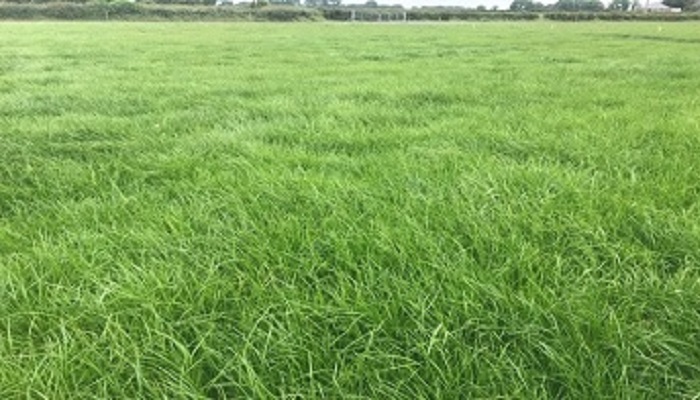
Gabriel Trayers, Teagasc Future Beef Programme Advisor, tells you why you should start growing your spring grass now!
Grass is unquestionably the cheapest feed for beef or sheep production. Maximising the use of grazed grass in the diet of cattle over their lifetime is key to improving profit margins while also helping to reduce, harmful greenhouse gas emissions (GHG) on farms. There is an ambitious target of reducing GHG by 25% from agriculture. Farmers must be prepared to adopt a suite of mitigating measures that will help reduce harmful emissions like ammonia and methane.
On average, drystock farms only utilize approximately 58% of the pasture that is grown yearly. The remainder is wasted. However, by addressing soil fertility, applying lime, focusing on better grazing management practices and developing simple grazing infrastructures, higher grass production and utilisation is possible on any farm.
Implementing a grassland plan that will deliver a longer grazing season ie (220days+) with high quality pasture will ensure a high level of cattle performance of 0.90kg to 1.2kg/liveweight/day. This will help reduce the amount of slurry produced on the farm through a shorter winter period and with increased animal performance, cattle should reach slaughter faster.
So if you want to target at least 220 days at grass next year – the plan must be put in place now!
No one can predict or plan what the weather and ground conditions will be like next February and early March for early grazing, but the one thing that farmers can plan for is to have grass available at this time if conditions are suitable to graze. It is better to be looking at the grass in the spring 2023 rather than looking for it.
As very little growth will happen between November and February, for grass to be available for grazing in February/early March it must be grown this October.
Each year the grassland management calendar starts in the autumn. The closing date of paddocks and how they are grazed out in the months of October and November has a direct effect on the amount of grass available on the farm in February and March. The 60:40 autumn rotation planner is a tool used during the last grazing rotation. The planner is based on a 60:40 rule of thumb, where 60pc of the total farm area would be closed by November 10th or one to two weeks earlier on wetter farms.
A consistent amount should be closed each week up to November 10th. When calculating your target areas, include all lands to be grazed in the spring, including silage ground that will be grazed before closing for silage. The remaining 40 % can be grazed from November 10th to the first week of December. Avoid all temptation to re-graze the areas that was closed in October. Another red card offence is allowing stock to “roam” the farm over the winter months and then wondering why there is no grass in spring when demand is high. Spring grass is worth at least €2 per livestock/unit/day so it is much more valuable then.
The idea is that when all paddocks are closed by early December that there would be a range of grass covers on the farm from grazed out (4cm) to 8cm. This gives an average farm cover of around 6cm which equates to 500 to 600kgs of dry matter per hectare. This will be the grass that will be available next spring before the growth starts.
Case Study
Michael McGuigan is a Signpost Future Beef Farmer based in Meath. Michael farms along with his wife Aisling and daughter Penny at Blackwater Farm, Clongiffen, just outside Longwood. Michael runs a suckling to weanling system consisting of all Autumn calvers on 23.5ha, on a part-time basis. The males are sold as weanlings while the heifers, if not retained for breeding, are planned to be slaughtered off grass.
There is a strong focus on growing and maximising the use of grass to drive animal performance as cheaply as possible. In 2021, the farm grew 10.2t/DM/ha and Michael estimates that 12.5t/DM/ha will be grown this year while cutting his fertiliser usage by 40%. “I have achieved this by getting better at managing grass at the shoulders of the year especially in Spring”. The farm has been reseeded over the last few years and this has helped grow more grass but according to Michael “there has to be a plan put in place in Autumn in order to have grass in February and March”.
As Michael calves in Autumn, getting young calves out in early Spring is a priority. Cows can stay indoors while the calves have access to grass on the paddocks around the yard. “It’s a healthier environment and the cow’s milk is supplemented with grass”.
Michael uses the autumn rotation planner to help him close up in a structured way. “ I will start closing the paddocks around the yard on October 10th as these are the first fields that will be grazed in February”. Following the autumn rotation planner 60% will be closed by November 10th (ie 23.5ha x 60% = 14ha) . So, 14ha needs to be grazed and closed starting October 10th(ie 3.5ha/week). These areas will not be grazed again until Spring.
The remaining 40% (9.5ha) will be grazed by the end of November. “ I like to graze, the reseeded ground with clover last, as I don’t want a heavy cover of grass that would block light getting into the base over the winter”. In late January, slurry will be applied to the bare paddocks that was grazed last in November. Only 16,000 to 20,000 gallons (8-10 loads) will be applied using LESS. The remaining slurry will be applied in March/April when there is better growing conditions.
The Autumn rotation planner is a tool to help farmers have a closing plan that will ensure there is grass available in spring. Depending on weather, farm type and location the above dates will have to have some degree of flexibility. A common mistake made on farms is that the whole farm is grazed bare at the end of the year especially on sheep farms. In order the have grass in Spring, a good starting point is to start closing paddocks in October and have 60% closed by the first week in November. Allow these areas to rest over the winter period.
More information on Autumn Grazing Management
Teagasc Beef Specialists issue an article on a topic of interest to Suckler and Beef farmers every Wednesday here on Teagasc Daily. Find more on Teagasc Beef here