
08 May 2025
May 15 deadline for ACRES Winter Bird Food
ACRES Winter Bird Food must be sown by Thursday, 15 May 2025, as undertaken on your ACRES plan, Teagasc Specialists, Catherine Keena and Mícheál Kelly remind us of the key requirements for the action and the species it benefits over the winter months.
It is critical to get the crop established and produce seed for birds to feed next winter. Harvesting is not permitted and this crop must remain in-situ until 1 March 2026.
Requirements for both Winter Bird Food plot and strip
Seed
- At least 3 crop species
- At least one or more spring cereal (oats/triticale/wheat/barley).
- At least two or more of the following: linseed, oilseed rape, phacelia, fodder radish, mustard, spring vetch, lucerne, chicory or birds-foot trefoil
- Certified seed must be used. Farm-saved seed is not permitted.
- Seed Rate
- At least one third of the monoculture rate for each of the chosen prescribed species for a 3-way mix or one quarter for a 4-way mix.
Table 1: Species and monoculture seed rate
| Species | Monoculture seed rate |
|---|---|
| Spring oats | 150kg/ha |
| Spring triticale | 180kg/ha |
| Spring wheat | 180kg/ha |
| Spring barley | 160kg/ha |
| Linseed | 50kg/ha |
| Spring oilseed rape | 6kg/ha |
| Phacelia | 8kg/ha |
| Fodder radish | 10kg/ha |
| Mustard | 15kg/ha |
| Spring vetch | 40kg/ha |
| Lucerne | 25kg/ha |
| Chicory | 10kg/ha |
| Bird’s Foot trefoil | 12kg/ha |
Table 2: Examples of 3- and 4-way mixes
|
3-way Wild Bird Food mix (kg/ha) |
4-way Wild Bird Food mix (kg/ha) |
||
|---|---|---|---|
| Spring oats | 50kg | Spring Triticale | 45kg |
| Linseed | 17kg | Linseed | 12.5kg |
| Mustard | 5kg | Chicory | 2.5kg |
| Bird’s Foot Trefoil | 3kg | ||
Other requirements
- Soil preparation is key. Cultivate by ploughing, light cultivation, power harrowing etc. to generate a fine seedbed. Roll after sowing.
- Where needed, carry out pre-sowing weed control to aid establishment. Once the crop is sown, pesticides are not permitted. Only the spot treatment of noxious and invasive weeds with herbicides is allowed.
- Where needed, apply lime and fertiliser up to a maximum of half the fertiliser rate for nitrogen and phosphorus on spring oats as per S.I. 113 of 2022.
- Where winter bird food crops fail to establish or are poor, there is no option to sow the crop again after May 15th therefore fertiliser/organic manures can be applied to winter bird food plots to aid establishment, once specification limit is not exceeded.
- Where necessary, the action must be protected from livestock using a fence that is fit for purpose. Where no fence is required, the boundary of the winter bird food must be clearly identified with visible posts/markers if no natural boundary feature exists.
Winter bird food plot
You must follow your ACRES plan – the area and location of Winter Bird Food cannot be changed. An area between 0.25 hectares and 3 hectares will have been selected on your ACRES plan. There may be a number of plots around the farm, but the minimum parcel size is 0.25 hectares. There must be a 2m uncultivated/unsown zone between the edge of the crop and the field boundary (i.e. a hedgerow, stone wall/bank, or stream/drain). This 2m zone is not required where a mandatory buffer already exists for applicable watercourses under S.I. No. 113 of 2022 (as amended) and GAEC 4.
Winter bird food strip
Again, you must follow your ACRES plan. The width of the strip (either 6 or 8m) and the length (between 10m and 2,500m) has been selected in your ACRES plan and the width, length or location cannot be changed.
Wild Bird Cover as a Non-Productive Investment (NPI) in ACRES Co-Operation (CP)
If you are a farmer in ACRES CP and have applied to grow Wild Bird Cover as an NPI, this must be declared on your BISS declaration. You must declare the parcel where the crop will be located and the associated area in the year of establishment. Use the crop code: Wild Bird Cover, when declaring the crop type. The action will not be eligible for payment if the correct crop code is not declared.
The minimum to be delivered has been reduced from 0.25 ha to 0.04 ha. The change will apply for all NPI approvals. The quantity for the NPI Wild Bird Cover Plot action, where approved in an NPI Annual Works Plan (AWP), has been advised to participants in the ACRES CP in their NPI approval letter. Where a Wild Bird Cover area is being claimed for payment, that entire area must be delivered in full.
You are providing a giant bird table!
Many birds will benefit from Wild Bird Food on your farm, in particular the seed eating birds. A bird’s beak indicates its food source. Birds of prey such as owls and hen harriers have a hooked beak to kill and feed on small mammals. Breeding waders such as curlew and lapwing have long beaks to probe deep into soft wet ground. Insectiverous birds such as the wren and dunnock have a fine beak. Seed-eating birds have short strong beaks to break open seeds. Birds of Conservation Concern in Ireland (BoCCI) is an assessment of the conservation status of all regularly occurring birds on the island of Ireland. The conservation status of species is signalled using a traffic light system: Red, Amber and Green lists.
Small seed eaters
Skylark is Amber listed. Known as the lark, it was well loved in Ireland for its beautiful song, which on first hearing hearlded the arrival of spring. If the lark sang on St Brigid’s Day, it was an omen for a good spring. Early risers were ‘up with the lark’. Skylark like open areas and build grass nests on the ground. They like small seed like kale and linseed.
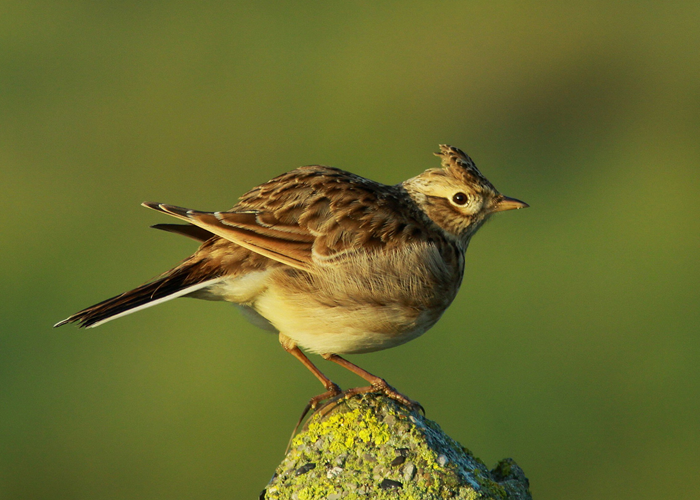
A Skylark pictured by Dick Coombes
Linnet is Amber listed. It is a long tailed finch that likes open areas and nests in a small tree. Their jerky bounding flight action make it difficult to see their plumage. The finches have a small beak suited to small seed only.
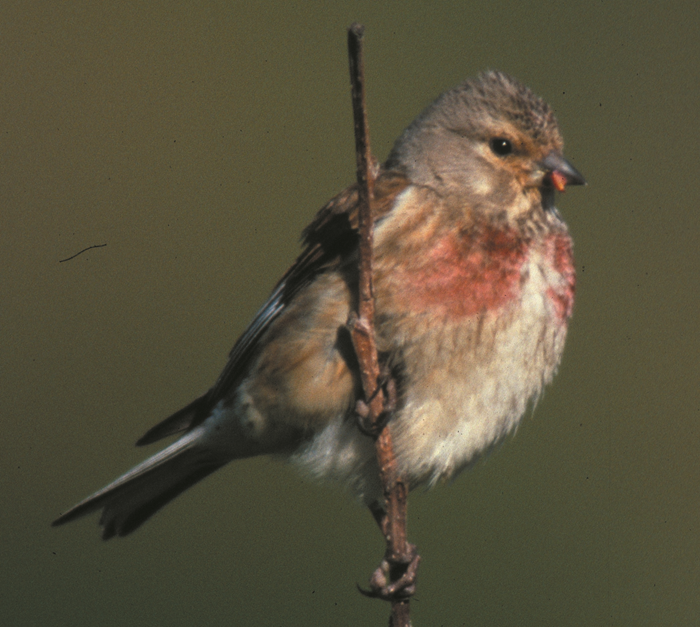
A Linnet pictured by Eddie Dunne
Twite is Red listed. They are found in Donegal and Mayo and there is a specific Twite Measure in GLAS. Twite like seed from dandelion, sorrel, catsear and yellow rattle.
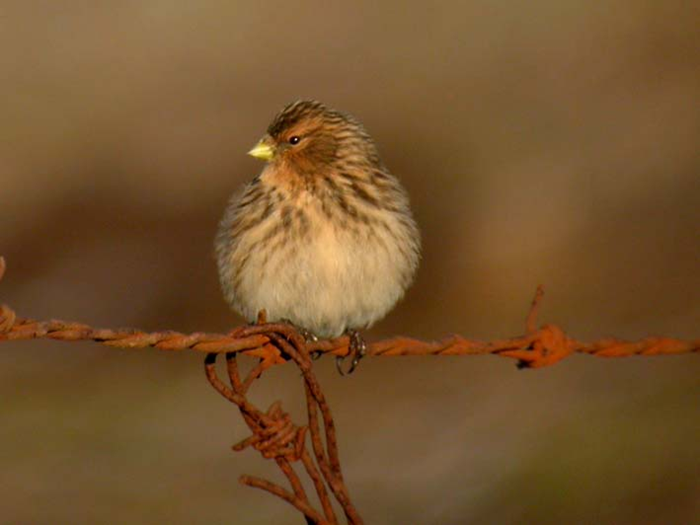
A Twite pictured by M Casey
Large and small seed eaters
Yellowhammer is Red listed. They are members of the bunting family as was the corn bunting which has become extinct in Ireland. Yellowhammer are now mainly found in the eastern half if Ireland. They prefer cereal and nest on or near the ground under hedge vegetation.
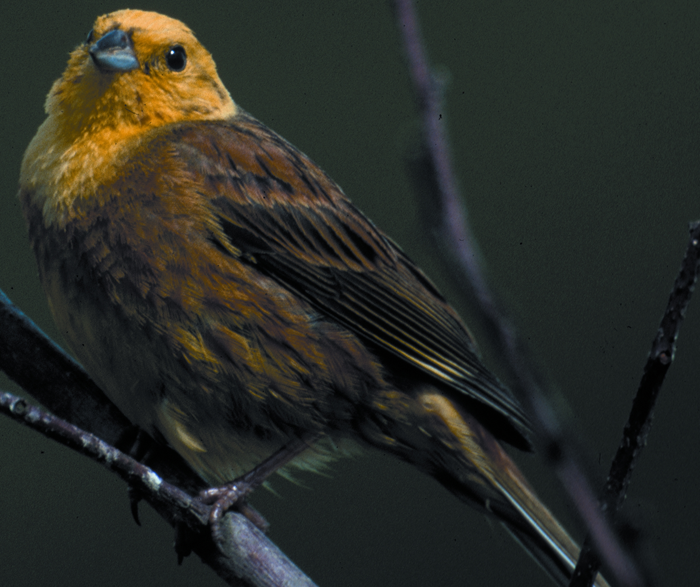
A Yellowhammer pictured by Eddie Dunne
Reed bunting is on the Green list. They are widely distributed, present in all counties. They eat all seeds especially oilseed rape and kale.
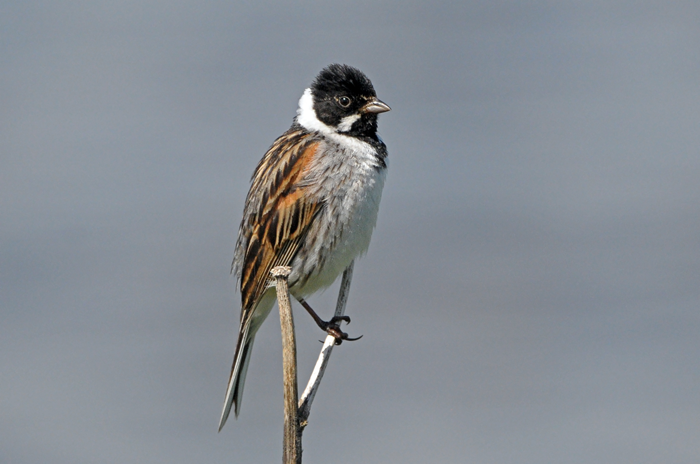
A Reed Bunting pictured by Colum Clarke
Tree sparrow is Amber listed. It is smaller than the house sparrow but makes the same chattering call from a group in a hedge or tree. They nest in loose colonies in holes in trees or banks.
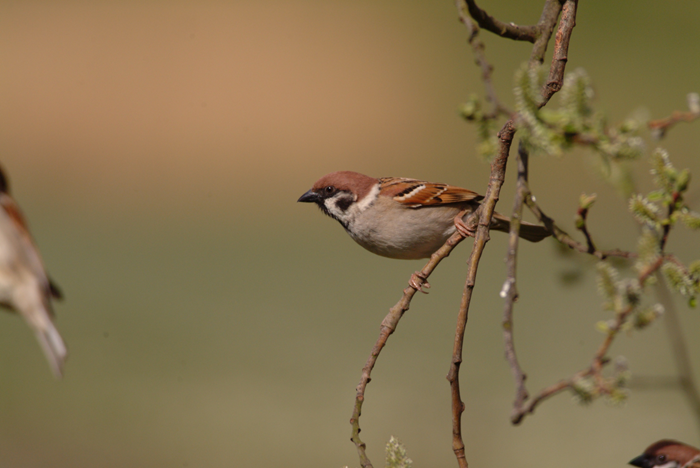
A Tree Sparrow pictured by Chris Wilson
To cater for all tastes, the ACRES Wild Bird Food seed mix contains both large cereal seed and smaller seed. The unharvested crop is a giant bird table, provided seed is produced. Broadleaved ‘weeds’ in these crops are beneficial as long as they don’t smother out the crop as they provide flowers for bees and another choice of smaller seed for birds. Weedy crops are also full of insects which provide food for other insect eating birds such as the swallow and great tit, as well as bats. Beneath the Wild Bird Cover on the ground birds such as the blackbird song thrush find earthworms easily, provided the crop is not too dense to access. An open crop is required so the seeding rate is much lower than that for normal crops. The crop is ideal habitat for shrews and field mice, which in turn attract owls and kestrel.