
Measuring efficiency in the main grass growing season
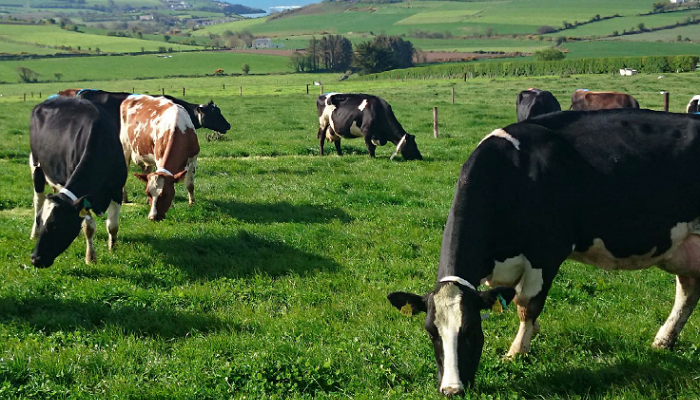
Are you producing milk solids efficiently? Dairy Specialist at Teagasc, Patrick Gowing discusses some of the metrics available to measure performance.
As we move into the main grass growing season and the weather seems to have settled to more favourable conditions, now is the time to produce your most efficient milk. We already know milk markets are depressed and the effects of the war in Iran could add at least 4c/l to your cost of production in 2026. Given this, we need maximise our peak milk months to produce as much milk as possible efficiently.
To examine if you are efficient, we use a metric of kg imported feed per kg milk solids. This tells us how much imported feed it requires to produce a kg of milk sold. The lower the figure the more efficient the production is. That is, you are utilising more of your own grazed grass to drive the production.
To do the calculation for yourself, you take your cows daily milk solids production (milk litres/cow/day x 1.03 x (fat % + protein %).
So, for example a herd doing 28 litres at 3.65% protein and 4.3% fat would produce:
- ((28 x 1.03) x (3.65 + 4.3)) = 2.16 kg MS/cow/day.
Now if this cow is getting 3 kg meal/ day then we convert to Dry Matter by multiplying by 0.88:
- (3 x 0.88) = 2.64 kg imported DM/cow/day
If we divide the imported feed by the milk solids production, it will give us how many kg imported DM/kg Milk solids.
- (2.65/2.16) = 1.23 kg DM/Kg milk solids.
Because we divide the milk output into what we feed to be efficient, we need to have a strong production figure.
The most efficient farmers will be producing at 1kg DM/kg MS. A low figure also indicates that you are maximising your grazed grass into your herd which will improve your grass utilised per hectare and improve your profitability. If your figure is high are you feeding too much? Is this due to a grass shortage? Or have you a grass quality issue on your farm.
Take the test today and see how your own farm fairs out.