
30 October 2024
Moving together towards raising pigs with intact tails
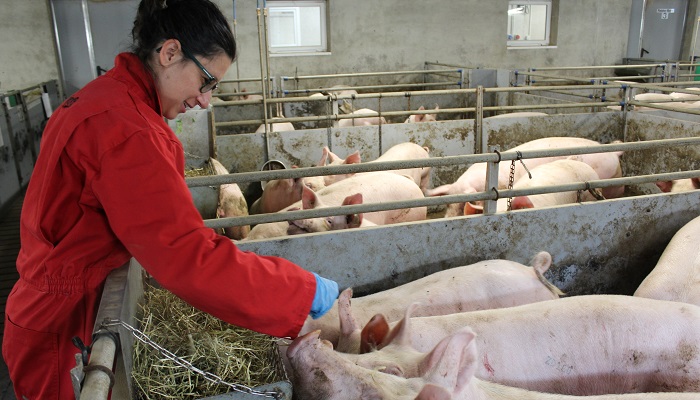
The Teagasc Pig Development Department has been awarded funding for a new European Innovation (EIP) Partnership Operational Group ‘Tailwards – Irish pig sector stakeholders moving together towards raising pigs with intact tails’, Ciarán Carroll and Edgar Garcia Manzanilla tell us more.
Ireland, similar to most European and all pig meat exporting EU countries, produces pigs with docked tails in compliance with EU regulations, to avoid tail biting. Apart from animal welfare concerns, tail docking is time consuming and takes a toll on farm staff.
Some countries, Finland for example, can successfully produce pigs with intact tails. There are a number of differences between the two countries which might lead us towards raising pigs with intact tails, e.g. public system of bonus payment for intact tails, farmers/vets developed plans to control tailbiting, Finnish health status is very good (free of 5 major pig diseases including PRRS), facilities mainly include single litter pens, partially slatted, with good environmental control and great attention to nutrition (feed composition) and feeding.
Irish farmers, veterinarians and advisors have been exploring countries like Finland to see if it is possible to adopt some of their best practices in raising pigs with intact tails. Based on this, a group of Irish farmers and advisors have come together in the Operational Group (OG) ‘Tailwards’ to progress towards raising pigs with intact tails by testing and adapting different innovations. The innovations identified by the OG as key are:
- Slurry management systems that allow the use of partially-slatted pens and enrichment on the floor for growing pigs;
- Strategies for the control/eradication of PRRS following a recent initiative developed in Northern Ireland (NI);
- Feedstuff quality monitoring and nutrition advice systems similar to the one in Finland;
- Feedback systems for farmers to prevent overstocking in farms;
- High welfare schemes in collaboration with big retailers.
The innovations to be tested are diverse, some include high investment in equipment (slurry management systems) and others will depend on the good co-ordination of farmers in their actions (PRRS control/eradication). Thus, the involvement of farmers as promoters of such innovations will be key for the success of the OG.
Farmers are not only contributing to Tailwards with their engagement, but also financially to test the different innovations. The Tailwards core team includes the main organisations providing technical advice and co-ordination to the Irish pig farmers; Teagasc, Animal Health Ireland (AHI) and the Irish Farmers Association (IFA). The wider group of stakeholders involved includes farmers participating in the different activities, private veterinary practitioners, farm advisors and nutritionists. The five proposed innovations will be assessed in five different tasks that are briefly described below:
1). Partially-slatted floors
Slurry management, slurry storage capacity in particular has been identified as the main barrier for the implementation of partially-slatted floors in Ireland. This task will assess slurry management systems with the potential to significantly improve the management of slurry by separating solid and liquid phases and purifying the liquid phase until it can be released to the environment.
These systems also have the potential to avoid clogging caused by environmental enrichment materials (e.g. straw) in slurry tanks of pig farms.
The systems to be tested have been selected by farmers as the most cost-effective ones and the farmers are willing to make a significant investment as part of the OG.
In a second step, a simulation of partially-slatted floors will be carried out in these farms using rubber mats. If this task is successful, partially-slatted pens could be used in Ireland and enrichment could be supplied on the floor of the pens for growing pigs.
2). PRRS Eradication/Control
Porcine Reproductive and Respiratory Syndrome (PRRS) causes reproductive pathology in breeding animals and respiratory disease in growing pigs. The virus also affects the immune system of pigs making them more susceptible to infections.
In 2020, Northern Ireland developed an OG to control PRRS in the area of Cookstown. By the end of the project, the number of positive units was reduced by one third, the overall viral load was reduced by 20%, and pleurisy and pericarditis were reduced 70% and 40%, respectively, at slaughter. The initiative has now been expanded to the rest of Northern Ireland.
Tailwards aims to adapt this initiative to the Cavan area as a pilot in the Republic of Ireland. The main steps included are: i) Mapping the level of PRRS in the area; ii) Assessing and improving biosecurity on individual units; iii) Synchronised vaccination in breeding herds within a short time window; iv) Monitoring of the results by blood analysis and slaughterhouse checks. If the task is successful, the initiative could be extended to the rest of the country.
3). Nutrition advice systems
Finnish veterinarians remark that optimal nutrition plays a key role in the control of tail biting, in particular amino acid imbalances and poor quality ingredients. Ireland, being an island, restricts the availability of ingredients and the humid climate makes feedstuffs conservation difficult. Additionally, the lack of a monitoring system for the quality of ingredients also favours that poor quality ingredients are imported to Ireland when rejected in other ports.
Teagasc has been working on an initiative to monitor the quality of the ingredients used by pig farmers similar to those existing in other countries. Tailwards will carry out an intensive sampling protocol in a group of farms for a year to define the current range of variability in the quality of the feedstuffs.
Then, improvements in the current formulation will be tested in collaboration with the farm nutritionist. If successful, this approach could be extended to the rest of the country to improve the quality of the feeds used in Irish pig farms, avoiding protein and amino acids imbalances, reducing the occurrence of undesirable things like mycotoxins, and increase the use of fibres in the diets.
4). Feedback systems to prevent overstocking
Overstocking has been identified by veterinarians in Ireland as an issue to solve before pigs can be raised with intact tails. Overstocking is often related to fluctuations in the pig market with farmers trying to take advantage of good prices by increasing pig numbers in their farms.
Based on available data from slaughterhouses and farms, we believe it is possible to give farmers real time feedback of future overstocking issues. Then, patterns in density can be managed by pig flows in slaughterhouse and by facility adjustments due to poor sizing of farms. This idea will be tested using the farms participating in the OG and could be easily extended to the rest of the country if successful.
5). High welfare schemes
Consumers have an appetite for high welfare pig meat and retailers are more and more interested in exploring collaborations with farmers to develop high welfare, low carbon footprint products. Lidl has recently shown interest in this type of approach in Ireland and other retailers have previously contacted Teagasc in relation to this.
This task will be developed in collaboration with ValuePig, an ongoing project in Teagasc to develop new pig products that result in higher income for farmers. We will contact the retailers to discuss the main requirements on their side in terms of animal welfare and what volumes of product would be required.
From there, we will establish a dialogue with the farmers involved in Tailwards to gather their views on the possibility of establishing such high welfare schemes. Retailers will be kept informed of the progress within Tailwards and any possibility of developing high welfare schemes will be planned as a follow up for Tailwards.
To find out more about the work of the Teagasc Pig Development Department, visit here