
17 February 2023
Multi-species swards for beef production
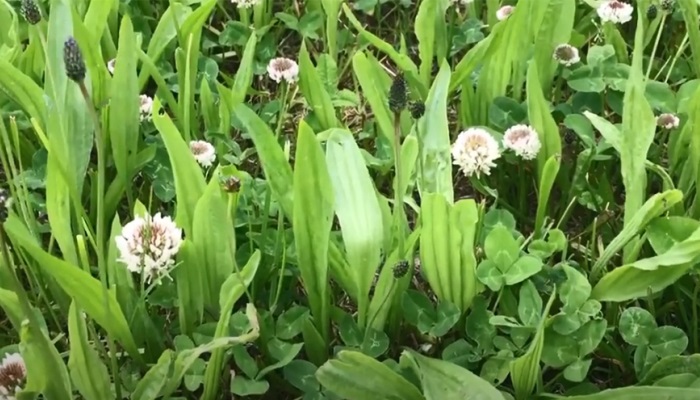
Edward O’Riordan, Sarah Burke, Paul Crossan and Mark McGee of Teagasc, Animal & Grassland Research and Innovation Centre, Grange report on the results of multi-species sward research.
In livestock grazing systems perennial ryegrass has predominated as the sown species of choice. With increased fertiliser N costs and a greater environmental awareness, the inclusion of legumes, in particular white clover, in the grassland reseeding mixture has become the standard. Previous research at Teagasc Grange showed that liveweight gain of steers tended to be higher on perennial ryegrass/white clover swards compared to perennial ryegrass swards. Due to its ability to fix atmospheric N, white clover inclusion resulted in annual savings of chemical fertiliser equivalent to in excess of 100kg N/ha for beef cattle grazing systems.
More recently, there is interest in using multi- species swards, which include grasses (perennial ryegrass, timothy, etc.), legumes (white and red clover, etc.) and herbs (chicory, plantain, etc.) to further exploit complementarities between pasture species.
Results from recent field plot cutting experiments at Teagasc Grange showed that herbage yield is primarily driven by the legume (clover) component of multi-species swards.
Currently at Grange, grass/white clover and multi-species swards are being compared under grazing and conservation for beef cattle production. Preliminary findings for the 2022 grazing season indicate that:
- herbage production and steer daily liveweight gain was similar for both sward types;
- the visual appearance of the multi-species swards is considerably different than what most people are accustomed to seeing, especially when the herbs are in flower – this takes getting used to;
- compared to the grass/white clover swards, multi-species swards had a lower dry matter content, mainly due to the chicory and to a lesser extent the plantain, and took a longer time to be sufficiently wilted for ensiling;
- in both sward types, the sown species’ composition varied substantially throughout the year; and,
- increased vigilance is needed when herding, especially when introducing cattle to these swards for the first time, as incidences of bloat were observed on both sward types
This article was published in the Teagasc Beef Newsletter – February 2023. Download the Full Publication (PDF)