
11 April 2024
Navigating Late-Sown Spring Malting Barley: Management Practices for Wet Weather Conditions
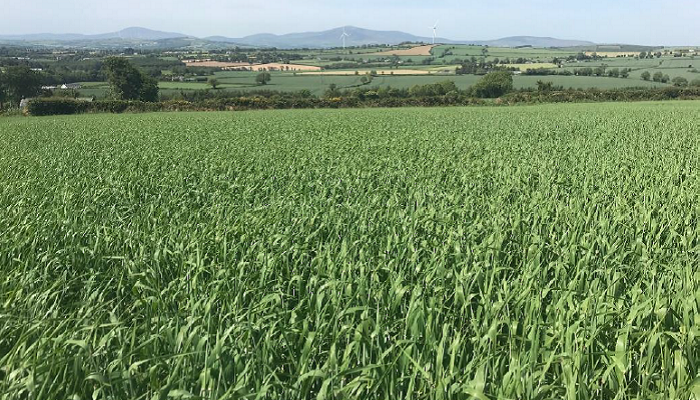
Rebecca Bayley, Teagasc/Boortmalt Joint Programme Advisor, explains effective management practices for late-sown spring malting barley, focusing on strategies to address challenges posed by wet weather and optimize crop yield and quality.
Spring malting barley sowing is a critical milestone in agricultural calendars. In Ireland, the unpredictable nature of weather, particularly wet conditions, can often lead to delays in sowing spring malting barley. Late sowing poses unique challenges for farmers, requiring tailored management practices to optimize yield and quality while mitigating risks associated with adverse weather conditions. In this article, we delve into effective management practices for late-sown spring malting barley, focusing on strategies to navigate wet weather conditions and ensure successful crop production.
Adjusting Seeding Rates
Late-sown barley may benefit from slightly higher seeding rates to compensate for reduced tillering potential and ensure adequate ground cover. Research has shown that there is a direct correlation between grain numbers/m2 at harvest and barley yield. Therefore, adjusting spring barley sowing rates to account for crops’ reduced tillering capacity in order to achieve the highest possible yield is crucial. Adjust seeding rates based soil conditions and variety characteristics to optimize plant populations and maximize yield potential. Aim to sow approximately 350 seeds/m2 to establish 300 plants/m2 into seedbeds that are fine, firm, and level because this will promote uniform germination and establishment. Having the seedbed right will aid in root soil contact for nutrient uptake and growth as well as moisture transfer for germination. This is very important with later planting as the season is shortened.
Timely Nitrogen Application
With the season being shorter, nitrogen management is a critical factor in spring malting barley as it impacts both yield and protein. It is very important to make a decision regarding nitrogen rates on malting barley, these need to be taken on a field-by-field bases. Certain growers will have fields where producing lower protein levels is quite achievable, while other growers may have stronger fields that can generate higher proteins. As later sown crops are slightly later maturing, it may be important to reduce the total nitrogen applied to help keep protein down in the required range. Nitrogen fertiliser needs to be applied early- no later than the three-leaf stage for malt and distilling. If all is applied into the seedbed there is a greater risk of leaching as nitrogen is very soluble, and if it all goes on late the chances of hitting required grain specification diminishes. A good compromise is to consider incorporating 70-80% of compound fertiliser into the seedbed and the remaining amount once tramlines visible in order to achieve the required combination of yield and quality.
Weed, Pest and Disease Management
Late-sown barley is susceptible to weed competition, especially in weather conditions that favour rapid weed growth. Implementing targeted weed management practices, such as early herbicide application (4-5 leaf stage of crop) can help control weed pressure and minimize yield losses. When applying a herbicide, best results are achieved when both the weed and crop are actively growing but ultimately the weather before spraying will influence how well the weed takes up the chemical. Ideally, wait for two to three warm days before spraying. Grain aphids are the main vector of Barley Yellow Dwarf Virus (BYDV) and yield losses of up to 2.0 t/ha have been recorded in April sown spring barley. Keep a close eye on April planted crops as these are at higher risk of BYDV. Where warranted apply an aphicide at the 3 – 4 leaf stage using full product rates for effective control but monitor after spraying to assess for resistant aphids. Wet weather can increase the risk of foliar diseases in spring malting barley, posing a significant threat to crop health and quality. The wet weather diseases Rhynchosporium and Net Blotch are big threats and have the potential to reduce yield. Other diseases to look out for are Mildew, Ramularia and Brown Rust. Growers should closely monitor their fields for signs of disease and implement appropriate control measures as needed in order to protect crop health and quality. For spring malting barley a two spray programme is suggested at late tillering/beginning of stem extension (GS 30) and at flag leaf/ awns emerging (GS 37 – 49).
Continuous Monitoring and Adaptation
Stay vigilant throughout the growing season and adapt management practices based on real-time observations, agronomic advice, and weather forecasts. Regularly assess crop health, nutrient status, and pest pressure to identify potential issues early and implement corrective measures as needed. Maintain open communication with agronomists, advisors, and industry experts to stay informed about the latest developments and best practices for managing late-sown spring malting barley.
Late-sown spring malting barley presents unique challenges for farmers, particularly in the face of wet weather conditions. However, by implementing tailored management practices focused on increasing seeding rates, nitrogen management, weed, pest and disease control, and continuous monitoring and adaptation, farmers can overcome these challenges and ensure successful crop production. Effective management practices, coupled with proactive decision-making and collaboration is essential for maximizing yield and quality potential in late-sown barley crops, contributing to the sustainability and profitability of Irish agriculture.