
27 September 2024
New integrated forest management systems – the Forest-MOOC-For-Change experience
Teagasc Forestry Development Officer, Jonathan Spazzi provides insights into his involvement with a Massive Open Online Course (MOOC), and the potential it has to integrate online training formats with in-forest workshops.
New integrated forest management systems seek to combine the profitable production of quality timber with the enhancement and protection of biodiversity and ecosystem services. To date, lack of knowledge and expertise of management options has been one of the main hurdles to fully enabling such systems. Teagasc collaborated with Irish stakeholders and three European forest agencies in Belgium, France and Germany in a new and ambitious Erasmus+ project to develop ‘ForestMoocForChange’ – the first free Massive Open Online Course (MOOC) on continuous cover forest management (CCF).
This new interactive educational tool went live in October 2023 with the aim of facilitating the transformation of forests towards integrated management systems, promoting production of quality wood, biodiversity and ecosystem services. The eight-week course is in three languages (French, German and English), self-paced and includes 74 tutorial videos, online quizzes and exercises to carry out in the forest. During the project, running between 2023 and 2024, each fortnight a live session allowed participants to ask questions on the topics covered.
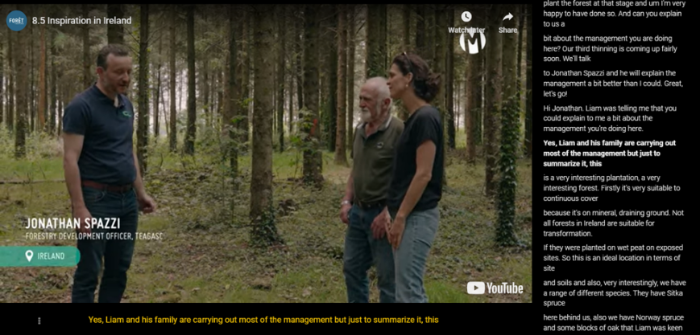
Example of the filming process and video tutorial where we meet private forest owners in Ireland and we share on the progress of their family forest transformation journey form plantation to multipurpose close-to-nature forest.
After viewing the videos and on successful completion of quizzes and exercises, participants received a certificate and approved a ‘charter of commitment’, to use and further develop their knowledge and understanding of CCF. Over 12,000 learners took the training course in 2023/2024, with over 2,500 certificates achieved. By demonstrating how forest transformation practices and management tools can be applied, the course provides innovative ways to enhance forest owners’ and managers’ capacity to adopt integrated management systems in their forests and thereby initiate long-term societal change. The course supports National and EU forest policies, which increasingly promote integrated management to enhance resilience, sustain production and deliver ecosystem services to society.
This project was also recently selected and included in Teagasc annual Research Impact Highlights publication showcasing research dissemination projects showing significant impact.
The ForestMoocForChange online training came to end in June 2024 but the MOOC team has now further expanded with a new Catalane partner and applied for further funding to secure continued access to the original MOOC and to develop a new online training facility to focus on research/best practice for adaptive forest management to best counter the impact of climatic changes in European forests.
Due to demand from stakeholders, an additional training session is scheduled to commence on 14th October 2024 and conclude on 31st December, 2024. You can start the course at any time during that period and work through it at your own pace.
Linking the MOOC with marteloscope workshops
During the course of this project, symbiotic linkages emerged between this new online training facility on integrated management and ongoing Teagasc marteloscope training workshops: learners from ForetMoocForChange tended to progress to marteloscope workshops and marteloscope workshops attendees to the ForestMoccForChange programme. A marteloscope is a specially-prepared forest plot, ranging 0.4-1 hectare in size, which is commonly used across Europe for training purposes. In essence, a marteloscope plot is an outdoor-classroom forest facility for training participants in tree selection and tree marking.
More on marteloscope workshops
These linkages revealed the demand and opportunity to further integrate online training formats with in-forest marteloscope workshops. This year so far, Teagasc has completed 6 marteloscope workshops events at its facility in Oak Park, Co Carlow. A total of almost 100 participants completed a 1-day intensive workshop, comprising mostly forest owners but also foresters, contractors, students and the general public.
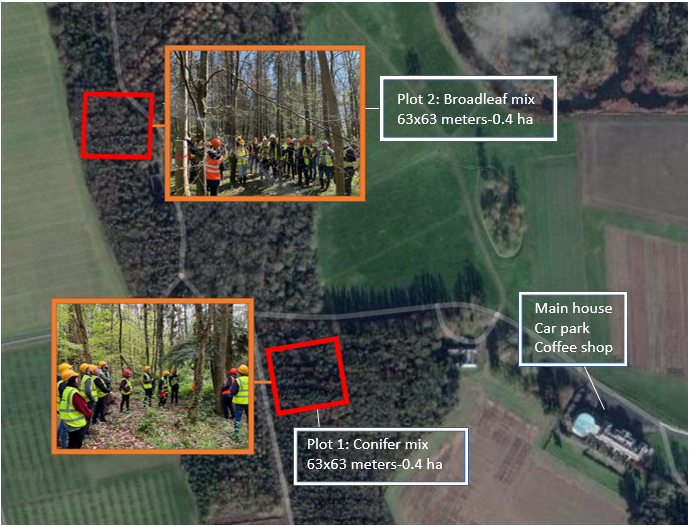
Layout of the marteloscope training facility in Oak Park, Teagasc National Research Centre
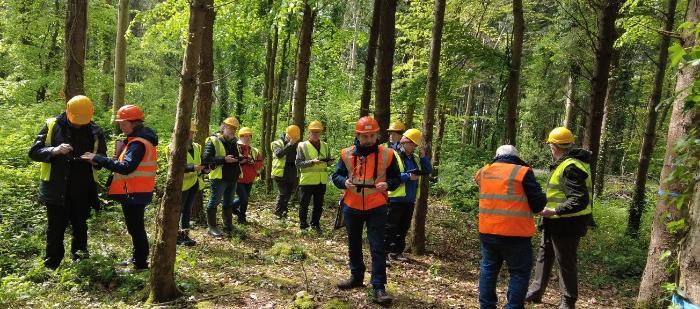
The Teagasc foresters team (in orange) assisting owners (in yellow) with setting up the tablets and initial discussion ahead of marteloscope group exercises.
These workshops adopt a facilitation-style format and encourage participants to learn by doing, leading to group discussions and valuable peer-to-peer learning. The main aims of these workshops are:
- to consider different forest management scenarios
- to practise the key skill of selecting trees by their quality, vigour and biodiversity value
- to demonstrate in practice how management can help integrate production with biodiversity and other important services that forests can provide
Further workshops will be organised in the coming months.
For latest forestry updates click here
Register for our e-newsletter
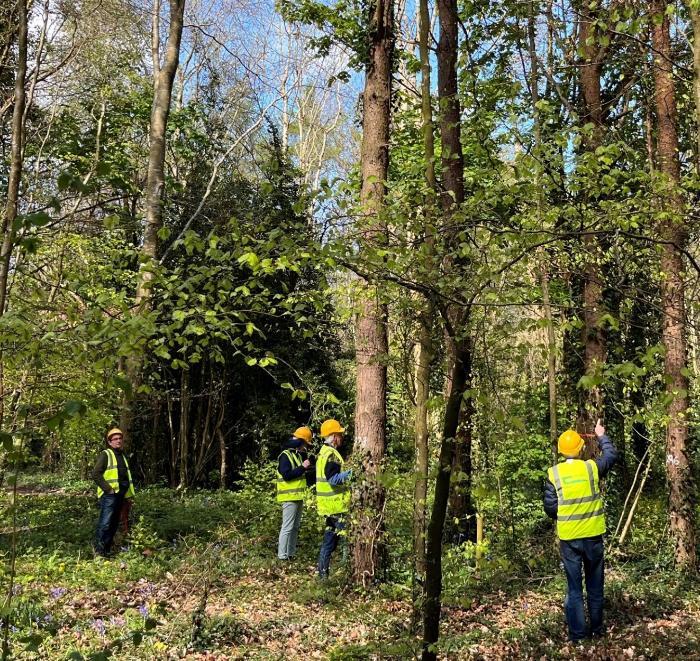
Forest owners in a smaller group carrying out a tree selection exercise to be presented to the rest of the groups. The aim of the exercise is to stimulate discussion on how to achieve balance between timber production and biodiversity enhancement, leading to peer-to-peer learning.