
09 September 2024
New resource on managing grass weeds available
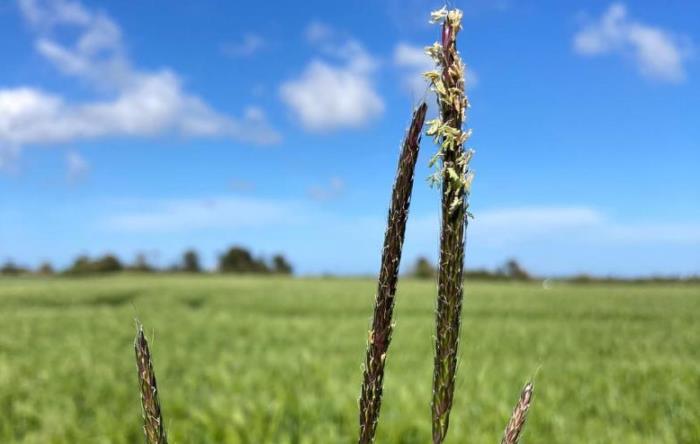
Teagasc, via a new and improved Grass Weeds webpage, has provided tillage farmers with a key resource to aid in the identification and control of grass weeds.
The umbrella term grass weeds relates to numerous plant types, including: blackgrass; bromes; wild oats; Italian ryegrass; annual meadow grass; lesser canary grass and rats tail fescue. Contained within the section is important information on grass weed identification and biology – necessary elements to study and understand when selecting the most appropriate control programme.
Detailed information is also presented on how to best deal with a grass weeds problem, tackling the key issues such as post-harvest management, establishment methods, sowing, in crop management and the effectiveness of control practices. Also included is information on factors that contribute to resistance development, population herbicide resistance status, and resistant management strategies. All information on resistance testing, an important service provided by Oak Park to the industry to combat resistance threat, is also included.
The webpage also serves for a hub for the findings of the Enable Conservation Tillage (ECT) project, a European Innovation Partnership (EIP) project co-funded by the Department of Agriculture, Food, and the Marine under the Rural Development Programme 2014-2020. The project was initiated to enhance the industry’s understanding of grass weeds and to enable the adoption of conservation agriculture practices on Irish tillage farms and to provide growers with the knowledge skills and capacity to achieve effective grass weed control.
Commenting on the improved Grass Weeds section, Head of Crops Knowledge Transfer at Teagasc, Michael Hennessy said: “Our specialist, research and advisory teams are acutely aware of the challenges that grass weeds can potentially pose on farms.
“Taking learnings from the UK and after witnessing the impact grass weeds such as blackgrass had on yield performance there, Irish tillage farmers must take time to study, identify and implement the best control strategies for grass weeds on their farms. The new and improved Grass Weeds webpage will enable this, allowing Irish tillage farmers to continue to produce high yielding, good quality crops in the years ahead.”
Vijaya Bhaskar, Research Officer in the Teagasc, Crops Research Centre who focuses on weed science and agronomy, continued: “Our research will continue to identify strategies for the most effective control of grass weeds, including elements such as testing for resistance, understanding the underlying resistance mechanisms and developing management practices based on cultural/non-chemical and judicious use of effective herbicides to lessen our reliance on herbicide-only approaches.
“In the meantime, there is an onus on farmers to understand the differences between different grass weeds and how these impact upon the control procedures available, all of which is detailed in the Grass Weeds section.”
Commenting on the challenge that grass weeds present, Crops Specialist at Teagasc, Ciaran Collins said: “Grass weeds have the potential to develop into a serious issue on some farms where the correct control strategies are not implemented. The starting point for control is being able to identify such grass weeds, their biology and how best to control them. I’d encourage all tillage farmers to visit the webpage and to make use of the Teagasc resistance testing service to help prevent grass weeds causing future problems on their farms.”
Access the new and improved Grass Weeds section here.
Teagasc also offers a herbicide resistance testing service for tillage farmers. Find out more about this initiative here.