
New study finds climate change increased July evapotranspiration, worsening the impacts of low rainfall
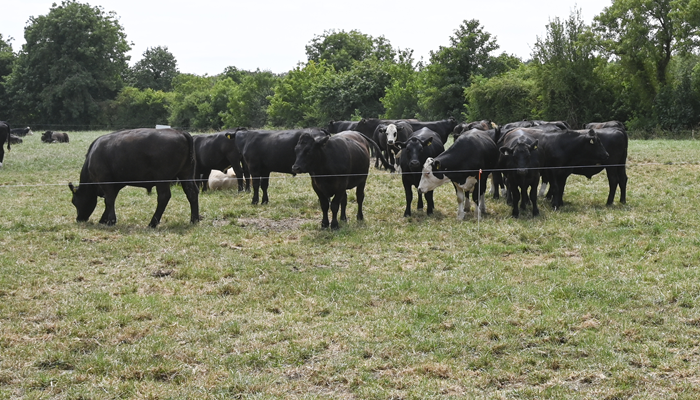
A new rapid attribution study shows that increased temperatures and evaporation levels directly linked to climate change will make for drier farming and land conditions.
A group of researchers from the WASITUS group in Maynooth University, supported by researchers at Met Éireann and Teagasc, have carried out a rapid attribution study on climate change impacts summer weather and how this may change in the future with further warming.
At the end of a summer where the United Nations Environment Program (UNEP) report said the world is on track to exceed 1.5°C of warming (UNEP, 2026) we summarise the extreme weather that affected Ireland and discuss its impact on agriculture and wider society. The UNEP “Limiting Overshoot” report highlights the worrying reality that current policies place the world in a position that exceeding global warming of 1.5°C is ‘unavoidable’. This striking message calls for urgent action in reducing our greenhouse gas emissions, but also acknowledges that we must adapt and prepare for worsening conditions as global temperatures continue to rise.
Focusing on Ireland, the Climate Change Advisory Council have voiced their concerns of the impact of climate change, including increased heat stress combined with prolonged winter rainfall, on agriculture. They cite the potential impacts on crop yields, fodder reserves and supplies, animal welfare, and animal waste, amongst other issues (CCAC, 2026).
This study sets out to further understand how climate change impacts summer weather and how this may change in the future with further warming.
Note: In this study Potential Evapotranspiration (PET) is analysed. PET is the amount of water which could be evaporated given sufficient water availability. In this analysis, PET is used to reflect the atmospheric drying capacity, independent of locally varying land surface conditions.
Key Messages
- Human-caused warming has already increased the likelihood of extreme July Potential Evapotranspiration (PET) by approximately 8-fold and the intensity by 7% in Ireland. As global temperatures increase, we expect the likelihood and intensity of future July PET events to further increase, with a nearly 6% increase in PET on present levels expected at 3°C of warming globally.
- Really dry Julys in terms of low precipitation levels, like those experienced this summer, are becoming rarer. However, when these exceptionally dry Julys do occur, they are expected to bring even less rainfall.
- The evidence indicates that it was the PET which exacerbated the effects of the low rainfall conditions and therefore exacerbated the drought conditions experienced across Ireland in July 2026. In general, drying in July is being driven by rising temperatures, which leads to more evaporation, rather than changes in precipitation.
- Maximum and minimum summer temperatures are following the expected trend and it is becoming not only more likely to have warm summers, as experienced this year, but future summers are also set to become warmer, not just during the day but also at night.
- Ireland’s agriculture sector is highly dependent on expected weather conditions. As global temperatures continue to rise, we expect soils to become increasingly dry during the warm summer months. What, historically, has been seen as unusually dry soil conditions will become increasingly common under further global warming, and it is important that farmers start to plan for such an eventuality rather than seeing the past summer as a one-off.
This rapid climate attribution study was carried out by researchers at Maynooth University supported by researchers at Met Éireann and Teagasc, under the umbrella of the WASITUS project. WASITUS aims to build an operational event attribution capability for Ireland in collaboration with the World Weather Attribution (WWA) team.
Dr Claire Bergin, Researcher for the WASITUS project, ICARUS Climate Research Centre, Maynooth University, said: “While warmer summers may sound appealing to the majority, the added evaporative potential the high temperatures provide is a cause for concern for those who rely on the land for their living. We know Irish winters are getting wetter and, in turn, resulting in later season waterlogged fields. Then, when temperatures rise in the summer, these same fields are set to dry out if there’s any lack of rainfall, thus resulting in reduced grass yields.
The effects of climate change are no longer a future problem. We must reduce our reliance on fossil fuels now, so that our meteorological future resembles the conditions our society has grown accustomed to, and needs, to maintain a steady economy. ”
Paul Moore, Climatologist at Met Éireann, said: “Ireland has experienced its second consecutive warmest summer on record, and six of the ten warmest summers have now occurred since 2001. The stable climate of the recent past, under which our modern ecosystem evolved, no longer exists. We are now in a rapidly changing climate, both in Ireland and globally. In Ireland, this is evident from the increasing frequency of broken records along with an uptick in extreme weather events. As global temperatures continue to rise, due to the burning of fossil fuels, Ireland’s climate will continue to shift away from its recent baseline along with a continuing upward trend in the frequency and intensity of extreme weather events.
Adapting to a fixed change in Ireland’s climate, although extremely difficult, might at least be possible if the climate stabilised again. However, adapting to a continuously changing and warming climate becomes ever more challenging with every increment of warming. This highlights the urgency of transitioning to a carbon neutral economy”.
Dr Pádraig Flattery, Research Meteorologist at Met Éireann said: “The hot, dry weather of summer 2026 created conditions for wildfires to start and spread, drying out vegetation that had grown earlier in the year, providing fuel for fires. With plenty of this fuel available and little rainfall to relieve the dry conditions, the weather left many areas of the landscape vulnerable to fire for prolonged periods.”
Elodie Ruelle, Senior Research Officer at Teagasc said: “The prolonged dry conditions of summer 2026 significantly affected agriculture in the most impacted areas, with reduced grass growth forcing many livestock farmers to increase supplementary feeding and, in some cases, use winter fodder reserves. Dry conditions also affected crop performance across the tillage and horticultural sectors.
Managing variable weather is at the core of farming, but higher evapotranspiration, increased variability and more frequent extremes will place additional pressure on Irish agriculture. Greater flexibility, together with the ability to recognise emerging pressures and adapt management early, will be increasingly important in preparing farms for conditions ranging from too dry to too wet.”