
Nutrition for rye crops
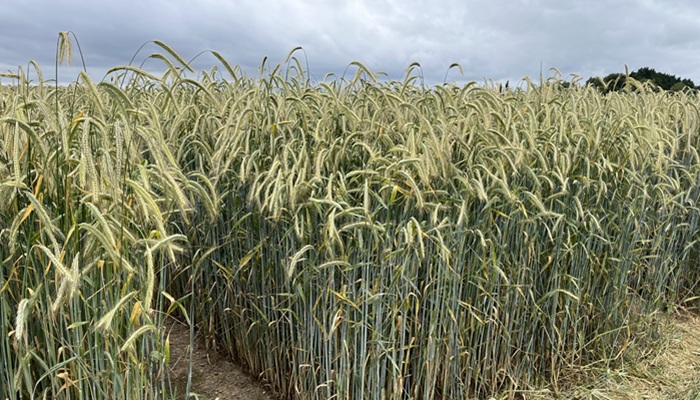
Rye is a relatively new crop in Ireland in the modern era, although it was grown in the past. The area of rye grown has increased steadily over the last number of years albeit from a low base. Through the Rye Growers Guide, Teagasc Research Officer, Richie Hackett looks at the crop nutrition requirements of winter rye crops.
Rye is reputed to tolerate a wide range of soil pH levels both acidic and alkaline but a pH in the range of 6 -7 should be the target. Rye has been shown to have an extensive and deep root system that is good at scavenging nutrients and water making it a better crop option on poorer, more drought prone or less fertile soils than wheat or barley.
Its high yield and particularly its high straw yield means that it has a relatively high demand for nutrients. The basics of nutrition of the rye crop will be similar to other winter cereals in that nutrient requirements should be based on soil and/or foliar tests and expected offtakes with the overall goal of replacing offtakes of the major nutrients so as to maintain soil levels.
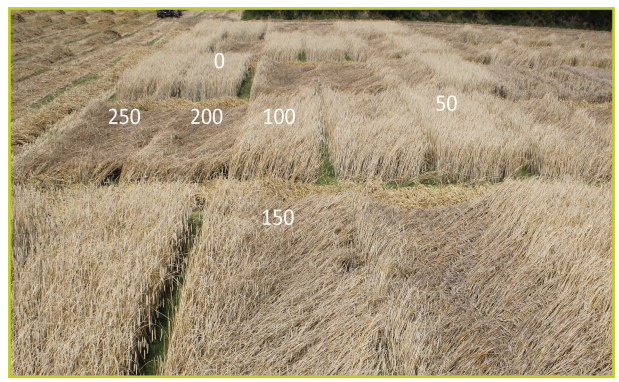
Figure 1: Lodging in relation to fertiliser N inputs (kg N/ha)
Nitrogen
Research at Oak Park has indicated that hybrid rye has a higher nitrogen use efficiency than winter wheat, typically requiring 20-25% less fertiliser N than wheat in Index 1 situations. There is some evidence that suggests that the difference between wheat and rye may be smaller when sown after a break crop. This high nitrogen use efficiency coupled with high yields contributes to rye having a low carbon footprint.
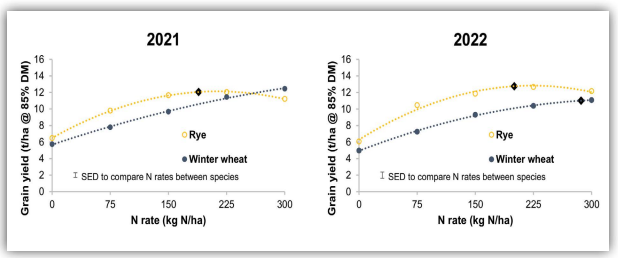
Figure 2: Rye can utilise fertiliser N more efficiently than winter wheat
Rye can move through growth stages earlier than for other crops in the spring and will have a greater demand for N earlier in the season. This might indicate that very early N application (Feb) may be required. However, work at Oak Park indicated very little difference, in terms of grain yield, between applying the first N in late Feb/early March and mid-March on well established crops. Early N application will encourage a more dense canopy which can exacerbate lodging risk. Crops with low tiller numbers or crops that are being grazed by slugs may benefit from earlier N applications.
A two or three split program is suggested with the first, comprising of 25-30% of the total, being applied in early to mid-March and the remainder being applied at around GS 31 in late March or early April.
While a third application generally doesn’t give a yield advantage over a two split program it can avoid the need to apply a large second application and can also reduces the risk of N loss due to leaching as a result of a large second application followed by unfavourable conditions. Where a third application is being applied it can be applied at around flag leaf emergence.
For soil N index 1 situations, where no organic manures have been applied, a total of 175 kg N/ha is suggested. On sites with reduced yield potential this can be reduced by 10-20 kg N/ha. Lower amounts will help reduce any risk of lodging. Rates in excess of 200 kg N/ ha significantly increase the risk of lodging. If organic manures are applied, it is essential that the amount of fertiliser N applied is reduced by an amount equivalent to the available N in the manure to reduce the risk of lodging. The risk of lodging is likely to be very high where rye is grown in a soil N index 4 situation particularly if the crop is sown early (i.e. in September).
Organic manures can be a useful and cost effective source of nutrients. Organic manures with high proportions of available N such as slurries, poultry manures or digestate should be applied in the spring to maximise the use of the nitrogen in the manures.
Phosphorous, potassium and sulphur
There is no Irish research available to date on the P, K and S requirements of rye. Phosphorus offtakes will be similar to other cereals in terms of kg P per ton of grain yield. Given its high straw yield, potassium offtakes are likely to be higher than for winter wheat or barley but there is conflicting evidence from abroad as to the concentration of K in the straw. In the absence of Irish data, similar K inputs to winter oats are suggested.
Sulphur requirements are similar to other cereals and 15-20 kg S/ha is advised. Trace element inputs should be based on soil tests and known deficiencies and appropriate foliar or soil applications made accordingly.
Table 1: Recommended amounts of phosphorous and potassium for a 10 t/ha winter rye crop
| Index | Straw removed1 | Straw not removed2 | ||
| P kg/ha | K kg/ha | P kg/ha | K kg/ha | |
| 1 | 58 | 175 | 57 | 77 |
| 2 | 48 | 160 | 47 | 62 |
| 3 | 38 | 145 | 37 | 47 |
| 4 | 0 | 0 | 0 | 0 |
1Increase or decrease P by 3.8 kg /ha and K by 14.4 kg/ha per tonne increase or decrease in grain yield. 2Increase or decrease P by 3.4 kg /ha and K by 4.7 kg/ha per tonne increase or decrease in grain yield.
For more insights on the management of rye crops, access the Rye Growers Guide here (PDF).