
Olivia Hynes showcases profitable beef and sheep system at farm walk
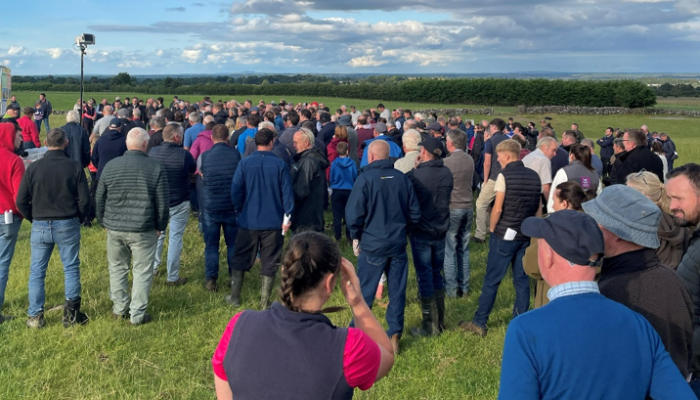
A large crowd attended the National Future Beef farm walk hosted by Future Beef farmer Olivia Hynes at Kilcash, Co. Roscommon. Catherine Egan, Teagasc Beef Specialist, tells us more.
Farmers gained a practical insight into how Olivia manages an intensive mixed beef and sheep enterprise, with a strong focus on breeding, grassland management, animal performance, infrastructure and environmental sustainability.
Olivia operates a spring-calving suckler-to-weanling system and calved 49 cows in 2026. Alongside the beef enterprise, she lambed 230 ewes this spring, retaining 70 ewe lambs as replacements.
Opening the event, local Teagasc advisor Brian Daly highlighted the significant progress made on the farm in recent years. “Olivia has placed a huge emphasis on improving infrastructure, which is evident from the layout of the farm. She has also moved to using 100% artificial insemination (AI), enabling her to breed all of her own replacements and calve them at 24 months of age.”
Future Beef advisor Aisling Molloy outlined the financial performance of the farm and emphasised the importance of livestock output. “The most important production figure on this board is output per livestock unit. It reflects the combined impact of good nutrition, herd health, breeding and low mortality. Output has increased by over 50kg/LU, rising from 304kg in 2023 to 356kg in 2025.”
Aisling explained that improved liveweight gain together with the prices received for Olivia’s high-quality weanlings resulted in an increase of 56% in their sales value in 2025 compared to 2023.
Olivia outlined why she had fully embraced AI. “I always used some AI, but after experiencing issues with a sub-fertile stock bull I switched to 100% AI. Instead of relying on one bull, I now have access to a much wider choice of sires and can select the genetics that best suit breeding top quality weanlings.”
Focus on breeding performance
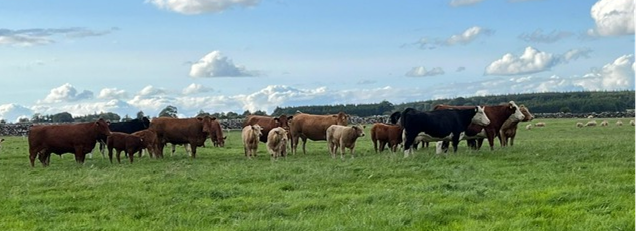
Teagasc advisor Charlie Devaney discussed the herd’s breeding performance, highlighting key breeding performance indicators including 0.98 calves per cow per year, a 357-day calving interval and just 4.1% calf mortality to 28 days of age.
He explained that these figures reflect a highly productive cow herd capable of consistently producing quality calves for the market. Careful sire selection, combined with strong maternal performance, grassland management and herd health, has helped maximise weaning weights.
Roscommon Mart Manager Tony Conry provided an outlook for the weanling trade. “While prices may not reach the exceptional levels seen in 2025, demand remains very strong. Shippers continue to be active, with export markets such as Algeria and Morocco creating excellent opportunities for quality weanlings.” Olivia’s January sale of weanlings averaged approximately 360kg, with prices on average of €5.30/kg.
Developing quality replacements
Replacement heifer management formed another key discussion point. Based on Olivia’s mature cow weight of 680kg, Teagasc advisor Donall Fahy explained that replacement heifers should weigh approximately 410kg, or 60% of mature body weight, at breeding.
Olivia outlined the traits she looks for when selecting replacements. “I want heifers with good weight for age, a quiet temperament and preferably out of good red Limousin or Simmental cows. During their first winter I try to minimise the housing period, feeding quality silage and concentrates before getting them back to grass as early as possible.”
Lowering the farm’s carbon footprint
Teagasc researcher Bright Ketadzo outlined the range of climate actions undertaken on the farm. Since 2022, Olivia has committed to actions projected to reduce farm emissions by 132 t CO₂ over five years while generating an estimated economic benefit of €3,500-€4,000.
Selecting productive ewes
The sheep enterprise also featured strongly throughout the farm walk. Teagasc advisor Michael Conroy emphasised the importance of recording ewe performance during lambing so informed culling decisions can be made after weaning. He encouraged farmers to identify ewes with poor mothering ability, difficult lambing, prolapses, ringworm, poor udders, teeth issues, persistent lameness or those that failed to rear lambs successfully. Michael said, “it is critical that there are enough replacement stock, at least 25% to ensure culling of old and problem sheep.”
Olivia explained her own approach. “Reducing lameness is a major priority and any ewe that doesn’t respond to treatment is culled. I also check udders and teeth after weaning and make sure problem ewes identified during lambing don’t stay in the flock.”
David Mannion, Livestock Procurement Manager in Kepak Athleague, thanked Olivia and the Hynes family for hosting the walk. “Kepak are delighted to be asked to be a part of this evening and it is especially encouraging to see so many young farmers in attendance. The lamb market this year continues to be very positive, however we are facing into a tough two weeks as there is currently a lot of lambs coming available in the French market.”
Health, grassland and infrastructure
Olivia stressed that a strong herd and flock health plan underpins the entire farming system. “Attention to detail during both calving and lambing, particularly around hygiene, is critical. I use plenty of straw for calves and lambs to reduce disease problems. It’s a small cost that pays off in the long term.”
As weaning approaches, calves are gradually introduced to concentrates while cows are removed from the group over several days to minimise stress.
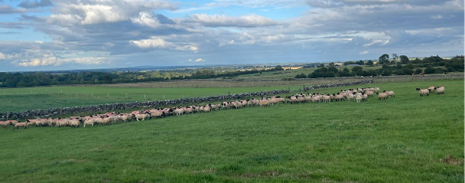
Grassland management was another key focus. Teagasc advisor John Kelly explained that average paddock size is 7.2 acres, allowing approximately four days grazing for 230 ewes and lambs. Significant investment in sheep fencing, one-strand electric fencing using Clipex posts and additional water infrastructure has transformed grassland management. “Every paddock now has its own water supply, allowing Olivia to better manage grazing, protect regrowth and make much more efficient use of grass.”
Improving soil health
Elena Hayes, who leads the GroundTruth Project at Teagasc, demonstrated simple methods of assessing soil health, including earthworm counts and the Visual Evaluation of Soil Structure (VESS).
Teagasc specialist Mark Plunkett highlighted practical indicators (such as rooting, soil colour and earthworm activity) of good soil structure and any evidence of compaction, particularly on headlands, and explained how targeted use of farmyard manure, together with reseeding where appropriate, can help improve soil structure.
Teagasc Signpost programme advisor James Mimnagh discussed opportunities to reduce greenhouse gas emissions while lowering fertiliser costs. “Switching from CAN to protected urea on a farm of this size could save up to €3,000 while also reducing greenhouse gas emissions.”
Future-proofing the farm
Teagasc advisors Conor Dobson and Brian Daly outlined proposals for a 6 Bay slatted tank & 4 bay single sided slatted shed are in for planning exemptions and is eligible for a 60% TAMS grant.
The additional slurry storage and housing capacity will improve nutrient management, provide greater flexibility for importing slurry and help ensure the farm remains compliant with nitrates regulations.
Closing the event, Gabriel Trayers, Teagasc Roscommon/Longford Manager, thanked the large number of farmers who attended and thanked Olivia and the Hynes family for opening their farm and sharing their experiences as part of the Future Beef Programme. Kepak kindly sponsored refreshments on the night.
Farmers also had the opportunity to engage with industry Teagasc researchers and stakeholders from ICBF, NCBC, Kepak and Progressive Genetics on the night.
There was an interactive demonstration for farmers with key tips when selecting ewes for breeding and carrying out a ram NCT.