
06 November 2024
Part-time farmer’s engagement with advisory services and how it can be improved
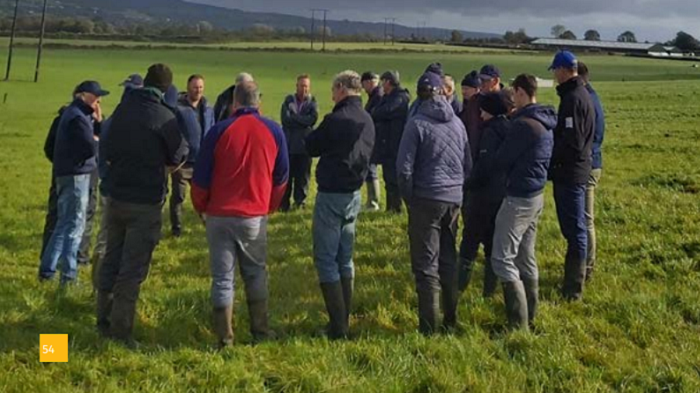
Sharing insights gained from her Masters in Agricultural Innovation Support Research Project, Claire Dolan identifies part-time farmer’s preferred communication methods and some of the barriers limiting their engagement with advisory services.
Why was there a need for this study?
Over half of the 135,000 farmers in the country are farming on a part-time basis of some description – be it the farm holder themselves or their spouse is working off-farm. Since 2010, there are 6,000 fewer full-time farmers in the country. As part-time farmers form the backbone of the farming population in Ireland, it was vital that the knowledge gap surrounding these farmers was filled. The majority of part-time farmers are either sheep or drystock farmers, mainly due to the lower profitability levels of these enterprises.
Study participants
In order to achieve the study objectives, it was vital to include as many part-time farmers as feasible in the study. Through involving almost 200 part-time farmers through surveys and interviews, a cohort of part-time farmers throughout the country were able to get involved and share their experiences as part of the study. Alongside the farmers, 11 advisors – including both private and Teagasc advisors – were also involved to acknowledge the advisor perspective on the study.
Key findings
Targets and goals of a part-time farmer
The main target and goal of a part-time farmer is to increase their farm profit, according to the study results. Secondary to increasing profit, farmers highlighted the need to improve the technical efficiency of their farm as well as prioritising continuing their family tradition of farming.
Effective Communication & Knowledge Transfer (KT) methods for part-time farmers
The study concluded that the primary motive for engagement with advisors is scheme work among these farmers, with technical advice on the back foot.
One-to-one consultations with advisors proved to be the preferred method of knowledge exchange for these farmers. Flexible communication methods such as phone call, text, WhatsApp groups were also highlighted as vital sources of knowledge exchange for part-time farmers.
In terms of using digital KT tools such as Pasturebase, E-Profit Monitor, NMP, the uptake is low among part-time farmers – mainly due to the complicated and time consuming nature of these tools. According to both the farmers and advisors, the tools need to be made more user friendly and simplified, along with being made more relevant to their system, for example – return per hour worked rather than profit per hectare.
Barriers preventing part-time farmers from being better engaged
The main barrier preventing part-time farmers being better engaged is time. These farmers are juggling off-farm work with family life along with the running of a farm enterprise, therefore spare time is limited to engage with their advisory services. Increasing the flexibility of advisory services is therefore key to being able to engage with these farmers.
Definition of a part-time farmer
From the outset of the study there was no set definition for a part-time farmer. From examining all of the previous literature around part-time work, along with the opinions of the study participants, the concluding definition for a part-time farmer is as: ‘Any farmer who works more than 20 hours off the farm per week and forms the primary source of their income.’
Claire Dolan completed her project titled: ‘Part time farmer’s engagement with advisory services and how it can be improved’ under the supervision of Peter Doolan, Teagasc, and Brian Leonard, University College Dublin. This work was highlighted at the Agricultural Knowledge Exchange in a Changing World – Knowledge Transfer Conference 2024.
Find out more about the conference here.