
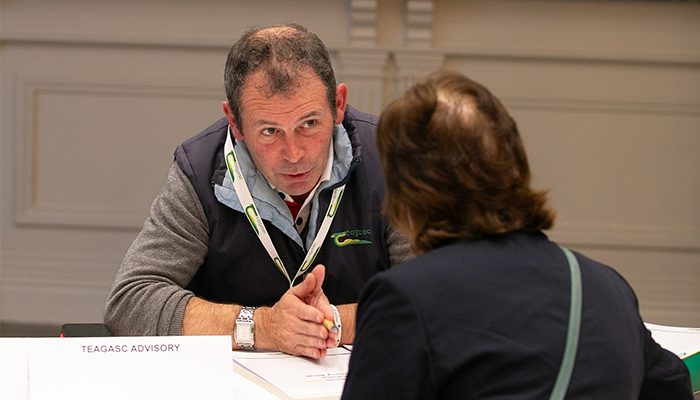
By coordinating your professional advisors and involving the whole family, you can move farm transfer planning forward and drastically reduce uncertainty. Kevin Connolly, Teagasc Financial Management Specialist provides more information and advice.
Why succession planning sometimes gets stuck
Farm succession often stalls due to fragmented professional advice and poor family communication. When accountants, solicitors and advisors work in isolation important facts about the family, the farm business and agri-schemes can be missed. That leads to conflicting guidance, mixed messages, extra cost and months of delay. Families then lose confidence and postpone decisions.
The Multi-Actor-Succession Teams approach (MAST)
Teagasc is piloting a new way to plan for this important milestone in a family’s life story: Multi-Actor Succession Teams. Instead of shuttling between separate offices, your family and your chosen advisors meet together to look at the same facts at the same time and agree a plan you can live with. The Teagasc advisor facilitates, your accountant and solicitor test options for tax, legal and scheme impacts. The family then confirms what their “preferred outcome” looks like and who will do what and when. By coordinating the succession advisory team in this way, families get comprehensive advice with no gaps or contradictions.
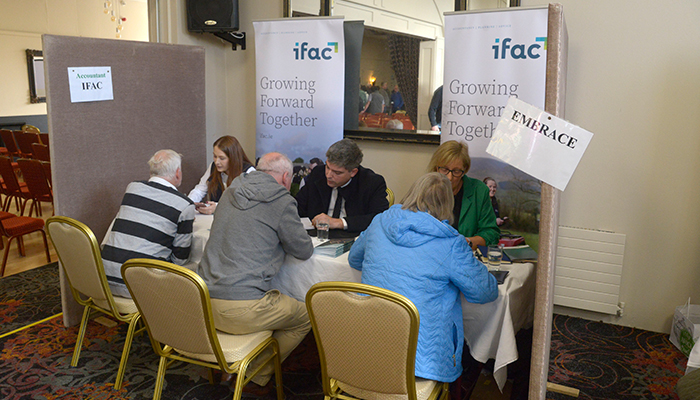
While the ever popular Teagasc Transferring The Family Farm events are one-to-one, the new MAST model involves a team approach
Who should be in the room?
- All relevant family members: the farmer, spouse/partner, farming and non-farming children, and anyone directly affected by decisions.
- Teagasc advisor (facilitator): keeps the discussion focused, ensures all voices are heard, and brings practical insight on schemes (e.g. BISS, TAMS, CIS-YF), structures and compliance.
- Accountant/tax advisor: runs the numbers and explains the relevant taxes – Capital Gains Tax (CGT), Capital Acquisitions Tax (CAT), Stamp Duty and income tax implications so choices are realistic and affordable.
- Solicitor: checks title and wills, advises on legal structures (e.g. transfer deed, partnership/company, residence clauses, enduring power of attorney) and ensures the transfer is drafted correctly.
- Mediator (if needed): helps families resolve initial disagreements so the team meeting can focus on options rather than arguments.
What the process looks like (about eight weeks)
1. Initial contact and suitability check
A short meeting with the farmer and spouse/partner (and successor if ready) confirms whether a team approach is appropriate now. You’ll sketch the farm and family profile, the assets involved (farm and non-farm), and a high-level view of a “good outcome” for all parties. Ground rules are agreed: who should attend and which professionals must be present.
2. Pre-meeting fact-sharing
With your input, the advisor compiles a concise Family Succession Memorandum. It summarises people, land parcels and enterprises, rough asset values, outline options (e.g. lifetime transfer now or later), retirement income ideas, dwelling house treatment and any scheme angles. The memorandum is circulated to the accountant, solicitor and all family members in advance so everyone arrives prepared and aligned.
3. The team meeting
Held in a Teagasc office during business hours (with video link available), the team meeting typically lasts 90-120 minutes. The advisor facilitates a structured discussion so everyone hears the same information at the same time. Each professional applies their expertise to test the options side by side – tax, legal and scheme/business – to identify a best-fit plan for the family. Family members can ask questions directly and raise concerns openly; that shared conversation removes confusion about ‘who said what’.
4. Implementation and follow-up
You leave with a clear roadmap: A Meeting Record sets out the agreed decisions, the sequence of tasks and responsibilities with target dates. One-to-one sessions with the solicitor and accountant handle the fine detail, paperwork and execution. Your advisor checks in to maintain momentum and flag timing around schemes, education/experience requirements for the successor and any partnership or herd-number steps needed.
What families gain
- Time saved: one shared meeting reduces duplicate explanations and cuts the back-and-forth between offices.
- Less tension: everyone hears the same facts and feelings together; professional facilitation helps surface worries and avoid festering disputes.
- Faster decisions: coordinated advice means the family can move from discussion to final decisions more quickly.
- Financial clarity: side-by-side consideration of CGT, CAT, stamp duty and scheme implications reduces the risk of missed reliefs or costly mistakes.
- Successor confidence: practical next steps on herd-number/partnership, skills/education and investment help the next generation build momentum.
Costs and supports
You will still need professional advice – the difference is that MAST coordinates it. Fees apply for your accountant and solicitor, but the shared format often reduces the number of individual meetings overall. The DAFM Succession Planning Advice Grant (SPAG) can contribute up to €1,500 toward eligible professional costs for those who qualify (generally 50% of vouched legal/accounting/ advisory costs for farmers aged 60+). Check current terms and application windows before you start.
How to get ready
- Sound out your professionals now. Tell your Teagasc advisor, accountant and solicitor that you are interested in a MAST-style team meeting.
- Do the easy preparation. List the people, land parcels, enterprises, loans, land leases and non-farm assets. Note what a “good” outcome would look like for each person.
- Name the worries. Tax, retirement income, housing, sibling fairness – write them down so they make the agenda.
- Decide who should be in the room. If things are tense, consider using the services of a trained mediator first so that the team session can focus on agreed options.
Frequently asked questions
How is this different from the Teagasc Transferring the Farm events?
Those events still involve individual consultations with advisors in the various specialist areas but the discussions and advice given will be general in nature. MAST is your single, case-focused session where your team works only on your plan.
What if the family can’t meet in person?
Remote participation is possible. A video link can be set up for family members or professionals who cannot attend on the day.
What if we’re not ready to name a successor?
The team can still map options and the steps needed to reach a decision – e.g. skills, education, experience or farm performance milestones – that give everyone confidence.
How soon will the service be available and what should you do next?
MAST is currently being developed within Teagasc with limited availability planned during 2026. If this timeline suits your family, start preparing now so you can move quickly when the service becomes available. Too many families wait until a succession crisis forces rushed decisions. A coordinated team meeting turns a complex, emotional process into a clear, shared plan. Agree the facts, test the options together and leave with a roadmap that works for everyone. With preparation and the right team in the room, progress is possible – and likely.
This article first appeared in the November/December 2025 edition of Today’s Farm