
Planning to reseed – get it right
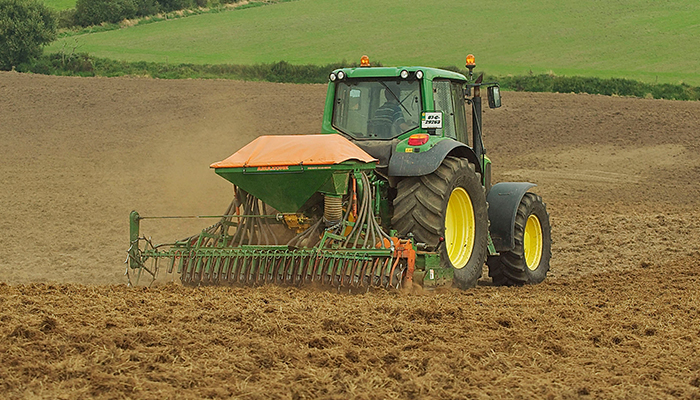
Vincent Ronayne, Drystock Advisor, Teagasc Mayo, shares key tips when establishing new reseeds this year.
According to Teagasc research the objective of reseeding must be to achieve by the spring of the first year after sowing, a full dense ground cover of grass and clover such that the sward is capable of full productivity in the first harvest year, including the spring growing period.
To do this, special emphasis needs to be placed on soil fertility. Ensure there is sufficient nitrogen (N), phosphorus (P) and potassium (K) present to germinate and grow the seed. If lime is required, then lime should be spread. Waiting to do it in year two is like closing the stable door when the horse has bolted, there is only one time to apply lime on a reseed.
Timing of sowing
Correct timing of sowing is also important as moisture is required. Seeding during an extended dry spell can lead to high seed failure rate. At this stage, late July / early August is now the best time to plan for this year, which gives the spray-off adequate time to work on the more difficult weeds like docks. A good level of management pre- and post-sowing to control weeds and to create a dense sward is required. Young grass seed swamped with chickweed or redshank will not develop.
Which reseeding method to choose?
A common question asked by many farmers who decide to reseed is: ‘what is the best method of reseeding to establish a good grass-clover sward? Farmers have a wide range of establishment methods to choose from, whether that is plough-based or minimum cultivation.
Ploughing
There are benefits of ploughing for reseeding as it provides an opportunity to level fields, particularly after land reclamation work. Ploughing can also help to improve land drainage.
A fine firm seedbed is essential in establishing a good grass-clover reseed, and ploughing will help achieve this, together with burying older grasses and weeds.
Ploughing reduces the risk of a reseed failing to establish, due to a high level of soil to seed contact in a fine seedbed and more available moisture. In addition, ploughing aids the release of natural nitrogen from the soil organic matter.
Minimum cultivation
Benefits of minimum cultivation for reseeding are in fields where ploughing is not suitable. This is where minimum cultivation methods have a big role. Minimum cultivation is an ideal method where ground contains a lot of stone or where there is rock near the surface. As there is minimum ground disturbance, a return to grazing is possible within 60 days in ideal conditions. Minimum cultivation is generally cheaper than ploughing and the most fertile soil remains at the surface where nutrients are needed. However, where shallow pans may have built up, ploughing rectifies this issue by breaking the pan and facilitating drainage and root growth.
Fertilisation of a newly reseeded grass/clover sward
When soil testing for reseeded land to be ploughed, ideally sample ploughed soil to get a more accurate result. If unable to do this, sample again within year of reseeding.
White clover is sensitive to low soil pH; nodule formation is limited at pH below 5.8. A number of weed species thrive at low soil pH. So, apply lime as recommended on the soil test report.
Old decaying swards will acidify soil, so lime applied at sowing time helps to counteract this acidity.
Apply lime to the seedbed and incorporate into the top 10cm of soil. The maximum single application advised is 7.5 ton/ha (3 ton/ac).
Phosphorus and potassium
Soil P and K are essential at reseeding time for grass/clover reseeds. Phosphorus ensures rapid root and tiller development during the early stages of establishment (first 3-6 weeks) and longevity of ryegrasses in the sward. Soil test to establish soil P and K levels and ideally target Index 3 for maximum production and persistency.
On low index soils, ideally incorporate P into the seedbed at sowing time as P is very immobile in soil. On peat soils, only apply P fertilisation rates advised for Index 3 soils. An additional P allowance of 15kg P/ha is available at index 1, 2 and 3 for reseeds as per Nitrates Directive. So, soil analysis is key to a successful reseed. Consult your advisor to get the correct recommendations based on your soil results.