
28 April 2023
Planning your silage strategy – tips for making quality bales of silage
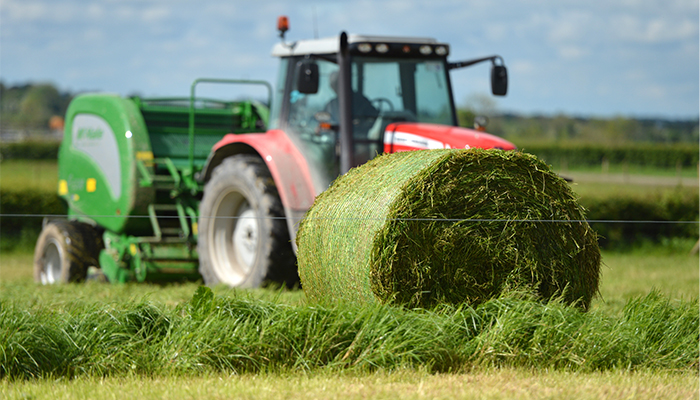
Although grazing conditions were excellent on many farms during the month of February, with many taking the opportunity to get stock out to grass early, unsettled conditions in March and April did delay grazing plans for many.
As a result, grass supplies on farms – as denoted by the average farm cover figure – are running above desired levels of 600-700kg DM/ha – reaching 788kg DM/ha on farms recording through PastureBase Ireland. In the near future, some farms may notice that grass covers are becoming too strong to graze effectively, leaving higher than desired residuals and poor grass utilisation. These fields may be diverted into silage production – either removed as surplus bales or taken as part of the first cut.
Baled silage – either in the form of surplus bales or first or second cuts – play an important role on many farms. However, ensuring these bales are made properly will have a big impact on the quality of the resulting feed.
As part of the planning your silage strategy series – a three-part series looking at silage budgeting and quality – Martina Harrington, Teagasc Beef Specialist, provides some tips on making quality bales of silage below.
The target with baled silage is to achieve a dry matter (DM) of 30-35% and this can be achieved by mowing when the dew has evaporated and wilting.
The aim is for dense, well-shaped bales with over 220kg DM per bale. Baler choppers will help in this regard, as they increase the DM per bale by 10-15%. To produce well-packed bales, a slow tractor speed is also required, while the baler density setting should be adjusted to the high/maximum position.
Once baling has been completed, it is best to transport bales to the final storage area before wrapping. Damage to the wrap during transport is a significant source of DM loss. Rough handling of unwrapped bales during this process should also be avoided, as this can cause them to lose shape. A bale lifter is preferred to a spike for transport.
During the wrapping process, use only a recommended plastic from a reputable supplier. At least four layers of plastic are required for adequate preservation. Under good management conditions, the benefits of six layers are small. However, if bales are to be stored for a prolonged period (9+ months) then six layers are advised.
When stacking bales, remember that bales made from low DM or very leafy grass will lose shape when stacked, which has the potential to increase spoilage losses. Instead, such bales should be stored on ground level.
After the bales have been safely stored, it is important to check for damage and repair plastic on a regular basis. And finally, when feeding out, aim to have the bales consumed within two days. Do not feed mouldy bales or parts of bales to livestock.
Also read: Planning your silage strategy – more to consider than just fertiliser
Also read: Planning your silage strategy – factors affecting silage quality