
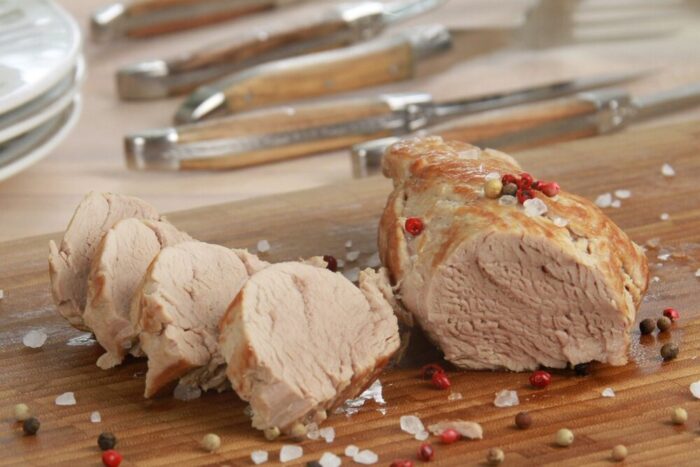
Pork is a lean, nutrient‑dense option that can help consumers who are increasingly focused on protein to increase or maintain their intake through everyday foods. Amy Quinn tells us more.
Protein has become highly visible on supermarket shelves, with “high protein” labelling now appearing across a wide range of foods, including yoghurts, bars, pancakes, breads and ready meals. This reflects growing consumer awareness of the role of protein in supporting health and nutrition. Research consistently shows that higher protein intakes support feelings of fullness, recovery from physical activity, and the maintenance of muscle mass and strength. These benefits help explain the growing focus on protein among consumers, from physically active individuals to households seeking filling, practical meals and older adults aiming to maintain strength.
How much protein do we need?
Protein requirements vary across life stages and are often underestimated or not fully considered, particularly among teenagers (especially girls), physically active adults, women during perimenopause and menopause, and older adults. Table 1 outlines approximate daily protein requirements across key life stages. While many people meet basic protein recommendations, intakes may still be lower than ideal for supporting muscle health in groups with higher needs.
Table 1. Approximate Daily Protein Requirements (g/day)*
| Group | (g/day) |
|---|---|
| Children 4–8 years | 19 |
| Children 9–13 years | 34 |
| Teenagers | 46–52 |
| Adults | 50–65 |
| Active adults | 75–110 |
| Women (perimenopause/menopause) | 70–90 |
| Older adults 65+ | 75–105 |
*Values shown are approximate intakes based on international guidance and typical body sizes; individual needs vary.
Irish consumption trends
Long-term consumption data show that meat choices in Ireland have shifted over time. CSO data shows that pork’s share of total meat consumption fell from approximately 39% in 2015 to around 32% in 2023, while poultry’s share increased steadily over the same period to approximately 47%. This shift may reflect consumer perceptions of poultry as a lean or healthy protein option. From a nutritional perspective, however, lean pork is directly comparable to chicken in both protein content and leanness when you choose lean cuts.
Nutritional value
When cooked, lean pork provides similar protein levels to chicken, typically around 30–32 g per 100 g, depending on the cut and how it is cooked. This highlights how meaningfully pork can contribute to daily protein needs when included in everyday meals.
Alongside providing a similar protein content to chicken, pork also contributes important micronutrients. Compared with chicken, pork provides higher levels of thiamine (vitamin B1), along with meaningful amounts of vitamin B12, iron and zinc, supporting energy metabolism, immune function and muscle health. When lean cuts of pork are used the fat content between them is comparable.
Protein value for money
It is clear that consumers are more than ever thinking about protein and why it matters but they are also becoming more aware of food costs. Irish food prices were about 7% higher in 2023 than in 2022 and have continued to rise, with prices around 4.5–5% higher in 2025 compared with 2024. Protein value for money is an area where pork really has an edge.
Table 2 compares similar pork and poultry products available in Irish supermarkets, showing the amount of protein provided per euro using values taken from product nutrition.
Table 2. Protein per Euro
| Category | Product (as sold) | Price €/kg | Protein (g/100 g, label) | Protein per € (g) |
|---|---|---|---|---|
| Fresh cuts (raw) | Chicken breast fillets | 13.50 | 24 | 1.8 |
| Fresh cuts (raw) | Pork loin chops | 9.00 | 23 | 2.6 |
| Mince (raw) | Turkey breast mince | 10.50 | 24 | 2.3 |
| Mince (raw) | Pork mince | 7.00 | 19 | 2.7 |
| Mince (raw) | Low-fat pork mince | 8.00 | 22 | 2.8 |
| Sliced (cooked) | Chicken slices | 19.00 | 24 | 1.3 |
| Sliced (cooked) | Ham slices | 13.00 | 21 | 1.6 |
While other meats are high quality sources of protein, larger pork cuts are particularly suited to delivering high protein, versatility and value across multiple meals. Shoulder and leg cuts provide substantial amounts of protein across several servings and lend themselves well to batch cooking and family meals.
Protein now plays a central role in how many consumers think about food, with familiar whole foods, including meat, continuing to contribute strongly to protein intakes. Pork provides high quality protein, valuable micronutrients and good value, while fitting easily into everyday meals. The question is how does pork keep its place at the table and grab a bigger slice of the protein conversation.