
Positive recovery in grass growth evident
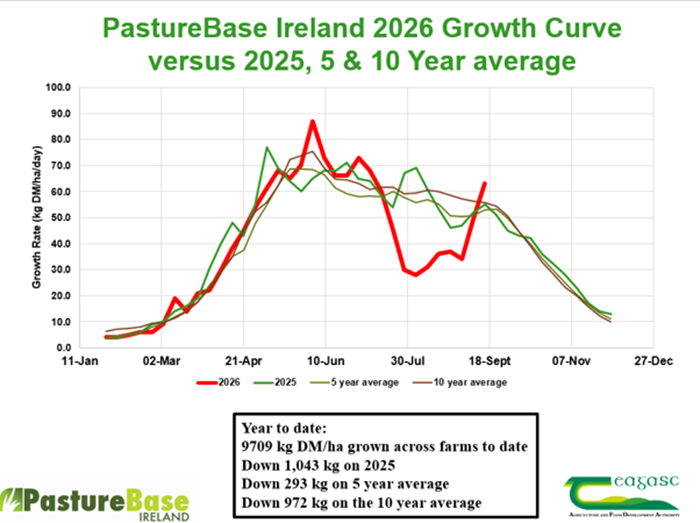
After the prolonged period of dry weather and the eventual return of rain, data from the national grassland database, PastureBase Ireland has pointed to a significant recovery in grass growth rates.
As recorded by farmers, average grass growth rates of 60+ kg DM/ha/day were measured this week and predictions from the Teagasc MoSt Grass Growth Model suggest this these growth rates are likely to hold into the coming weeks.
Commenting on the extent of this grass growth recovery, Head of the Teagasc Grassland Science Department, Professor Michael O’Donovan said: “The return of moisture to warm soils where nitrogen mineralisation has occurred has resulted in a significant increase in grass growth rates.
“Since August 11, grass growth rates have doubled, and evidence of a high grass growth recovery is now visible in all parts of the country.”
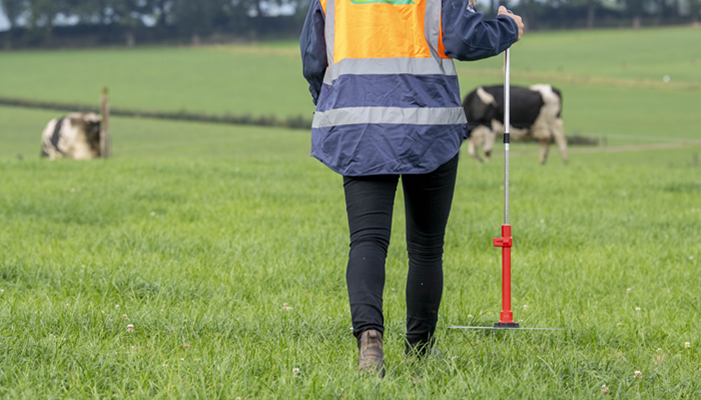
Aligning with this, the Teagasc Grass10 Campaign is encouraging farmers to walk their farms and assess the situation on the ground, while also preparing to reach autumn grassland management targets.
Results of fodder budgets completed through PastureBase Ireland have been widely publicised, indicating that, of the farms surveyed, 4.3 months of winter fodder is available. Given the significant increase in grass growth rates, it is noted that building autumn covers and reducing the proportion of supplementary feeding in diets are priorities.
“Farmers are encouraged to complete an autumn grass budget through PastureBase Ireland to make informed decisions around supplementation and ensure key farm cover targets are met to extend the grazing season,” Michael O’Donovan explained.
Key targets to consider include maintaining a 35-day rotation length, targeting pre-grazing covers of 1,800-2,000kg DM/ha by late September / early October and reaching an average farm cover of 1,000+ kg DM/ha by the start of October.
Fertiliser advice
Farmers are reminded that the final day to apply chemical fertiliser is September 14.
Dr Caitlin Looney, PastureBase Ireland Coordinator, stated “We’d strongly encourage farmers to spread only what is required, with 25kg N/ha (20 units N/ac) sufficient to sustain grass growth for 40 days alongside mineralised nitrogen.
“Where possible, farmers should utilise the organic nutrients available, with the closing date for slurry being October 1. Applying 2,500 gallons of slurry/ac will provide about 15 kg N/ha (12 units/ac) and, where possible, this should be spread as soon as possible to ensure maximum nutrient use.” Dr Looney added.
For more information on fertiliser advice, listen to the Dairy Edge podcast below, where Dr. David Wall, Enterprise Leader at Teagasc Johnstown Castle, discusses the timing of fertiliser applications over the coming weeks to maximise the return from nutrients applied while minimising the risk to water quality:
For the latest tips and advice, find out more about the Teagasc Grass 10 Campaign here.
Visit the Teagasc Grass10 team’a Instagram page for regular updates.