
22 August 2024
Post-harvest stubble management
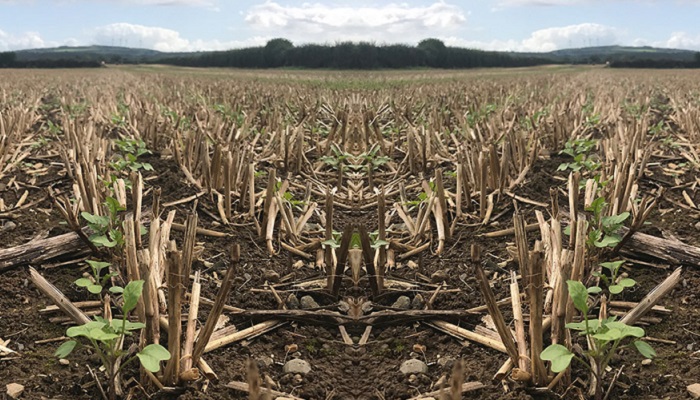
Post-harvest cultivations are a useful tool to try to control problem weeds, Crops Specialist at Teagasc, Shay Phelan tells us more.
When deciding which fields to cultivate and to what end, the following issues need to be considered:
- Dormancy status of the weed – some weeds need light to break dormancy, e.g., oilseed rape volunteers and wild oats; others need to be buried, e.g., sterile brome and blackgrass. Tailor your strategy within the stubble cultivation rules.
- Remember that the rules around stubble cultivation state that between 20% and 25% of the cereal area on the holding must be left untouched for ground-nesting birds. Pick the fields where the appropriate weeds will benefit from being left on the soil surface to be eaten by birds, small mammals, etc.
- Don’t forget that you must stubble cultivate within 10 days of the straw being removed. However, where late harvested crops are grown, e.g., maize, beet, potatoes, or beans or cereals harvested after September 15, or if you are going to sow a winter crop before October 31, there is no need.
- Shallow cultivation is only applicable to counties Carlow, Cork, Dublin, Kildare, Kilkenny, Laois, Louth, Meath, Offaly, Tipperary, Waterford, Westmeath, Wexford, and Wicklow.
- Where cover crops are being established as part of the various schemes, these can be used to suppress the different weed species, but they are also a good way of trapping residual nitrogen (N) in the soil and preventing it from reaching watercourses.
- Aim to sow cover crops as soon as the straw is removed, where possible; a week’s growth in August is worth two weeks in September.
Soil sampling
The post-harvest period is a good time to take soil samples, as land has not received chemical or organic fertilisation in over three months. Under current regulations, you cannot apply phosphorus (P) to an arable soil without a valid soil sample (a sample that is <4 years old and represents no more than 5ha of land). This also applies to grassland soils where the grassland stocking rate exceeds 130kg organic N/ha.
It is important that you determine your grassland stocking rate and check that your soil samples are valid for this year. If not, sample as soon as you can. A soil sample taken and tested by September 14 is valid for 2024. Any soil reports expiring this year should be replaced by a sample taken after September 15 so that 2025 will be the first of the valid four years. Contact your advisor to assist you in calculating your grassland stocking rate.
This article first appeared in the August Teagasc Tillage Advisory Newsletter, which was edited by Shay Phelan, Crops and Potato Specialist at Teagasc. The full newsletter is available to view here.