
Potassium: Should all of it be applied in autumn?
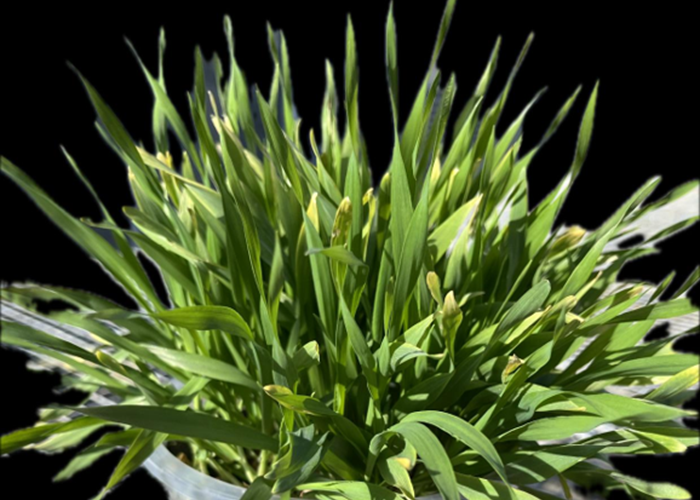
Potassium may receive less attention than nitrogen, but cereals have a substantial requirement for it, Teagasc Soil and Plant Nutrition Specialist, Dr. Veronica Nyhan explains why it needs a little more thought in autumn.
Potassium (K) plays an important role in water regulation, crop strength and stress tolerance, while good K nutrition can also reduce lodging and brackling.
Traditionally, large K dressings are often applied to tillage soils in autumn. But should all of the K requirement necessarily go out then?
The starting point is the soil test. The target for mineral tillage soils is K Index 3, which indicates an adequate soil supply for crop growth.
Applications are then based on soil K status, expected yield and crop offtake. Straw management is important to. A 10 t/ha winter wheat crop removes around 98 kg K/ha where straw is removed, compared with 47 kg K/ha where straw is chopped and incorporated.
The role of soil type
Soil type also plays a key role, as soils differ considerably in how they hold and release K. Heavier soils generally have a greater capacity to retain K. Light, sandy soils have less capacity to hold potassium, increasing the risk of movement below the main rooting zone where applications are greater than the crop’s immediate requirement. Large reserve applications are therefore generally discouraged on these soils.
Some soils can also fix K within clay minerals, making it less readily available to crops. Previous soil tests can provide useful clues here. If K Index remains stubbornly low over successive soil tests despite adequate K applications, K fixation may be part of the explanation. In other words, if plenty of K has gone in but the soil test refuses to budge, it is worth asking where it has gone.
Timing therefore matters. On sandy or organic soils, current advice is not to build large soil K reserves, but to apply sufficient K annually to meet crop requirements.
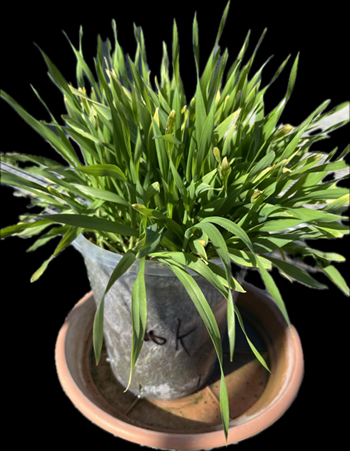
Figure 1: Spring barley showing potassium deficiency
For winter cereals, there may also be good reason to question putting the entire requirement out months before peak crop demand. On soils with a low K Index and a high crop requirement, splitting the application may be worthwhile, with approximately 30% applied in autumn and 70% in spring, ahead of stem extension.
So perhaps K deserves a little more thought than simply emptying the spreader in autumn. How much matters, but so do where and when.
For more information and guidance on crop nutrition, visit here.