
17 November 2024
Practical nutrient management solutions on beef farms
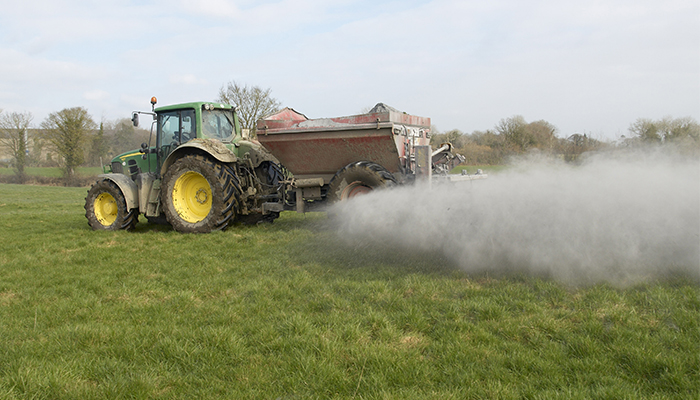
Research specific to Irish soils and conditions is offering valuable tools and strategies to help farmers tackle the issues of reducing greenhouse gas and ammonia emissions, minimising nutrient losses to water while, at the same time, ensuring the sustainability of their farm businesses.
In this article, Beef Specialist at Teagasc, Catherine Egan tells us more on Dr. Patrick Forrestal’s presentation, which will explore these technologies in detail.
Dr. Patrick Forrestal, Senior Research Officer at Teagasc Johnstown Castle, will present a range of research based practical nutrient management solutions at this year’s Teagasc National Beef Conference. His presentation will focus on strategies that Irish beef farmers can implement to enhance farm efficiency, reduce costs and address the environmental pressures facing the sector. The conference will take place at the Landmark Hotel in Carrick-on-Shannon, Co. Leitrim, on Tuesday, 19th November at 5pm.
On the night, Dr. Forrestal will discuss the importance of liming mineral soils to achieve a pH in the range 6.2 of 6.7, which will release plant available phosphorus (P) from the soil P pool while also favouring the success of clover in new and existing swards. The P release from liming has potential to give a one-unit increase in the soil test P index, thus saving money on P fertiliser.
The use of low/no nitrate fertilisers including urea protected with the urease inhibitors NBPT, NBPT+NPPT or 2-NPT in place of nitrate-based fertilisers (e.g. calcium ammonium nitrate, CAN) can maintain grassland production, while reducing greenhouse gas (GHG) emissions on beef farms.
Furthermore, including sulphur with nitrogen (N) fertilisation increases the grass yield response to applied N, gives potential to reduce N fertiliser application rates, while also reducing nitrate leaching loss to water, particularly in free-draining soils.
Recent work at Teagasc, Johnstown Castle is showing that the inclusion of ribwort plantain in grass clover swards reduces nitrate leaching losses across a range of soils while maintaining sward production.
Other speakers on the night include:
- John Donlon, Research Officer, Teagasc Grange will out outline ways to control pneumonia in suckler weanlings.
- Peter Doyle, Research Officer, Teagasc Grange will outline the impact of red and white clover on animal performance in suckler calf-to-beef production systems.
- Eoin Ryan, Department of Agriculture, Food and the Marine, will discuss the risks for Irish cattle farmers in relation bluetongue
- Martina Harrington, Programme Manager, Future Beef Programme, Teagasc will outline Innovations on the participants of Future Beef Suckler Farms
- Shane Pearson, Design Your Life Coaching, will outline ways for farmers to stay resilient on farms through stressful times of the year.
Additionally, there will be an opportunity for farmers to meet with members of the Teagasc Organic team, Agricultural Sustainability Support and Advisory Programme (ASSAP) and Signpost Programme to discuss any queries you may have. The Teagasc Future Beef and DairyBeef 500 teams will also be in attendance at the conference with updates from both programmes. There will be a focus on farmer health and wellbeing with a number of health professionals with information stands on the night also.
As November 19 is ‘International Men’s Day’ there will also be a focus on the night on farmer health and wellbeing. There will be a number of health professionals with information stands on the night also.
The Teagasc National Beef Conference is a free event and all are welcome to attend.
Further details on the Teagasc National Beef Conference are available here.
Also read: Setting the scene for the Teagasc National Beef Conference
Also read: Staying resilient on the farm through stressful times of the year
Also read: Bluetongue: What are the risks for Irish cattle farmers?