
Practical steps for farmers during this dry spell
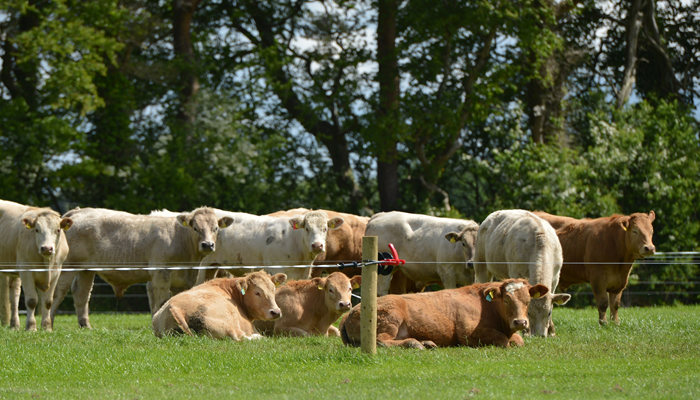
The past few weeks have seen exceptionally high temperatures and low rainfall across all parts of the country. Padraig Glynn, Teagasc Advisor, discusses the key management priorities for drystock farmers during dry conditions.
July often brings a natural slowdown in grass growth after the May/June surge, and a dry spell can quickly tighten covers on drystock farms. The priorities are to protect grass quality, match demand to lower growth, and secure enough winter fodder.
1. Walk the farm, measure, and act early
Measure grass covers at least weekly. Aim to hold 12–16 days ahead, and if average farm cover is sliding, move fast to reduce demand. Housing cull cows or forward stores, or weaning and housing heavier cows, will reduce grass demand.
Tighten groups. Run larger combined groups to improve graze-outs and reduce the number of paddocks grazed at once. This protects regrowth and slows the rotation.
2. Keep grass quality while stretching the rotation
Target pre-grazing covers of ~1,000–1,400 kg DM/ha where possible. Avoid forcing young stock to graze stemmy swards, as it depresses intake and gain. Dry autumn-calving cows or dry ewes are ideal to tidy up rough paddocks; otherwise, use strip wires and, where necessary, topping to reset quality.
Manage surpluses and deficits. Where a few paddocks raced ahead before the dry spell, remove them as bales to reset quality. If covers are too light, feed a bale at grass to hold residuals and protect the next rotation.
3. Fertiliser, slurry, and soil fertility
Where ground is very dry or bare and severely moisture-stressed, moisture, not nutrients, is limiting grass growth.
Where SMD is above 60 mm and swards are dry or bare, delay nitrogen until meaningful rain is forecast. Do not spread fertiliser in the hope that rain will arrive.
Where there is still moisture in the soil and grass is actively growing, apply 20 units N/ac as soon as possible to take advantage of the moisture that is there.
Avoid applying slurry where no meaningful rain is forecast. Dry conditions increase the risk of nitrogen loss through volatilisation, and slurry can crust on the soil surface. Wait for suitable conditions and rainfall to improve nutrient recovery and reduce losses.
Where second-cut silage is planned, typical dressings are 1,700–2,500 gal/acre of cattle slurry, topped with protected urea + S to drive regrowth. Where no slurry is available, products like 18-6-12 or 29-0-14 can replenish P and K alongside N, especially after silage.
July/August is a good window to replenish K on fields that test low, boosting silage yields; 29-0-15 is one option. After second cut, consider lime where pH is <6.5 and apply lime according to lime requirements from soil sample results. This will promote clover and nutrient use efficiency.
4. Reduce grass demand without losing performance
Prioritise stock. Keep weanlings and finishing cattle on the best grass or aftergrass. Use forward- or creep-grazing so calves get the pick while cows tidy behind.
Strategic supplementation. Feeding 2–3 kg/day of meal to forward stores or finishing cattle at grass can bridge gaps. Build steers to 3–5 kg/day at grass to maintain targets when growth lags.
Housing targeted groups. In tight spells, housing cull cows, cattle near finish, or heavy cows post-weaning reduces demand quickly and allows you to feed efficiently indoors.
Monitor performance by weighing cattle to target supplementation and decide early who to finish, sell, or move. Heavier bullocks can be fed at grass for 6 weeks, reviewing in early September and finishing in autumn if targets are back on track.
5. Safeguard winter fodder now
Do a fodder budget. First cuts following a wet spring can be below average. Assess needs and plan second/third cuts early. Where second-cut regrowth is slow, avoid grazing silage ground by feeding one bale/day to cows and calves on the grazing block.
Build aftergrass. Remove strong paddocks for bales so quality aftergrass is available for young stock. Note that bucket-reared calves on very lush aftergrass can scour, so manage transitions carefully.
6. Mind the sward for the back end
Slow the rotation now to build August covers, “grass grows grass.” Correct quality in July, then build covers in August for an easier autumn.
Reseed and repair. Where last year’s wet weather damaged swards and is still hurting growth, target reseeding and drainage while soils are dry enough to travel.