
27 September 2022
Pre breeding stock management at the fore
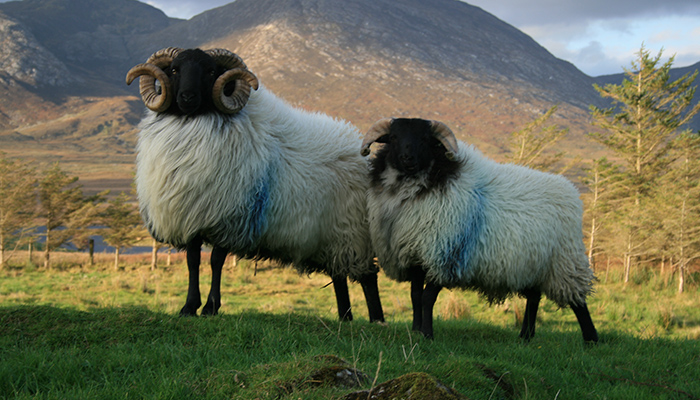
As summer turns into autumn in Malin Head, Co. Donegal, sheep farmer Tommy Mullin is as busy as ever. The autumn check list of jobs is well underway with stock management to the fore ahead of a busy breeding season.
The ewe flock are in preparation for ram turnout from the 1st of October, with important tasks such as fluke dosing, dipping and culling already carried out. All ewes in the flock were dipped in August. Tommy is confident that the plunge dipper remains the best treatment for ewes at this time of year to ensure a good cleanout of the fleece for flies, ticks and lice. Fluke dosing for the year has also commenced with the breeding flock all receiving the Triclabendazole based Endofluke drench, aiming to target those early fluke burdens.
Tommy shears the flock twice a year, with their second shearing carried out in the last few weeks. Tommy sees a lot of benefits to the autumn shearing such as more room in pens at housing and less likelihood of ewes going on their back after lambing. Another big benefit at this time of year is identifying thin ewes pre breeding, and earmarking these for culling.
Inspecting the breeding flock
When the lambs were weaned an inspection of the breeding flock was carried out and any ewes earmarked for culling earlier this spring were drafted out for sale. A second draft was carried out at shearing with a further 5% of the flock culled, mainly due to thin ewes or bad udders, leaving the remaining ewe flock fit and ready for breeding with no passengers on farm for the winter. Tommy is happy with ewe condition pre breeding also with ewes currently between 3.5-4.0 BCS. Ewe lambs are also being prioritised on farm ahead of their first run with the ram later in October, with the very important job of vaccinating for Enzootic abortion and Toxoplasmosis to be carried out this week.
The team of rams will soon be back in action on farm with the breeding season only around the corner. Tommy has freshened up his breeding stock with the purchase of several Texel and Suffolk ram lambs to ensure he has sufficient ram power on the ground. All rams were purchased on their star ratings for terminal and replacement traits at the Sheep Ireland sale in Tullamore. Tommy operates a strict quarantine protocol for incoming breeding stock on farm with rams isolated, dosed for worms and given Heptavac-P. Rams are allowed a few weeks on farm to acclimatise to their new surroundings and are lightly supplemented with concentrate to ensure they are fit and ready for their October turnout.
Lambs on the farm continue to be drafted weekly with prices slightly back in recent weeks. Tommy introduced 0.5kg of concentrate to his heavier lambs at grass in August to help them get over the line. Lambs are fed at trays once a day with no creep feeders in fields. With the price of coarse ration approx. €440/ton, Tommy has no plans to increase the quantity of meal significantly in the next few weeks as he also has plenty grass on farm. Tommy prefers feeding at trays over creep feeders as he feels in the creep feeder the heaviest lambs are eating the majority of meal while the tray allows all lambs to eat. With 100 lambs away for slaughter in the last two weeks this method appears to be working well to keep lambs pushing on. A close eye has also been kept on the worm burdens and the dosing regime all summer. Lambs were dirtier than Tommy would have liked in August and while the FEC sample showed a low burden of 100 epg for strongyle, coccidiosis was detected in the sample. Action was taken immediately to treat lambs and performance has continued as normal on farm. Tommy is awaiting his latest dung sample results this week and expects to see a rise in worm burden with the wet and warm weather experienced in the Northwest in recent weeks.
Outside of the sheep flock
The calves were weighed and FEC samples lifted for the BEEP scheme. The breeding stock were scanned and disappointingly a younger cow not in calf will soon be for sale. Tommy also has several heifers coming on this spring to maintain his cow numbers. Fluke dosing for the cattle will not commence until the herd is housed for 6 weeks.
Maintenance of the grassland remains a priority for Tommy with an impressive 200 ton of lime spread to date in 2022, with another 50 ton still to spread. 10 acres of grass was ploughed and reseeded on farm and is ready for a clover safe post emergence spray.
As the evenings draw shorter Tommy has found time for a few days away from the farm, with plans to attend the Ploughing Championships and he also enjoyed an interesting visit with a Nuffield Scholar from Australia in August completing their research around Ireland.
Despite the shorter evenings there are plenty of jobs to prioritise on sheep farms at this time of year with BCS of breeding stock and ram MOT of particular importance. The identification of problem ewes and culls should be completed to ensure no passengers are carried over ahead of a costly winter period. The purchasing of rams in good time is essential to allow sufficient quarantine time before turnout with ewes and the ordering of vaccinations in sufficient time is also of big importance to ensure ewe lambs and purchased breeding stock are sufficiently covered for abortion pre-breeding.
This article was first published in the Irish independant
The Teagasc Sheep Specialists, Researchers and Teagasc Advisors issue an article on a topic of interest to sheep farmers on Tuesdays here on Teagasc Daily. Find more on Teagasc Sheep here Teagasc provides a Local Advisory and Education service to farmers. Find your local Teagasc office here