
Precision spraying and IPM in Ireland: Reducing pesticides with sensor based technology
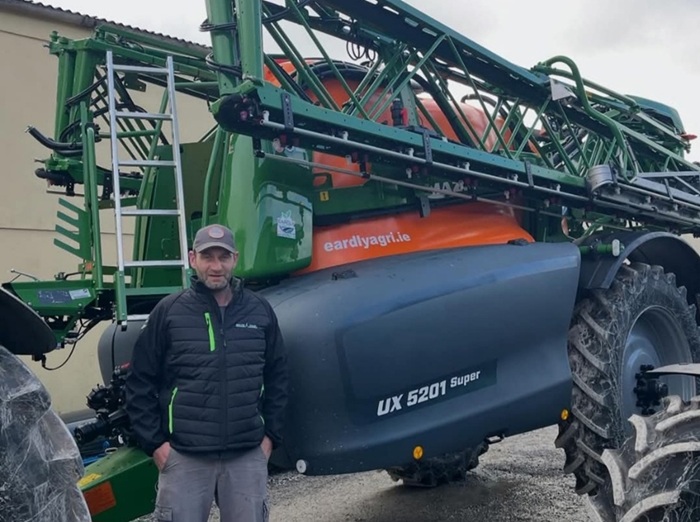
Precision sprayers - machines that detect weeds or crop needs and apply pesticides only where required - are gaining traction in Ireland as practical tools to cut chemical use, improve targeting and help meet national and EU pesticide reduction goals, John Mahon, Tillage Signpost Programme Advisor, tells us more.
When used correctly, they reduce off‑target exposure and chemical volumes while maintaining weed control effectiveness.
Ireland implements the EU Sustainable Use of Pesticides Directive (SUD) through national policy and advisory work by the Department of Agriculture, Food and the Marine (DAFM) and Teagasc. Pressure to protect water quality, comply with Integrated Pest Management (IPM) requirements and reduce environmental impacts makes technologies that enable lower application volumes especially relevant for Irish tillage, horticulture and amenity sectors.
How precision sprayers work
There are several technologies grouped under precision sprayers:
- Section and nozzle control – GPS‑linked section control and pulse‑width‑modulated (PWM) nozzles cut overlap and allow variable application rates along the boom.
- Variable‑rate application (VRA) – uses prescription maps (from yield maps, weed maps or drone/satellite imagery) to alter spray dose across a field.
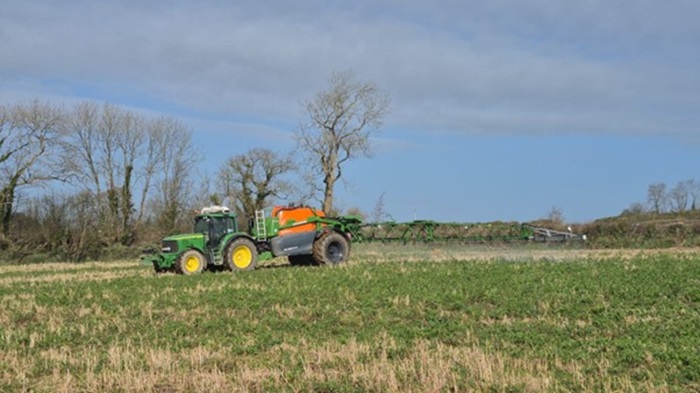
- Sensor or camera‑based spot spraying – onboard cameras or optical sensors detect green plant material against the background and actuate individual spray valves to hit only weeds or patches that need treatment.
- Green‑on‑brown spraying – sensor or prescription map optimised to detect green weeds against a brown (soil or stubble) background.
- Green‑on‑green spraying – similar except within the growing (green) crop, which can be more difficult to detect.
Benefits
- Reductions in pesticide volumes applied in appropriate situations, lowering input costs and environmental loading.
- Improved accuracy and lower drift compared with blanket spraying.
- Better record keeping and traceability when linked to GPS and farm systems – helpful for compliance with IPM and DAFM requirements.
- Opportunity to integrate with cultural IPM controls and weed mapping for better weed management.
Limitations and practical considerations
- Initial capital cost and maintenance can be significant.
- Requires operator training, calibration and good agronomic timing to be effective.
- Not a stand‑alone solution – best used as part of an IPM strategy (crop rotation, cultivation, hand-rogueing).
Not only for pesticides
Precision sprayer technology is not only limited to pesticides. With a growing trend towards using more liquid based fertiliser, particularly nitrogen during the growing season, the sprayer offers more accurate application of the nutrients particularly on headlands and close to hedgerows and drains compared to granular fertiliser spreaders. They also have the capability of variable rate application like GPS enabled fertiliser spreaders, helping to reduce overall fertiliser application volumes, more accurately place the fertiliser, and improve water quality in drains and watercourses.
In practice
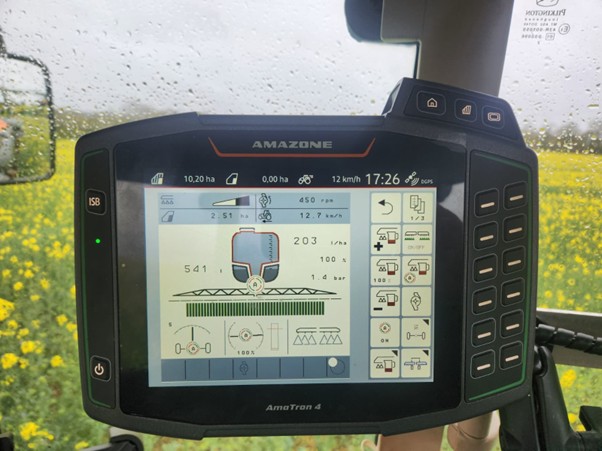
Signpost tillage farmer, Don Somers in County Wexford is no stranger to precision farming technology having many years of experience with yield mapping, precision soil sampling and prescription variable rate fertiliser application maps.
Don recently upgraded his sprayer to an Amazone UX 5201 Super and has partnered with Cutiwise in association with machinery distributor Farmhand to further explore the capabilities of this technology on his farm. His hope is to further improve yields, enhance input efficiencies on the farm, lowering his costs, while also having a very positive reduced environmental impact on his surrounding area.
If you would like to see a live demonstration of this technology in action, why not come along to a farm walk at 6.30pm on the 17th of June on his farm in Oylgate, Co. Wexford (Y21 TR80) which is being held following his recent Teagasc/FBD Environmentally Sustainable Farmer of the Year 2025 award.
For further details on the event being held on Don Somers’ farm, visit here.