
04 April 2022
Preparing for silage 2022
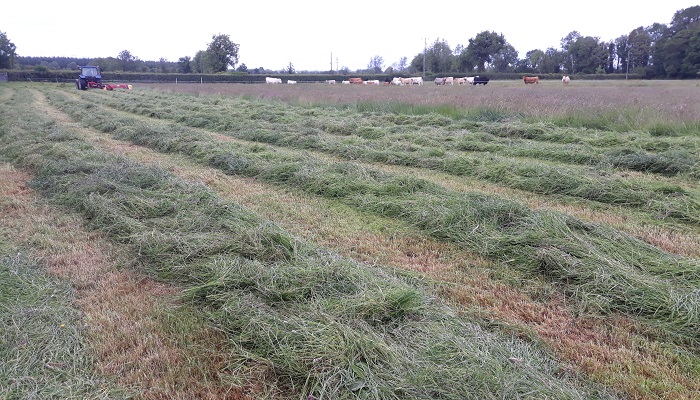
Catherine Egan, Teagasc Beef Specialist and Shane Devaney, Teagasc Advisor, emphasise the benefits of good quality silage including reduced meal feeding and better weight gain at housing. They advise on slurry and fertiliser requirements and when to cut in this article and video
Silage makes up 25-40% of the annual diet on beef farms depending on the length of the winter across the county. Decisions made at farm level, over the coming weeks will have a huge impact on the quality of silage fed next winter. Drystock Specialist Catherine Egan gives some advice.
Silage quality ranges from 58% to 78% dry matter digestibility (DMD) nationally, on average quality remains poor at around 65% DMD. Over the coming week decisions made at farm level will have a huge impact on the quality of silage fed next winter. This year, silage quality is very important to reduce concentrates required next winter.
How much and what type of silage is needed?
The first step to improving silage quality is to decide how much and what type of silage is needed:
- For spring calving suckler herds, dry cows will need about 6 bales (1.1 tonne DM) per cow 68 DMD silage with all remaining silage at higher quality (72+) for weanlings, finishing stock and autumn calving suckler cows.
- Calf-to beef-systems need 100% of silage at 72+ DMD.
How much fertiliser is required?
With fertiliser costs much greater this year, farmers will be trying to make savings. We have already seen excellent usage of slurry this spring. The recommended application for silage ground is approx. 2500 gal/ac which should supply 25 kg N/ha or 20 units/ac.
For first cut silage the guidance is to have at least 25 kg N/ha supplied from organic sources (slurry) and the remainder 60-75 kg N/ha (48 – 60 units/ac) supplied from chemical N, a total N application of no more than 100 kg N/ha (including 12-15 units of sulphur) for a crop growing from early April to late May (60 days). Where no organice sources available, apply 100 Kg N/ha using chemical fertiliser.
Grass growth stage
Grass growth this year has been slow to date, the grass growth stage at harvest is the most important factor deciding silage quality. Once seed heads appear DMD will be around 70% at most, and will drop by 1 point every 2-3 days after that. Lodged crops with dead material at the base will have 3-4% lower DMD still. The main step to improve average quality is cutting from mid-late May rather than into mid-June. There is a false assumption that ‘one big cut’ will reduce costs and secure enough feed for the winter. It is clear from recent fodder deficits that farms which fail to cut first cut by the June bank holiday (June 6th in 2022) at the very latest are much more likely to run short of silage in a difficult year. A delayed heavy first cut actually reduces annual DM yield and quality, and can create problems salvaging second cut crops later in the year (remember, 70% of grass growth has taken place by August). Farms that routinely take earlier first cuts have higher annual silage yields and quality. Drystock farms should close up enough ground and try secure most of thier winter fodder requirement through first cut silage (this will be the lowest cost silage made).
When to cut?
Well-managed silage swards closed from late March/early April should have good yields of 5.5 to 6t DM per ha (9-10 tonnes per acre fresh) ready for cutting by late May.
Shane Devaney, Teagasc Advisor emphasises the benefits of good quality silage in the video below
Find other useful information on Quality Grass Silage here. | You might also like this article: Want 50kg more winter weight gain for no extra cost? Cut silage in May instead of June
Talk to your Teagasc advisor about fertiliser advice for first cut silage now.
The Teagasc Beef Specialists issue an article on a topic of interest to Suckler and Beef farmers every Wednesday here on Teagasc Daily. Find more on Teagasc Beef here Teagasc provides a Local Advisory and Education service to farmers. Find your local Teagasc office here