
Preparing native broadleaf trees for Ireland’s future forests
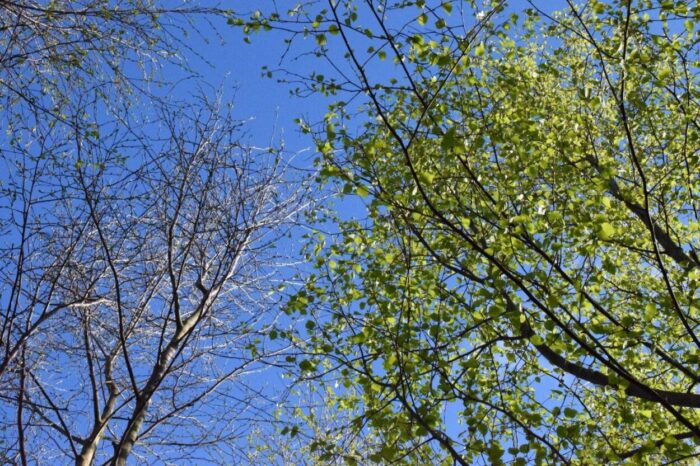
Robert Pim, Teagasc Walsh Scholar, and Dheeraj Singh Rathore, Teagasc Tree Improvement Research Officer, explain how tree improvement is helping ensure Ireland’s native broadleaf species are better adapted to tomorrow’s climate.
Climate change is creating new challenges for forestry in Ireland, while the need to increase forest cover and enhance biodiversity has never been greater. Trees planted today will remain in our forests and landscapes for many decades, so the planting material we choose now must be capable of growing and thriving under future environmental conditions.
Native broadleaf trees have an important role to play in developing resilient and diverse forests. They contribute to biodiversity, capture carbon and provide a wide range of ecosystem services. However, broadleaf forestry also presents challenges. Many native broadleaf species grow more slowly than conifers, require longer rotations and need good stem quality to produce high-value timber. While good silvicultural management can improve timber quality, long-term genetic improvement is equally important to develop planting material that combines good growth, resilience and timber quality under future climatic conditions.
Why tree improvement matters
Trees have long lifespans, and the trees that performed well in the past may not necessarily be the most suitable for the future. Identifying well-adapted, high-performing trees today will help ensure that future forests remain productive, resilient and economically viable.
To support this long-term objective, Teagasc established tree improvement programmes for three native broadleaf species: Silver birch (Betula pendula), downy birch (Betula pubescens), and black alder (Alnus glutinosa). These three species are well suited to Irish conditions, possess valuable genetic diversity and provide important environmental benefits, including soil improvement, and biodiversity support. They also respond well to selective breeding and have been successfully improved in several European countries.
The aim of a tree improvement programme is to identify trees with desirable traits and use them to produce future generations with improved performance. Achieving this requires long-term evaluation of traits such as growth, stem quality, stress tolerance and seasonal development, all of which are influenced by a tree’s genetic makeup and its environment.
The Adap4Tree Project
Adap4Tree is evaluating how native birch and alder populations perform across different environments to identify planting material that is better suited to Ireland’s future growing conditions. As our climate continues to change, successful forestry will increasingly depend on planting the right tree, in the right place, for tomorrow’s climate.
Launched in 2025, Adap4Tree is a collaborative project between Teagasc and South East Technological University (SETU), funded through the Walsh Scholarship Programme. The project builds on Teagasc’s long-established tree improvement programme for birch and alder making use of existing field trials, seed orchards and research infrastructure across Ireland. By combining long-term field observations with new assessments of tree performance and resilience, the project aims to generate the evidence needed to support future breeding and deployment decisions.
Understanding tree performance
Trees differ naturally in how they grow and respond to their environment. Some grow faster, others produce better stem form, while some are better able to cope with environmental stresses such as drought or changing seasonal conditions. Understanding these differences is central to developing planting material that is well adapted to future forestry needs.
To achieve this, Adap4Tree focuses on four main areas of research:
Learning from existing field trials
Teagasc has established a network of birch and alder field trials across Ireland, providing an excellent opportunity to study tree performance under different environmental conditions. Measurements such as tree height, diameter at breast height (DBH) and stem quality allow researchers to compare performance across sites and environments to identify families that show consistent growth and adaptation. The project will also establish additional trials to strengthen this long-term evaluation.
Understanding seasonal growth
The project is investigating phenology – the timing of seasonal events such as budburst and leaf fall. These characteristics influence how well trees are adapted to local conditions and can affect their vulnerability to late spring or early autumn frosts. Understanding these patterns will help identify planting material that is better matched to future climatic conditions.
Assessing climate resilience
Climate resilience is another important focus of the project. Researchers are assessing how trees respond to environmental stresses, particularly drought, using physiological measurements such as stomatal conductance and chlorophyll content. These assessments will improve our understanding of how different populations respond to changing environmental conditions and help identify material with greater resilience.
Comparing Irish and European material
The project also compares Irish birch and alder populations with material from other European countries. Evaluating traits such as seasonal growth and adaptation will help determine how Irish material performs relative to other populations and whether additional genetic resources could strengthen future breeding programmes.
Supporting the forests of the future
The information generated through Adap4Tree will strengthen Ireland’s tree improvement programme by identifying birch and alder populations with desirable characteristics such as improved stem quality, growth, resilience and adaptation to local conditions. These findings will help guide future breeding and selection decisions, supporting the development of planting material that is better suited to Ireland’s future forests.
The new field trials established through the project will continue to provide valuable information well beyond the lifetime of Adap4Tree, creating a long-term resource for research and tree improvement. Integrating field performance with future genetic information will also improve our understanding of the traits that contribute to adaptation and resilience.
The project will benefit forest nurseries, landowners and the wider forestry sector by providing the evidence needed to support informed decisions on the selection and deployment of forest reproductive material. Rather than relying solely on past performance, future planting decisions can increasingly be guided by how trees are expected to perform under changing environmental conditions.
The decisions we make today on tree improvement and planting material will influence the productivity, resilience and diversity of Ireland’s forests for generations. By providing the evidence needed to guide these decisions, Adap4Tree will help ensure that native broadleaf planting material is better suited to future growing conditions.