
Pressure mounts for first-cut silage after difficult spring
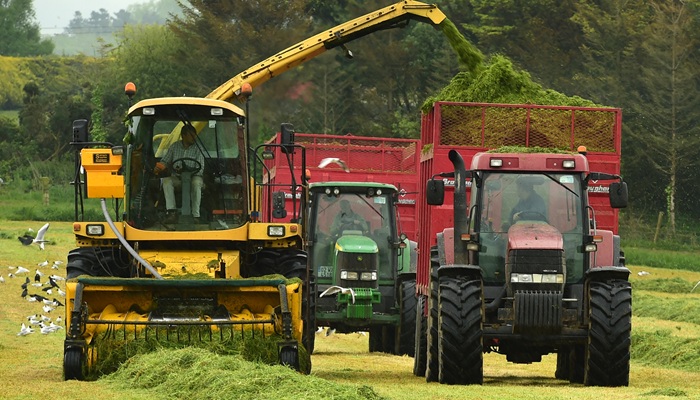
Farmers across the country have faced a challenging spring, with persistent wet weather making progress difficult from the outset. Nollaig O’Dowd, Drystock Advisor, Teagasc Galway/Clare discusses how these conditions are shaping key decisions for the weeks ahead.
Ground conditions have remained heavy, slurry tanks are at capacity, and opportunities to travel have been extremely limited. In many cases, early slurry application simply wasn’t possible, and a significant number of farmers have yet to spread any at all.
As a result, cattle remain housed on many farms, placing additional strain on silage reserves and slurry storage. For dry stock farms in particular, with no sheep to help graze off ground, getting silage fields into condition for closing has proven a task. This has created a knock-on effect, delaying key decisions and tightening the window for first-cut silage preparation.
This leaves many farms in a tricky position when thoughts turn to first-cut silage. With little or no slurry applied, silage ground is lacking key nutrients at a time when growth should be accelerating. There is now a real possibility that slurry applications will have to be delayed until after first cut, increasing reliance on bagged chemical fertiliser at a time when costs remain high.
While slurry is a valuable source of nutrients, it alone is not sufficient to maximise silage yields. Chemical fertiliser will be required to drive growth and do the heavy lifting this year, particularly where no slurry has been applied. In these situations, fields are effectively starting from scratch and will require 80–100 units of nitrogen per acre. However, nitrogen is only part of the equation.
Slurry typically supplies significant levels of phosphorus (P) and potassium (K), both of which are essential for silage production. In its absence, these nutrients must be replaced using compound fertilisers such as 18-6-12. Farmers should base application rates on recent soil analysis where available, as blanket spreading is unlikely to be cost-effective this year. Applying fertiliser without knowing soil fertility levels risks wasting money at a time when margins are already under pressure.
Sulphur is another important nutrient that should not be overlooked, as it plays a key role in nitrogen utilisation and overall crop performance. In addition, lime remains a low-cost option to improve soil pH and unlock existing nutrients, helping to increase the efficiency of any fertiliser applied. It’s important to note lime should be delayed on silage ground until the last cut of the year is taken as it causes issues with silage preservation. However, it can be applied to grazing ground and grazed 7-10 days later.
Given the high cost of inputs, farmers may also need to reassess whether all silage ground justifies a full fertiliser programme. Not every acre will deliver a return on investment this year. Prioritising the most productive fields and scaling back on poorer-performing ground could be a more practical approach. Flexibility will be essential. Some farms may opt for a lighter first cut followed by a stronger second cut.
Where ground has been grazed off, fertiliser should be applied as soon as conditions allow, followed by closing to encourage regrowth. If farmers have been lucky enough to get cattle or sheep out to graze, they should now be making plans to move animals and prioritise closing dates, even if later than usual. Acting quickly when a weather window appears will be critical in the weeks ahead.
Timing will be one of the biggest decisions facing farmers this season. Traditionally, silage ground would be closed by early to mid-April to allow for a late May or early June cut. This year, delayed closing may push cutting dates further into June. While this can help increase yield, it often leads to a drop in silage quality and feeding value. Balancing the need for bulk with the requirement for high-quality forage will be key.
After a difficult spring, there is no perfect plan. However, timely decisions and careful prioritisation now will play a major role in determining both silage reserves and grass supply for the remainder of the year. Walk the farm and access current grass covers. This season is less about ideal scenarios and more about making the best of limited opportunities. Ensuring there is sufficient, good-quality forage in the yard next winter will depend on the decisions made in the coming weeks.