
Protecting the tillage bottom line: 5 areas to control this coming year
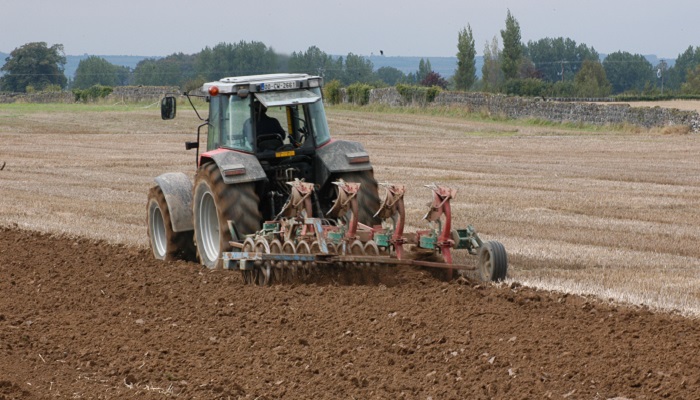
Focusing on machinery, straw and crop choices, Teagasc Crops Specialist, Shay Phelan shares five areas tillage farmers should examine to increase farm income in 2027.
As we move towards the end of the year, most farmers’ minds turn towards analysing the year outgoing and planning for the coming year.
Most will be concerned with the below average yields that many crops returned in 2026. Some will wonder what will happen if the El Nino effect is even more dramatic in 2027, and what effect this may or may not have on the business.
While the weather and markets are beyond your control, what we should really be concerned with is what you can control. Here are five areas that farmers can control which can make a difference to the bottom line:
1). Machinery costs
National Farm Survey data has shown that machinery costs have risen on tillage farms by 47% from 2020 to 2025. Clearly this level of increase is not sustainable if it continues and the margins from tillage get even tighter.
Over capacity seems to be present on all farms, as the uncertain weather patterns mean that work must be completed quicker. However, over capacity is coming at an extreme cost.
Remember, a tractor which does 1,000 hours per year is only working for less than 20 hours per week. Ask the question: Is there more ways to get more from your existing machinery?
Machinery sharing, while not popular in Ireland, is commonly practiced in most other European countries, not just between farmers but also between contractors as well. This is an area that is worth considering as machinery costs increase and available labour decreases.
2). Straw
The drought in August made many livestock farmers aware of the value of straw, not just for bedding but also for feeding.
However, many tillage farmers still underestimate the value of straw when the Straw Incorporation Measure (SIM) is considered.
€25 – 30 per 4×4 bale was commonly quoted for barley straw off the field at harvest time. However, depending on the straw yield and the amount of handling that was required, those prices were probably only equal at best to what the SIM would offer when fertiliser cost, baling, handling, diesel etc. are taken into account. While livestock farmers also must make a profit, it should not be at the expense of tillage farmers.
3). Fodder crops
Fodder beet and maize are two of the most common fodder crops that tillage farmers grow. Unlike grains, the price of these crops is set locally so global markets have less of an influence.
Other crops like wholecrop silages can also be grown. Whether they are baled or clamped, there may well be an increased demand as silage stocks are likely to be reduced due to the drought this year.
Crucially, you can set the price rather than accepting a price for grain based on international markets.
4). Crop choice
Spring barley is the largest crop grown in Ireland every year, yet it is one of the poorest returning crops that you can grow on a tillage farm. While land suitability and rotation considerations need to be taken into account, look at alternative break crops such as beans, peas, oilseed rape, beet, maize etc. which can all return more profit to tillage farmers than spring barley. Just because you have grown it for the last number of years does not mean that it will return more money next year.
5). Market you crops
Growing cereals and selling them direct to your local merchant is the most convenient way to grow crops, especially for part-time growers.
However, if you can market you crops to sell them to other markets then, with a bit of effort, you can make more profit.
Recently I saw a livestock farmer use social media to rave about bean straw and how he now uses it in combination with barley straw. Social media is now a useful tool, not just for posting videos of machinery, but it can be used to sell product.
So, while you have some downtime over the next few weeks, sit down and evaluate your business. Focus not just on how the crop grew but more importantly on how you can increase the amount of money coming into the farm in 2027. Do not expect anyone else to do it for you.