
Putting methane-reducing feed additives under the microscope
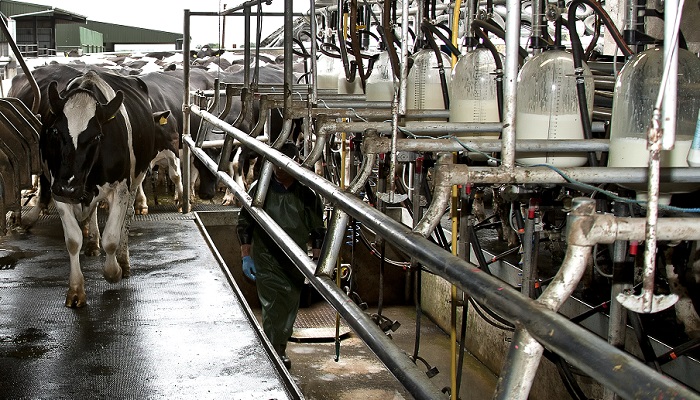
Teagasc research is investigating methane-reducing feed additives to understand their potential effects on milk quality and dairy products within pasture-based production systems. Wishmore Gwala, Teagasc Walsh Scholar, tells us more.
As part of my PhD research with Teagasc, I am investigating methane-reducing feed additives to understand their potential effects on milk quality and dairy products within pasture-based production systems such as those used in Ireland.
Methane is produced naturally in the rumen during digestion through a process known as methanogenesis. While this process plays an important role in maintaining conditions within the rumen, the methane released is a potent greenhouse gas. This has led to growing international research into strategies that could reduce enteric methane emissions.
My research examines feed additives including 3-nitrooxypropanol (3-NOP or Bovaer®), Asparagopsis taxiformis (red seaweed) and calcium peroxide, investigating their effects on milk composition and dairy product quality.
To date, much of the research on these additives has focused on indoor dairy systems using total mixed ration (TMR) feeding, with comparatively limited research in pasture-based systems such as those used in Ireland. Irish dairy products have a distinctive compositional profile associated with pasture feeding, making it important to independently investigate whether these technologies could affect milk composition, including its fatty acid profile, and the subsequent characteristics of dairy products.
Supported by the Dairy Levy, this research is helping to build an independent evidence base around an area of growing international importance. Rather than assuming how these technologies might perform in Irish production systems, the research is examining their potential impacts under pasture-based conditions and generating evidence that can inform future research, policy discussions and industry decision-making.
Internationally relevant
The international relevance of this work is also creating opportunities to share the research with the wider dairy research community. Earlier this year, I was honoured to win the International Dairy Federation (IDF) Student Competition in dairy research. As part of this award, I have been invited to attend the IDF World Dairy Summit 2026 in Auckland, New Zealand, where I will represent Teagasc and have an opportunity to meet and discuss the research with an international audience of dairy researchers, industry representatives, policymakers and farmers.
I will also present a research poster at the Higher Education Institutions Rural Development Research Symposium at University College Cork on 21 September 2026, providing another opportunity to discuss the work with researchers and stakeholders working across rural development, agriculture and innovation.
Research into methane-reducing feed additives is growing around the world. By studying them independently in Ireland, we hope to better understand how they affect pasture-based dairy farming, from the cow and rumen through to milk and dairy product quality.
Wishmore Gwala is a Teagasc Walsh Scholar based in the Teagasc Food Chemistry & Technology Department and is supervised by Dr. Jonathan Magan.