
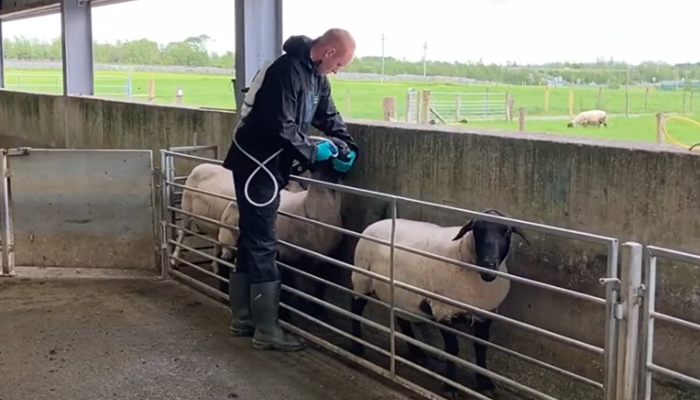
When introducing new sheep onto the farm, one of the biggest risks is that they could be carrying resistant parasites or worms. To avoid the spread of these worms, a quarantine treatment protocol should be followed for all incoming sheep.
In the below video, Dr Orla Keane explains the process of quarantine treatment:
Key quarantine treatment recommendations
On arrival to the farm, sheep should be dosed with a product from one of the two newest anthelmintic groups: Zolvix (Group 4) or Startect (Group 5).
To increase effectiveness, a second product should also be used.
If Zolvix is chosen as the first treatment, the second should come from either Group 2 (levamasole) or Group 3 (macrocyclic lactones). If Startect is used, levamisole should be the follow-up, as Startect already contains a macrocyclic lactone.
It is important that these products are given sequentially, not mixed together, to ensure effectiveness.
Even after treatment, resistant worm eggs may still pass out in dung. To prevent these from contaminating pasture, treated sheep should be housed for 48 hours after the quarantine treatment. This holding period allows most eggs to be excreted before the animals are released to pasture.
When turning sheep out, they should be placed on contaminated pasture, fields recently grazed by the farm’s own flock. This ensures the new arrivals pick up the local worm population, which is already susceptible to the treatments used on the farm.
More insights
Every time an animal enters or re-enters a flock, it poses the risk of bringing unwanted health challenges with it. With sales in full swing, Michael Gottstein, Head of Sheep Knowledge Transfer at Teagasc, joined Ciaran Lynch on a recent episode of the OviCast podcast to share ways to reduce the risks.
Key topics discussed include:
- Quarantine and parasite control plans
- Reducing the risk of lameness in new arrivals
- Using vaccination to protect your flock
Listen in below:
More from Teagasc Daily: Store lambs – budget before you buy