
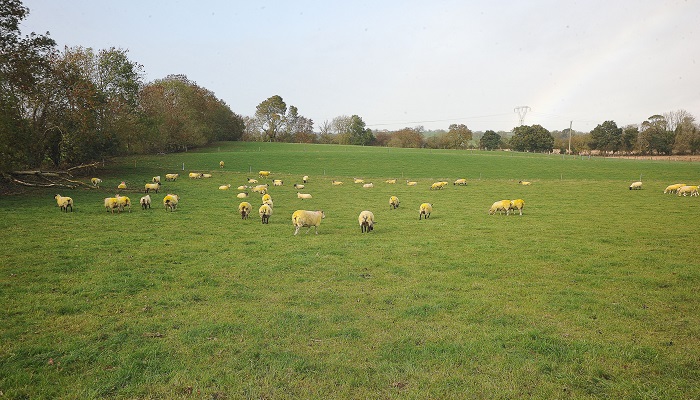
Effective ram management during the mating season is essential for ensuring high flock fertility and avoiding costly surprises at scanning time. Head of Sheep Knowledge Transfer, Michael Gottstein tells us more.
Effective ram management during the mating season is critical to the reproductive success of the flock. All too often we hear of stories where flock owners get a nasty surprise at scanning time with lots of empty ewes. Unfortunately at that stage it is generally far too late to implement remedial action to correct the situation. With careful planning, proper pre breeding health checks, and tools like raddling, farmers can ensure that the reproductive efficiency of the flock is not compromised and that where a problem occurs it is identified at an early stage.
Pre-Mating Preparation
In all cases, rams should undergo a breeding soundness examination 6–8 weeks before tupping. This includes checking:
- Body condition score (BCS): Aim for a score of 3.5–4.0. Rams will lose condition during mating, so they should be in good shape to begin with. Body condition is linked to Libido (the desire to mate) and thin rams spend more time eating and lying down rather than seeking out ewes that are in season.
- Feet and legs: Sound locomotion is crucial. Lameness will reduce mating activity.
- Teeth and jaw alignment: In particular the molar teeth. Rams with swellings along the jaw line are likely to have issues with teeth.
- Testicles: Both testicles should be even, firm, and free moving in the scrotum.
Additionally, ensure vaccinations and parasite control are up to date. Rams should be treated for internal and external parasites and vaccinated against diseases like clostridial infections.
Ram-to-Ewe Ratios
The number of rams needed depends on ram age and terrain. A general guide is:
- Mature rams: one ram per 45 ewes.
- Ram lambs: one ram per 25 ewes.
In extensive systems or rough terrain, reduce these ratios accordingly. Running too few rams can lead to missed matings and extended lambing periods. The optimum number of rams to run per mating group is three or more. This prevents blocker rams from preventing other rams from serving ewes.
Ram Management: Introducing the Rams
Ensure that rams that are working together are acclimatised to one another. From a ram management perspective, this will require rams to be kept in a very confined area for a few hours before being turned out hungry so that they concentrate on foraging rather than fighting.
Raddling: The Most Valuable Ram Management Tool
Raddling, the practice of using a crayon, paste (powder mixed with oil) or paint on the ram’s chest to mark ewes when they are mounted—is an essential tool for managing and monitoring the mating.
Benefits of raddling
- Identifies mated ewes: You’ll know which ewes have been served, helping track conception dates and expected lambing windows.
- Detects returns to service: Ewes marked twice (usually in a different colour).
- Monitors ram performance: If few ewes are marked after several days, it may indicate a problem with the ram.
When raddling the ram it is important that all rams are raddled from the start of the breeding season. Otherwise you will not have a handle on what percentage of the ewe flock were mated in the first cycle. Start with the lighter colours first. A good example of the order in which the different colours could be applied are yellow, orange, green, red, blue and black. The colour should be changed every 14 days. Some flock owners change the colour every 7 days to allow for more concise late pregnancy feeding.
Make sure the raddle is properly fitted and checked regularly so that it is not causing the rams discomfort. Crayon types are less messy and longer-lasting than raddle paste or paints, particularly in wet or muddy conditions.
Proper ram management during the mating season isn’t just about putting rams in with the ewes and hoping for the best. It involves careful preparation, health checks, raddling, and observation. By investing time and attention into your ram team, you can boost flock fertility, tighten lambing periods, and ultimately improve profitability.
More from Teagasc Daily: Drench testing for anthelmintic effectiveness
More from Teagasc Daily: BETTER hill sheep farming – the Kerrigan’s journey