
05 September 2024
‘Rapid uptake’ of MACC measures needed to reduce agricultural emissions
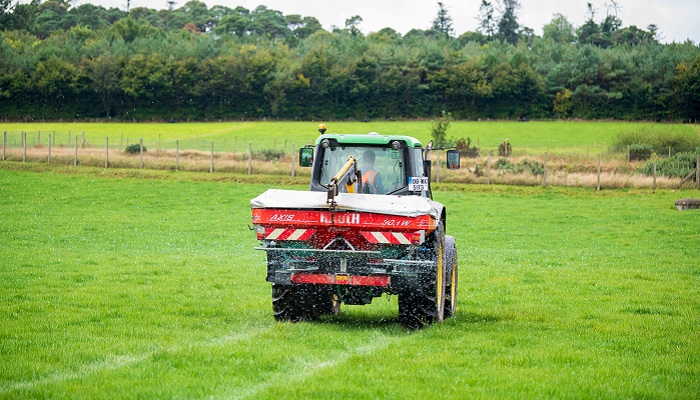
In its recommendations to Government, the Climate Change Advisory Council (CCAC) has highlighted the need for a “rapid uptake of the high-impact and cost effective measures from the Teagasc Marginal Abatement Cost Curve to reduce agricultural emissions”.
As presented in the Annual Review 2024 – Agriculture and Land Use, Land Use Change and Forestry, submitted to the Minister for Environment, Climate and Communications on September 2, such measures include: the increased uptake of protected urea fertilisers; the use of approved feed additives indoors and the incorporation of additives in slurry that reduce emissions; and reducing the age of finish of beef cattle nationally.
Protected urea is a urea nitrogen (N) fertiliser made safe from ammonia loss through the addition of a urease inhibitor (NBPT). Teagasc research has shown that as a technology, it has the potential to give the largest and quickest reductions in greenhouse gas (GHG) and ammonia emissions within agriculture, while at the same time supporting grass growth.
Given its benefits, the CCAC is calling for more support and resources to ensure the Climate Action Plan target of displacing 80-90% of CAN fertilisers with protected urea is achieved by 2025. To ensure the rapid uptake of protected urea to replace CAN and other conventional nitrogen fertilisers as appropriate is achieved, the CCAC pointed to accelerated communications and advisory programmes, while also highlighting to the need for proven protected urea products to be fully available across the market.
The CCAC also noted the advanced stage of development of several feed and manure additives to reduce emissions when animals are housed, stemming from research conducted by Teagasc and other organisations. On account of this, the CCAC advised: “There is a need to ensure that there is a business case for farmers to rapidly adopt these innovations,” with necessary incentives required “to enable farmers to invest in, and report on, the routine use of ‘off-the-shelf’ feed and manure additive products, for example the feed additive 3-nitrooxypropanol (3-NOP)”.
Additionally, in an effort to promote the earlier finishing of livestock, an avenue as highlighted in the Teagasc MACC as having the potential to deliver significant emissions reductions, the CCAC has encouraged meat processors to reconfigure the carcass specification bonus payment scheme to favour animals finished at an earlier age.
Commenting on the publication of the review, Marie Donnelly, Chair of the Climate Change Advisory Council, said, “Government needs to communicate the opportunities and incentivise proven measures for farmers, suppliers and the wider industry. Key areas of impactful gains include the accelerated roll out of protected urea fertiliser, increased uptake of methane reducing feed and manure additives and also the early finishing of livestock.”
Continuing, she said: “Positive news is that the Organic Farming Scheme has helped to treble the area organically farmed in Ireland since 2021. Incentives and supports are required to improve land management practices across all land uses to enhance resilience to the impacts of climate change and improve biodiversity with measures such as water table management, mixed swards, hedgerows and woodlands extension.”
Find out more about the Teagasc Marginal Abatement Cost Curve here.
Also read: 2024 fertiliser N performance during a difficult grass growing year
Also read: Farmers reminded to use slurry additives with a ‘solid scientific backing’
Also read: Feeding 3-NOP in Irish dairy systems