
Reducing somatic cell count this spring
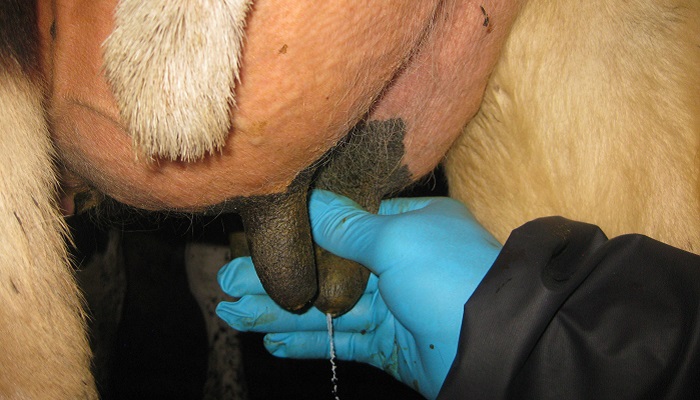
Elevated Somatic Cell Count (SCC) is one of the most significant hidden costs on Irish dairy farms. Here, Teagasc Dairy Specialist, James Dunne shares practical and timely advice for managing SCC in freshly calved cows.
Unlike clinical mastitis, which is visible and usually treated promptly, sub-clinical mastitis often goes unnoticed, yet it is responsible for the majority of mastitis-related losses.
Teagasc research shows that mastitis costs Irish dairy farms approximately €60 per cow per year, with most of this cost arising from sub-clinical infections. These losses include reduced milk yield, poorer milk quality, penalties and increased risk of clinical mastitis later in lactation. Clinical mastitis adds further costs through treatment, discarded milk, labour, veterinary intervention and premature culling.
Spring calving is a high-risk period for SCC, making early detection and control in freshly calved cows critical.
Managing SCC in freshly calved cows
1). Is the cow fit to enter the bulk tank?
Freshly calved cows should be assessed before their milk enters the bulk tank. The California Milk Test (CMT) is an effective on-farm tool to identify cows with sub-clinical mastitis.
- Cows with elevated SCC can be milked separately to reduce the risk of spreading infection.
- Milk from infected quarters should be excluded from the bulk tank.
- Infected quarters should be monitored closely and managed appropriately.
Early segregation prevents cross-infection and protects bulk tank SCC.
2). Using the California Mastitis Test (CMT)
The CMT is a simple and reliable method of identifying which quarter(s) within a cow are contributing to high SCC. Sub-clinical mastitis cannot be detected accurately without this test.
Correct procedure:
- Carry out the test before milking.
- Discard the first three strips of milk from each teat.
- Collect a small, equal amount of milk from each quarter into the CMT paddle, taking care to avoid contamination.
- Tilt the paddle briefly to equalise milk volumes, then return it to level.
- Add an equal volume of reagent to each well (approximately a 50:50 milk-to-reagent ratio).
- Gently swirl the paddle for about 30 seconds.
- Observe changes in consistency:
- The thicker or more gel-like the reaction, the higher the SCC in that quarter.
Practical tip:
If you are new to CMT testing, collect quarter samples into labelled sample bottles during milking and carry out the test afterwards, when there is more time to observe, interpret and record results accurately.
A practical demonstration of correct CMT use can be viewed in the video below:
3). Identifying the causative pathogen
If a freshly calved cow continues to show high SCC and does not improve with monitoring, the next step is laboratory milk culture.
- Take a clean, uncontaminated sample from the affected quarter(s).
- Good sampling hygiene is essential – dirt or contamination can give misleading results.
- Laboratory analysis will identify the mastitis-causing pathogen.
- Sensitivity testing helps determine whether antibiotic treatment is appropriate and which product is most effective.
This step prevents unnecessary or ineffective antibiotic use.
4). Treatment decisions
Treatment should only be considered once laboratory results are available.
- Discuss results and treatment options with your veterinary practitioner.
- Not all sub-clinical infections benefit from antibiotic treatment.
- Targeted treatment improves cure rates and supports responsible antimicrobial use.
5). Preventing the spread of infection
Many mastitis pathogens are contagious and spread easily:
- From cow to cow through milking clusters
- Via hands, gloves and clothing of the milker
- Through cubicles and poor housing hygiene
Key control measures include:
- Excellent milking hygiene
- Correct cluster management
- Clean, dry cubicles
- Clear Standard Operating Procedures (SOPs) for everyone milking cows
Consistency is critical – small lapses can quickly undo good SCC control.
6). Book milk recording early
- Milk recording should take place within the first 60 days of calving.
- This provides a clear picture of SCC patterns in early lactation.
- Results help assess how effective dry-period management and mastitis control have been.
- Early data allows timely intervention before SCC problems become established.
More from Teagasc Daily: Examine all costs now
More from Teagasc Daily: 10 tips for better transition cow nutrition and health