
15 January 2025
Reducing spring workload pressures on dairy farms
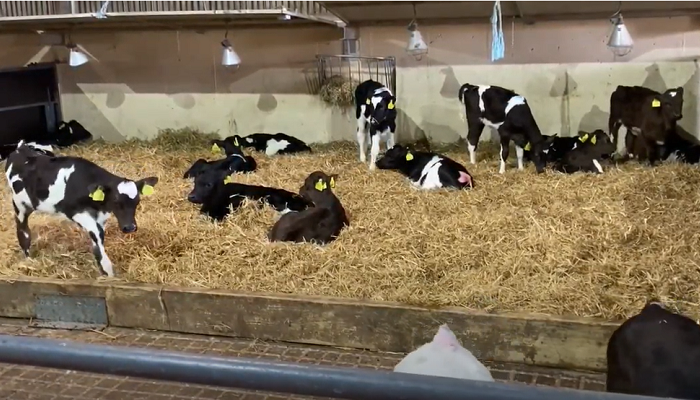
Spring is always a challenging time for dairy farmers and spring 2024 was particularly difficult. So what lessons can be learned and what actions can be taken to reduce the pressure and stress during spring 2025?
As part of a Today’s Farm article, Martina Gormley, Dairy Specialist, Conor Hogan, Research Officer, and John McCabe, Advisor on the Teagasc/Aurivo Joint Programme, explain how some answers can be found in the experience of farmers involved in the involved in the joint Teagasc Aurivo dairy programme.
Farmers know they work hard in spring; their own experience provides the evidence and this is backed up by research. The calving period accounts for a third of annual labour input on dairy farms. Any time that can be saved during this period is crucial, whether that’s to alleviate pressure on the farmer, family members or staff working on the farm.
With this in mind, 100 dairy farmers involved with the Teagasc Aurivo programme recorded their working hours, time savers and challenges encountered during spring 2023 and 2024. Results from the study highlighted the substantial workload on farmers (Table 1).
Table 1. Workload measures for farms Feb/March 2023 and 2024
| Feb/March 2023 | Feb/March 2024 | ||
|---|---|---|---|
| Average (n=47) | Average (n=53) | Top 25% (n=13) | |
| Time you left the house every morning | 06:27 | 06:34 | 06:24 |
| Start time of evening milking (cups on) | 16:29 | 16:18 | 15:43 |
| Daily PM finish time | 19:15 | 18:55 | 17:49 |
| Hours worked per week (excl night checks) | 72 | 74 | 63 |
The average farmer started at 6.34am and finished at 18.55pm, adding up to an average of 74 hours worked per week. As is always the case in these studies, there were farmers who worked more and some who worked fewer hours per week. The latter had similar start times (6:24am) but finishing over an hour earlier (17.49pm), working 63 hours per week.
Much of this difference was due to the significantly earlier evening milking time. This poses the question: what were these farmers doing, or not doing, to reduce their workload so that they could milk earlier? Most importantly, what steps can we take to manage spring 2025 as effectively as possible?
The farmers involved in this survey came together to discuss the topic, and five key actions were identified:
- Calf management
- Workforce planning.
- Weather
- Animal health
- Work organisation.
This article looks at these five key actions identified by farmers to reduce work and stress in spring.
Calf management: Invest time and money to maximise your returns
Building a good reputation with calf buyers was seen as crucial; sale of calves was identified as the largest time saver for farmers. Best practice calf management from birth is essential for this, as well as to avoid future problems with calf health. Farmers suggested using the Dairy Beef Index when selecting beef AI.
They also advocated testing every cow’s colostrum with a refractometer. Appearance alone will not tell you if colostrum is of good quality. Farmers who tested colostrum noted surprising variations within their herds, highlighting the importance of testing for optimal calf health. Ideally colostrum should have over 22% protein. Following the ‘colostrum 1-2-3’ rule (first milking, within two hours, three litres) will ensure calves get the best start. Farmers noted that this all takes time but the reason is to try to ensure calves get the best start and reduce sickness at a later stage, for the dairy farmer and also for the purchaser.
“It’s like an insurance policy,” said one farmer.
The farmers said a store of high-quality colostrum was vital. Many recommended investing in a fridge and using zip-lock bags or one litre plastic bottles for easy thawing. They also recommend testing silage and, if needed, feeding soya two weeks before calving to boost colostrum quality.
Housing and feeders
Investing in calf housing and improving existing calf houses was noted as a key area for some farmers; bearing in mind the need to keep calves for longer. A number of farmers praised automatic calf feeders as a key time saver. Most farmers agreed that a straw budget of about €30 per calf is needed to provide sufficient bedding. Vaccination was viewed as another important preventive measure; providing an insurance policy against future health issues.
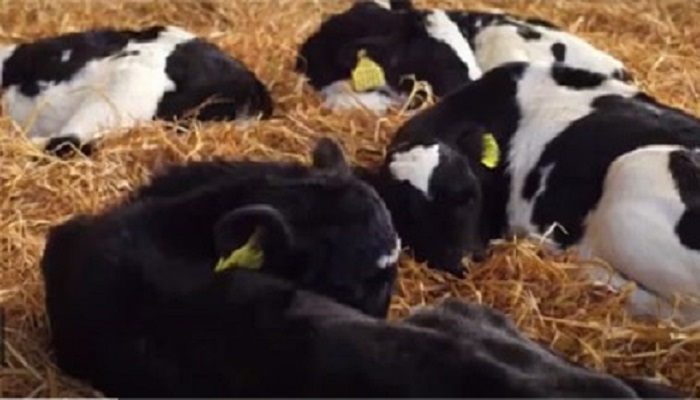
In summary, farmers noted that their thinking around selling calves had changed, particularly as herds got bigger and workload increased. In the past, the thinking was to get as high a price as possible. Now the aim is to achieve a win-win outcome. Sell a good healthy calf at a younger age and hope that the drystock farmer makes a profit and buys from you again next year.
One farmer summarised that a ‘good healthy calf’ means: “DBI, good, tested colostrum, a dry cosy bed and vaccinated for all the preventives. It costs time and money but it’s worth it in the end.”
Workforce: Plan ahead for disruption
Traditionally dairy farms were run by full-time people, working seven days a week. Now many dairy farmers with 100-cow herds have two or three part-time employees plus themselves, whether it is for a few milking’s or helping with calves. There are plenty of tasks and flexibility on working hours on dairy farms.
A lack of help was a serious issue on some farms, especially if it fell through at the last minute. Some farmers found themselves short-handed by putting all of their eggs in one basket – namely, a single employee or student. Through no fault of their own, or yours, people can get sick, injured, or may not be suitable for your farm. To avoid you having to work on your own in spring, start looking for help a few months prior to calving.
Training
Allow time to train new employees before spring. Ideally have more than one person to help you. Being proactive is essential when sourcing people, whether that is through the Farm Relief Service, neighbours, local students or schools, GAA clubs, men’s sheds, or stay at home parents. While this can be initially difficult, the farmers said they were surprised by what opportunities arose when they took the initiative.
Weather: Expect the unexpected
The unpredictability of weather was acknowledged, as was the fact that planning can mitigate its impact. Farmers agreed that spring weather is usually tough in either February or March. In 2024, both months were difficult. Having adequate help, good roadways and high-quality silage were seen as critical tools for operating under poor weather conditions.
A surplus of silage was key to reducing stress during spring. Some farmers noted that having a few locations to store silage was essential, so that the appropriate silage quality could be fed to the right cows.
If the ground is waterlogged, housing cows is the best way to protect your land. Walking the land and regularly assessing conditions can guide your decision making. Aim for one grazing per day and if you cannot get out for the odd grazing here and there, do not dwell on it.
Animal health: Focus on prevention
Good dry cow management was seen by participants as essential to reducing sick animals and preventing metabolic diseases during calving. Testing silage, feeding the right minerals and monitoring body condition score were key to ensuring cows calved down in good condition. Farmers also stressed the need to manage over-conditioned cows through restriction or feeding lower quality silage. Some ideas highlighted to prevent mastitis included: cleaning cubicles twice a day for milking cows, CMT testing post calving, and using adequate teat dip.
Colostrum group
Having a colostrum group of cows for milking was another suggestion. This group will make milking easier, allow for the treatment and recovery of any sick animals, and give freshly-calved cows a chance to settle in. Colour coding colostrum cows with four colours and changing the colour each morning was a great way of giving assurance and peace of mind, especially where multiple milkers are present. The majority of the farmers had now moved to two groups of cows (milking & fresh group) and said they would not go back to mixing all cows together at milking.
Work organisation
Two necessities during the period before calving were a to-do list and a supply list; writing them down is essential to make sure they are done!
Repairs and maintenance accounts for about 8% of all spring labour input which is significant in the context that much of this work is avoidable, or could be completed now or postponed until later in the year.
Key items
Some of the key items highlighted by farmers included:
- Auditing the yard and milking block to identify any repair work required;
- Checking fences, roadway surfaces and water troughs;
- Servicing the milking machine, bulk tank, machinery, calf feeding equipment, cameras, lights, etc;
- Restocking materials needed for the season ahead;
- Completing sire advice early;
- Completing a nutrient management plan and ordering fertiliser.
For more information and to access the full Today’s Farm publication, click here.