
Replenishing soil nutrients is crucial to maintaining high yields
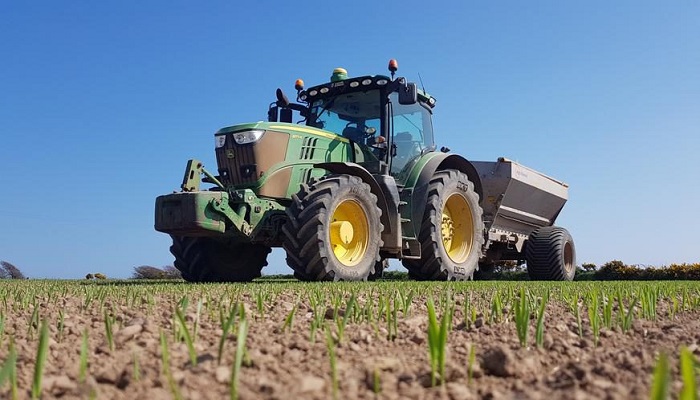
With one eye on the yield potential of crops next harvest, Michael Hennessy, Head of Crops Knowledge Transfer, reminds growers that soil fertility remains one of the most important factors in influencing crop performance and long-term productivity.
The cornerstone of effective nutrient management is a current soil test; it tells you the base levels of phosphorus (P) and potassium (K) in your soils and guides practical decisions for the season ahead.
Relatively few tillage soils have all the key fertility parameters in the optimum range. A recent Teagasc summary of tillage soils tested in 2025 showed that only 30% of soils had sufficient fertility (pH > 6.2 and P & K at Index 3 or 4). At the same time, 54% of soils were at P Index 1 or 2 and 37% were at K Index 1 or 2. We can be confident crops at Index 1 and low Index 2 soils are underperforming relative to their genetic potential.
Why this matters after a high-yielding year
Yields in 2025 were generally very good, with many farmers seeing higher outputs than in the previous four to five years. Winter crops, especially winter wheat and winter barley, yielded much higher than in recent seasons, with some farms recording exceptionally high yielding crops.
Very high yields remove large amounts of nutrients from the soil. For example, an 11 t/ha crop of winter wheat will remove around 42 kg/ha of phosphate and 110 kg/ha of potash, equivalent to the P and K of about 495 kg/ha (4 x 50kg bags) of a 12-8-20 fertiliser. If these nutrients are not replaced, soil P and K reserves will be drawn down, pushing index values lower and reducing the yield potential of following crops.
Soils at Index 1 (and many at low Index 2) will have constrained yields, even if you apply large amounts of P and K in the growing season. The best long-term strategy is to keep soils at least in a high Index 2 or ideally Index 3 to secure consistently high yields.
How to regain P and K at reasonable cost
- Check soil test results
- Take a current soil sample where you don’t have recent results – repeat sampling every 3–4 years on a rolling basis.
- Prioritise fields with Index 1 for immediate action and plan to lift them to high Index 2 / Index 3 over a number of seasons rather than trying to replace everything in one year.
- Use crop residues (straw) where possible
- Straw contains only a small proportion of total crop P but a larger proportion of the K. For example, straw from an 11 t/ha winter wheat crop will return roughly 4.4 kg P/ha and about 55 kg K/ha to the field if chopped and retained. That represents a significant saving on purchased fertiliser where straw is retained.
- Make best use of organic manures
- Slurry and farmyard manure are useful sources of P and K and can be cost effective when available. Nutrient content varies substantially with dry matter (DM).
- As a guide, watery cattle slurry (2% DM) contains about 0.21 kg P/m3 and 1.4 kg K/m3, while a ‘good quality’ slurry (6% DM) contains nutrient available content of about 1.0 kg/m3N, 0.5 kg P/m3 and 3.5 kg K/m3. Applying 22.5m3 (2,000 gal/ac) of this slurry delivers 23 kg N/ha, 11.3 kg P/ha and 79 kg K/ha, worth €162/ha (excluding transport and spreading costs)
- Where slurry is available, include its nutrient value in your P and K plan. Be mindful of spreading limits, even application, and overall farm limits, especially for P.
- Apply P and K strategically
- If soils are very low (Index 1), plan to build indices over several seasons rather than trying to fix everything in one year – spreading cost and workload.
- Consider incorporating P into the seed bed soils with low index P or soils that tend to ‘fix’ P.
For more from Teagasc Crops, visit here.
For further insights on the soil fertility on tillage farms, view the Teagasc Soil Fertility Dashboard here.