
08 April 2023
Reseeding checklist: spring or autumn?
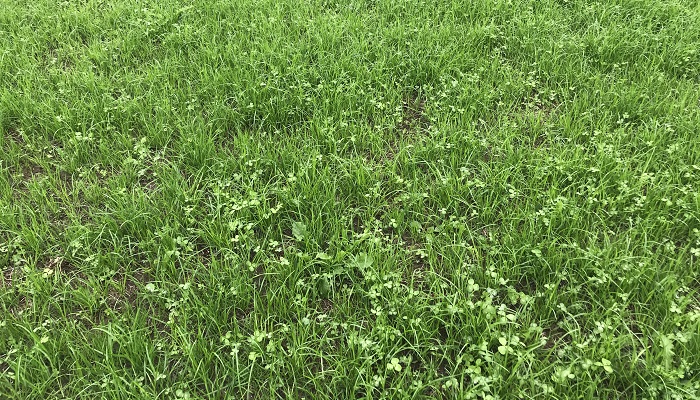
Regular reseeding of pasture allows farmers to grow increased yields of higher quality grass. Despite this, reseeding levels in Ireland are low with less than 2% of our national grassland area reseeded annually.
As grass is our dominant feed during the main grazing season, and the primary source of winter forage in the form of grass silage, the low level of reseeding must be addressed to maximise herbage production on farms. Swards with low perennial ryegrass content can ‘cost’ farmers up to €300/ha/year due to reduced herbage production and reduced nitrogen (N) use efficiency.
On average, across recent years, reseeding costs approximately €800/ha. However, the increased profitability resulting from the new sward will – on average – recoup the cost in just two years, making reseeding one of the most cost-effective on-farm investments.
During reseeding, choosing the correct grass variety remains important. The Pasture Profit Index (PPI) is used when selecting grass varieties at reseeding. The PPI outlines, in economic terms, the agronomic differences between varieties for traits that influence the profitability of ruminant production systems.
Timing of reseeding
Timing of reseeding depends to a large extent on weather conditions and grass supply. Generally, total grass production from a spring / early summer reseed is as much as, if not more than, old permanent pasture in the establishment year. Establishing white clover in spring / early summer is more reliable than autumn due to the stability of soil temperatures. Conditions for post-emergence weed control are also more favourable following spring / early summer reseeding. While autumn reseeding may make sense from a feed budget perspective, soil conditions deteriorate as autumn progresses reducing opportunities to graze, lower soil temperatures can reduce seed germination, and variable weather conditions reduce the opportunity to apply post-emergence spray and to graze the new sward.
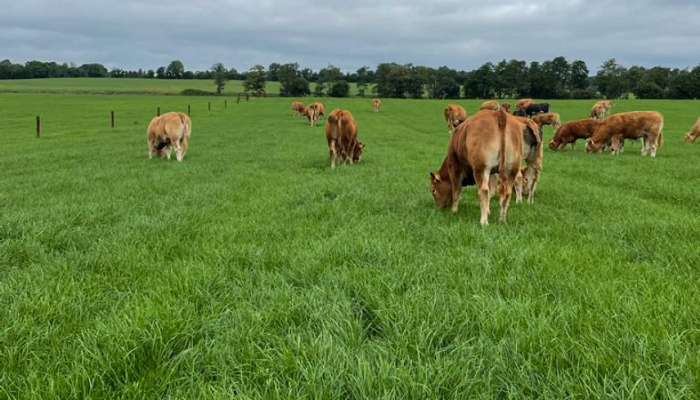
Key principles to follow when reseeding:
- Soil sample for phosphorus (P), potassium (K) and pH;
- Spray off the old pasture with a minimum of 5L/ha of glyphosate; allow a minimum of 7–10 days after spraying before cultivating;
- Prepare a fine, firm seedbed. There is little difference between cultivation and sowing methods once completed correctly;
- Use grass and white clover varieties from the Teagasc Pasture Profit Index or either of the Irish (Republic or Northern) Recommended Lists;
- Sow at a rate of 28–30kg/ha of grass plus 3.5–5.0kg/ha medium-leaved clover;
- Include no more than three or four perennial ryegrass cultivars per seed mix;
- Avoid sowing white clover seed too deep; sowing depth – approximately 10 mm;
- Roll well to ensure good contact between the seed and the soil;
- Apply a suitable post-emergence spray when weeds are at seedling stage.
Management of reseeds
Weed control is an essential part of the reseeding process. Weeds in new reseeds are best controlled when grass is at the 2–3 leaf stage. Docks and chickweed are two of the most critical weeds to control in new reseeds; it is important to control these at the seedling stage by applying the herbicide before the first grazing. When clover is included in the swards, it is important to use a clover-safe herbicide. All pesticide users should comply with the regulations as outlined in the Sustainable Use Directive (SUD).
Care must be taken when grazing newly reseeded swards. The sward should be grazed as soon as the new grass plants roots are strong enough to withstand grazing (root stays anchored in the ground when pulled). Early grazing is important to allow light to the base of the plant to encourage tillering and white clover establishment. Light grazing by animals such as calves, weanlings or sheep is preferred, as ground conditions may still be somewhat fragile depending on the seedbed preparation method used.
The first grazing of a new reseed can be completed at a pre-grazing yield of 600–1,000kg DM/ha. Frequent grazing of the reseeds at lower pre-grazing yields (<1,100 kg DM/ha) during the first year post-establishment has a beneficial effect on the sward. The aim is to produce a uniform, well-tillered, dense sward. Reseeded swards should not be closed for silage in their first year of production, if possible, as the shading effect of heavy covers of grass will inhibit tillering of the grass plant and white clover establishment resulting in an open sward which is liable to weed ingress.
Using the PPI
Farmers should select varieties using the PPI to ensure best return on investment when reseeding. Variety performance data is collected and assessed by the Department of Agriculture, Food and the Marine Recommended List trials, which take place at five sites. Varieties are ranked based on their overall PPI value, which is calculated by adding a variety’s performance in each of the sub-indices or traits that make up the PPI. These sub-indices are spring, summer and autumn dry matter (DM) production, grass quality, silage DM yield and persistency. The relative emphasis of a trait within the PPI is based on its economic value and the level of variation between varieties for that trait.
A ‘grazing utilisation’ sub-index, expressed using the ‘star-rating system’ is also available in the PPI. This trait uses grazing data from the Teagasc Moorepark variety grazing studies. The index provides an indication of how suited a variety is to intensive grazing. Varieties with five stars are highly suited as this indicates that grazing performance of a variety was better than expected, thereby showing high grazing efficiency (lower residual grazing height). Varieties with a low star rating performed poorly under grazing and therefore should not be selected when reseeding for swards intended for intensive rotational grazing. Tetraploid varieties are generally more ‘efficient’ for grazing than diploid varieties.
Selecting varieties based on the sub-indices allows for system specific seed mixtures to be designed. When choosing varieties for intensively grazed paddocks on the grazing platform, those performing strongly in the grazing utilisation, quality and spring/autumn DM sub-indices should be selected. Variety selection for paddocks destined for regular intensive silage harvesting would benefit from prioritising the silage and spring yield traits. Paddocks located on the grazing platform but destined to be closed for silage should aim to combine high silage and utilisation traits. Research investigating variety mixtures found that the trait performance of a mixture could be accurately predicted as the average of the component varieties for all traits.
This article by Tomás Tubritt, Peter Doyle, Michael O’Donovan, Deirdre Hennessy and Philip Creighton was adapted from the Beef 2022 – ‘Supporting Sustainable Beef Farming’ open day book. For more information on the PPI, visit here.