
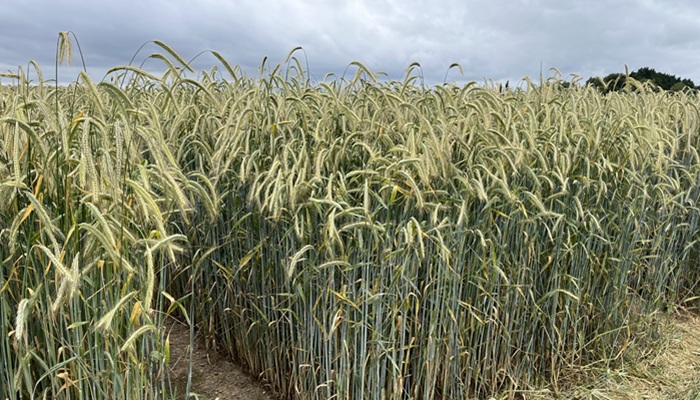
Michael McKeon of the Teagasc Pig Development Department discusses the potential of rye as a cost-effective and nutritionally viable alternative grain for the Irish pig sector.
The Irish pig sector consumes approximately 1.2 million tonnes of feed annually. Grain makes up a major portion of this, with barley (480,000 tonnes), wheat (360,000 tonnes) and maize (120,000 tonnes) forming the core components of typical rations.
Given that feed represents one of the highest input costs in pig production, any ingredient that can deliver equal or better performance at a lower cost deserves attention. This is where rye enters the conversation.
Why consider rye?
Rye has long been incorporated into Danish pig rations, but Irish farmers have historically been reluctant to use it due to the risk of ergot contamination, which poses health risks to both livestock and humans.
However, modern rye varieties, developed through improved breeding programmes, have significantly reduced ergot risk, opening the door to its reconsideration as a feed grain in Ireland. To assess its suitability, Teagasc’s Pig Research Facility, under the supervision of Dr. Peadar Lawlor, conducted a controlled trial to compare rye against traditional grains like barley and wheat.
The finisher pig trial
The study involved finisher pigs from 30 kg to 120 kg and evaluated four dietary inclusion levels of rye: 0%, 20%, 40%, and 60%. All diets were balanced for net energy and standardised ileal digestible (SID) amino acids, with a wheat/barley-based diet as the control.
Performance results
| Rye Inclusion (%) | 0% | 20% | 40% | 60% |
|---|---|---|---|---|
| ADFI (g/day) | 2,810 | 2,830 | 2,740 | 2,770 |
| ADG (g/day) | 1,170 | 1,150 | 1,150 | 1,150 |
| FCE | 2.40 | 2.46 | 2.38 | 2.42 |
The data shows no significant differences in feed intake, growth rate, or feed conversion efficiency, even at the highest inclusion rate of 60% rye.
Implications for the Irish pig sector
The trial clearly indicates that rye can safely replace a substantial proportion of barley in finisher pig diets without compromising performance. From a nutritional standpoint, rye offers a comparable energy and amino acid profile to barley, making it a promising cost-effective alternative.
However, for rye to be adopted commercially, the industry must address:
- Consistent grain supply
- Mycotoxin and ergot monitoring
- Storage and handling protocols
- Price competitiveness
Looking ahead
With positive trial results backing its potential, rye could soon become a mainstream feed ingredient in Irish pig production. Collaboration between grain growers, feed mills, and pig producers could support a circular economy, with pig units utilising rye and providing nutrient-rich manure back to tillage farms.
By embracing alternative grains like rye, the Irish pig sector can improve resilience, reduce feed costs, and remain competitive in an evolving agricultural landscape.