
24 November 2023
Safety with ATVs and the new training requirements
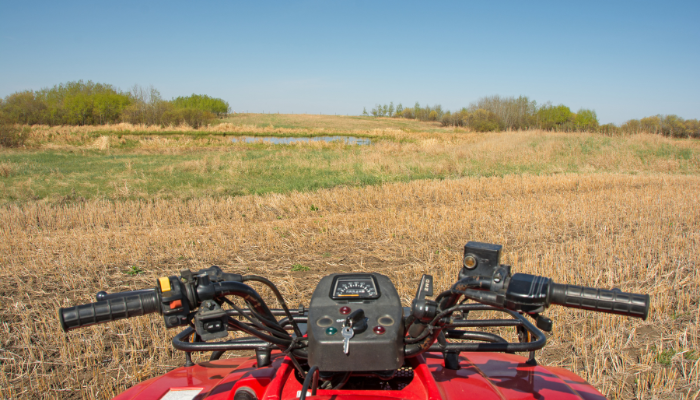
An All-Terrain Vehicle (ATV) can be a very versatile and useful machine on the farm. Unfortunately, they are also one of the most dangerous machines on farms.
Francis Bligh, Teagasc Health and Safety Specialist, tells us more, while also outlining details of the recently introduced requirement to have completed a safety training course before operation.
Health and Safety Authority (HSA) data shows that over the past decade (2013 – 2022), there have been 10 farm fatalities involving ATVS. Of these, two were under 18 and six were over 65 years of age. Many more people have been left with life changing injuries.
Watch the video focusing on ATV/Quad bike safety below:
Consider alternatives
Before purchasing or replacing an ATV, check the market to identify alternative options. ATVs can be fitted with a roll-over bar, but it is important to assess other options. There is an increasing trend towards people considering a slightly larger Utility Vehicle (UTV) with a cab or roll over protection that will carry two people.
Training and experience
Engaging in training and gaining experience are very important tools to help you understand how to operate your ATV safely. Knowing and understanding how to manage your ATV in different situations will help you develop the skills to operate it safely.
Legal requirements
Under Regulation: S.I. No. 619 of 2021 all operators using an ATV/quad for work must have undergone an ATV training course provided by a registered provider to a QQI standard or equivalent by November 20th, 2023. The law also places a requirement on the operator to carry out a risk assessment of ATV operation and wear personal protective equipment (including a helmet).
The HSA will enforce this legislation. When an ATV is found during an inspection, HSA inspectors will request evidence to show professional training has been completed and wearing of a helmet takes place. For more on the training requirements and the selection of a training provider, click here.
Quad/ATV helmets
When purchasing an ATV/Quad helmet take time to ensure it is fit for purpose. The HSA guidance states: ‘Helmet types suitable for ATV/Quad Bike operations, depending on the circumstances of use, are motorcycle helmets and specialist ATV helmets. All helmets should have a chinstrap and be capable of being used with suitable eye protection. The type of helmet chosen must be based on an assessment of the circumstances in which the ATV/Quad Bike will be used, e.g. the types of surface travelled over and anticipated speeds. Importantly, all quad bike helmets should fit comfortably and securely, to ensure full protection.
For more information on the guidance from the HSA in relation to Quad/ATV helmets, click here.