
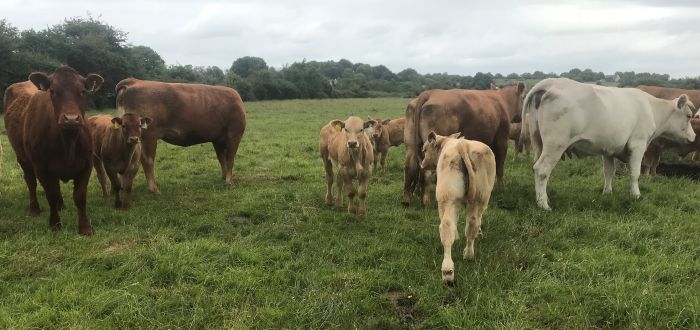
Did you join the Suckler Carbon Efficiency Programme (SCEP) in 2023? SCEP is a 5-year scheme, now in its 3rd year. It is a good time for suckler farmers to review where they are now in relation to scheme targets. Alan Nolan, Drystock Advisor in Mayo takes a look at the key requirements and actions
Key requirements
To start, there are a number of key requirements that farmers must comply with throughout the duration of the SCEP to ensure they remain in the scheme. These include:
- Bord Bia SBLAS membership must be maintained for the duration of SCEP participation.
- A minimum of 50% of the yearly reference number should calve down between July 1, 2024, and June 30, 2025.
- A valid BISS application for 2025 must be submitted.
Failure to comply with any of the above requirements will result in a farmer being removed from the programme and having to re-imburse payments already received. It is critically important if you have reduced suckler numbers in recent years to ensure that you had enough calves registered on 30th June to reach 50% of the SCEP yearly reference.
Remember SCEP is an environmental scheme that is paid on a per hectare basis. Farmers in the scheme are paid €225/ha on the first 15 hectares and €180/ha on the remaining hectares. This works out at a payment of €150 per cow on the first 22 cows and €120 per cow on the remaining cows. For a farmer with a reference number of 20 this works out at a payment of €3000 per annum over the 5 years, minus the cost of genotyping.
Five mandatory actions
The scheme is built around five mandatory actions. As the scheme progresses some of the targets in these actions have increased. It is good for farmers to re-cap and be aware of any of these new targets so that they can maximise their payments over the lifetime of the scheme.
Action 1 – Eligible Bull / Eligible AI
In years 3 & 4, 85% of calves born must be sired from a 4- or 5-star eligible bull. In year 5 this target increases to 90%. Therefore, it is important where a stock bull is changed or where a farmer purchased in-calf heifers that this target is still reached.
Action 2 – Female Replacement Strategy
2025 is an important year for this action. Applicants are required to ensure that by the 31st October 2025 at least 65% of their yearly reference number are eligible females. They must be genotyped 4 or 5 star on the Replacement Index at the time of purchase for replacements brought into the herd, or at the time of genotyping for those replacements bred within the herd. This will increase to 75% in Oct 2027.
Action 3 – Genotyping:
Applicants must continue to genotype 70% of their yearly reference number and submit the samples by 30th November each year. This may be an area of concern for farmers who have reduced suckler cow numbers over the last few years. In this case all cows and females on the farm may be genotyped. There may not be enough new calves born to reach the 70% figure and there may be no other cattle on the farm available for genotyping. So, on suckler only farms it is important to ensure there is enough calves born each year to reach the 70% genotyping figure.
Action 4 – Weighing and Submission of Weights to ICBF
This action remains the same in that farmers must weigh at least 80% of the calves born on their farm along with their dams. Calves must be unweaned and a minimum of 50 days at weighing. All weights must be submitted to ICBF by the 1st of November annually.
Action 5 – Calving Details and Surveys
Applicants are required to complete a range of survey forms collecting data relating to calving details and calf and cow traits throughout the year. Calves born in the herd must be kept on the farm till they are at least 5 months of age. This is one action a number of farmers have failed on in the past, in that they have not returned all the survey information and therefore have lost out on over 20% of their annual payment, despite reaching all other targets.
Maximise your payment
For farmers to maximise their payments under the SCEP, it is essential to complete and meet all actions and requirements. Failure to comply with any of the steps – whether it is meeting the 50% calving requirement or completing surveys – can result in reduced payments or no payment.
Make sure to keep a track on your herd’s progress to ensure you receive your full payment in the programme over the next 2-3 years. Use the ICBF website for assistance. Login onto your ICBF home page and view the SCEP Eligibility page to see if you are reaching the required targets.