
Scope to improve water quality communication strategies
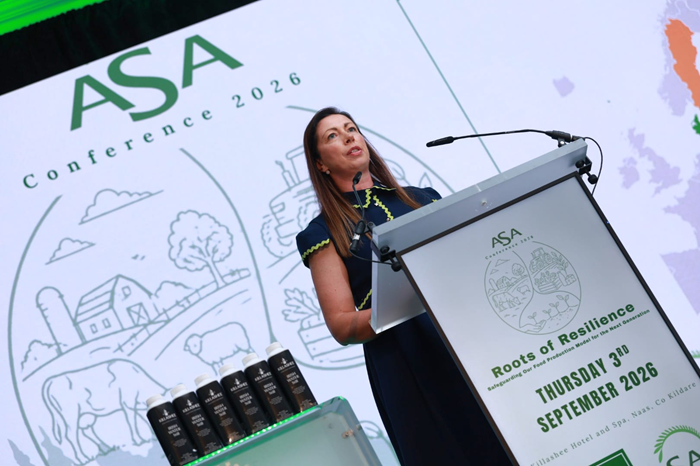
Dr. Bridget Lynch, Research Officer in the Agricultural Catchments Programme (ACP), was awarded the annual ASA Fellowship in 2025. Through this bursary, which involved travel to Denmark and Sweden, along with a qualitative study, Dr. Lynch gathered knowledge on science communication strategies to enable better uptake of water quality messaging.
Marking the cumulation of the fellowship, Dr. Lynch presented her key recommendations to delegates at the annual Agricultural Science Association (ASA) Conference on Thursday, September 3, 2026, highlighting the positives, challenges and areas where improvement is required to maximise uptake of water quality messaging to reach a wider audience.
Current water quality science communication is supported by high-quality scientists and robust science, Dr. Lynch explained. However, several barriers can make water quality science difficult to communicate effectively. These include the sheer volume of regulatory frameworks, acronyms and units used to express water quality metrics in reports/papers, along with the complexity of below ground processes.
“Another challenge is the level at which technical scientific information is presented. While it may be appropriate for researchers and regulators, it can be overwhelmingly dense for advisors, farmers, the media and non-experts,” Dr. Lynch explained.
She added that water quality messages can also be delivered in isolation, rather than being integrated with other environmental metrics and economics.
Despite the abundance of information, Dr. Lynch also noted that there is a shortage of dedicated science communicators with both science and media training. At the same time, some audiences remain difficult to reach, including the general public, older farmers and hard to reach farmers.
As explained by Dr. Lynch, there are of course a number of approaches that are working well. These include ASSAP, one-to-one advisory services, farm walks and peer-to-peer communication. Storytelling featuring researchers, farmers and advisors is also being used through testimonials, video, television, farm walks, print and Our Food Roots, while current industry collaboration was highlighted as another strength.
Building on these, Dr. Lynch recommended a number of actions to strengthen science communication, including the use of dedicated science communicators and media-trained scientists. A communications approach using multiple platforms and tailored messages was also advised.
In addition, Dr. Lynch highlighted the need for an increased presence of agricultural scientists in mainstream medial and a greater focus placed on audiences that are currently missing, including the public, schools and hard-to-reach farmers.