
Scour – limiting its impact
05 February 2025 Scour – limiting its impact A costly disease when occurring at farm level, Manager of the Future Beef Programme at Teagasc, Martina Harrington takes a look at some of the steps farmers can take to reduce the impact of scour this calving season. Scour and gut infections are the leading cause […]
05 February 2025
Scour – limiting its impact
A costly disease when occurring at farm level, Manager of the Future Beef Programme at Teagasc, Martina Harrington takes a look at some of the steps farmers can take to reduce the impact of scour this calving season.
Scour and gut infections are the leading cause of death in suckler calves under one month old, accounting for 32% of cases in Irish regional veterinary labs. However, simple management practices – centring on vaccination, good colostrum management and hygiene – can significantly reduce the risk.
Where scour is a reoccurring issue on your farm, you need to assess the risk factors:
- Can you identify the cause? Various bugs and/or viruses may be responsible, speak to your vet to identify the cause and find the most appropriate solution;
- Are you calving pens and housing clean? Poor hygiene is a significant contributor to scour occurring;
- Do your calves receive sufficient colostrum? If intervention or colostrum feeding is required, is you feeding equipment sterile?
Prevention
As with all animal diseases, prevention is always better than cure. Where scour is a problem on your farm, a vaccination programme developed and implemented under the guidance of your vet may be a good starting point. Pre-calving vaccines are available for rotavirus, coronavirus, E. coli and cryptosporidium. However, careful management of these vaccines, both in terms of the timing of administration and ensuring the calf receives adequate colostrum, is necessary to ensure the best results.
More detailed information on pre-calving vaccination programmes are available here.
Colostrum
Ensuring the cow has adequate volumes of good quality colostrum is essential to ensue its benefits to the newborn calf, namely the achievement of adequate passive transfer, a process required to kick start the calf’s own immune system. Nutrition of the cow in the final weeks of gestation plays an essential role and high protein diets in late pregnancy are necessary to allow for the production of quality colostrum. Where the protein content of the diet is unknown or lacking, supplementation with soyabean meal might be one possible solution.
Additionally, as calves are born with no immunity to the bugs present in their environment, ensuring they receive adequate volumes of colostrum is essential until their own immune system develops over time.
Some key points to note on colostrum management include:
- Feed immediately: Provide 2–3 litre of colostrum within 2 hours of birth.
- Check quality: Use a Brix refractometer; >22% indicates good quality.
- Technique: If calves fail to suckle, hand-feed or use a stomach tube (if trained.
- Label and freeze surplus high-quality colostrum for emergencies.
- Train staff in stomach tubing if necessary.
Hygiene
In the weeks leading into the calving season, farmers have one final opportunity to ensure their calving pens and housing are clean before the arrival of newborn calves. Power washing is recommended, provided a sufficient period of time is available to allow all surfaces to dry thoroughly. The use of disinfectants, effective against rotavirus and cryptosporidium and recommended by your vet, is also advised. When using disinfectants, read the label careful and use as per instructions on concentration, contact time and drying time.
Pro Tip: Use footbaths and designated calving clothes to maintain hygiene standards.
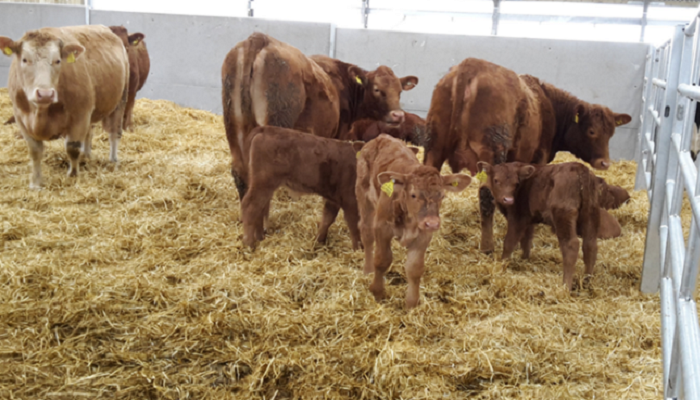
Once thoroughly cleaned and disinfected, ensure the calving pen has a clean, deep bed of straw – allowing the calf to ‘nest’ and keep warm after birth and to prevent chills occurring. Consideration should also be given to clipping the cows’ tails and flanks, as this will help prevent the calf from picking up bugs when trying to suckle.
For many farmers, calving is seasonal and feeding utensils and equipment may not have been touched since the last cow calved last year. Consider purchasing new, clean utensils. If they have to be carried over from last year, ensure they are thoroughly cleaned and disinfected before use. In addition to limit the risk of spreading scour, all bottles, teats and stomach tubes should be cleaned and disinfected between each use.
By addressing these areas, you can reduce the risk of scour and improve calf survival and health outcomes. However, be prepared for the unexpected and use this down time before calving commences to limit the impact of scour and to prepare an isolation area, where sick calves can be isolated to immediately to reduce the spread if scour occurs on your farm.
Future Beef Webinars
The Future Beef team also hosted two webinars in recent weeks. The first, ‘A Farmers’ Guide to Pre-Calving’, Focused on topics such as body condition score (BCS), minerals and pre-calving vaccinations. Chaired by Aisling Molloy, Future Beef Advisor, this webinar centred on essential pre-calving preparations and featured: Prof. David Kenny, Teagasc; Emma Sargent, MSD; and Ed Curtin, Future Beef Farmer.
A recording of the ‘A Farmers’ Guide to Pre-Calving’ webinar is available to view below:
The second webinar, ‘A Farmers’ Guide to Calving and Post-Calving’, focused on calving the suckler cow and post calving management of the suckler cow and calf, including if and when to intervene and how to manage the newborn calf. A key target in a profitable suckling enterprise is achieving a calf per cow per year and calving the herd compactly each year. The webinar focused on:
- Calving the suckler cow: Knowing when and if to intervene during calving, what the signs of a difficult calving are, what do you need to have in the calving shed? If you have a hard calving – how do you treat the cow afterwards
- Calf care: How can I reduce illness once my calf is born- scour, navel ill etc. If my calf does get sick – what can I do to minimise the effects – correct rehydration of using the correct products etc.
- Getting the cow back in calf: The webinar looked at ways achieve a 365 day calving interval, through post calving nutrition, decisions around breeding and fertility and is synchronisation an option – Michael Biggins’ experience.
A recording of the ‘A Farmers’ Guide to Calving and Post-Calving’ is available to view below: