
Seasonal shifts: Tracking biodiversity in autumn
Autumn is a critical window for wildlife survival and habitat management, writes Brian Clancy, Lecturer at Teagasc Kildalton College.
With over 60% of Ireland’s land area dedicated to agriculture, the choices made by Irish farmers in September, October and November directly dictate the health of local ecosystems, the survival of overwintering species and the preservation of native biodiversity.
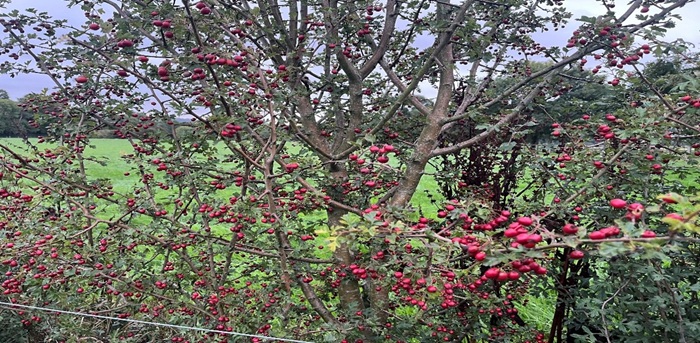
The hedgerow network – nature’s autumn larder
Ireland’s networks of native hedgerows, comprising of whitethorn, blackthorn, elder, holly, hazel and other woody vegetation, growing on boundaries from stockproof hedgerows to relict hedgerow are estimated at 689,000km of hedgerow in the country.
In autumn, these linear habitats transform into crucial ecological corridors and foraging grounds. Following the lifting of the cutting ban on 1st September, hedge cutting becomes a major seasonal task on Irish farms.
However, modern biodiversity focused farming practices place a heavy emphasis on structural management. Instead of severe ‘shaving’ or lowering of the hedge height, farmers are increasingly adopting practices that leave mature fruiting trees, such as crab apple and mountain ash, untouched.
Leaving a high, A-shaped profile ensures that the abundance of autumn berries, haws, hips, and nuts remains available as a vital food source for resident birds (such as thrushes, blackbirds, and finches) and small mammals (like the wood mouse and hedgehog) preparing for the harsh winter months.
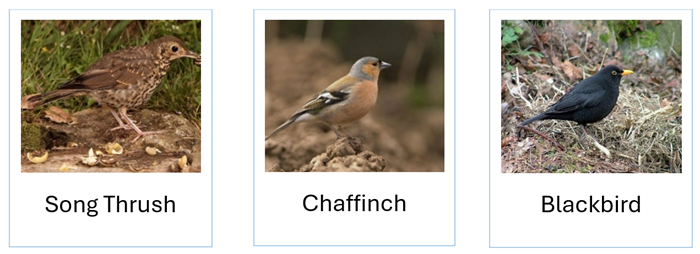
Image source: Birdwatch Ireland
Multi-species swards and soil biodiversity
The biological activity beneath the soil surface is just as vital as the visible wildlife above it. Autumn is a period of transition for pasture soils, and the rise of multi-species swards (MSS) across Irish dairy and beef farms is playing a vital role.
Swards containing a mix of perennial ryegrass, legumes (like red and white clover), and herbs (such as chicory and plantain) maintain deeper, more diverse root structures compared to traditional monocultures. In autumn, as these deep roots naturally decay and regenerate, they release organic carbon into the soil, feeding earthworms, fungi, and beneficial bacteria. This active soil biology improves soil structure, enhances water infiltration during heavy autumn downpours, and maintains nutrient cycling long after chemical fertiliser applications have ceased for the season.

Managing watercourses and riparian zones
Autumn rains bring a heightened risk of overland nutrient runoff into Ireland’s dense network of drains, streams and rivers. Protecting aquatic biodiversity during this period relies on the rigorous maintenance of riparian zones and margins.
Farmers participating in agri-environmental schemes maintain fenced-off buffer strips along watercourses. In autumn, the dense, ungrazed vegetation in these margins act as a natural sieve, trapping sediment, phosphorus and nitrogen before it can enter the water. This protection is critical for aquatic life, autumn is the spawning season for native salmonids, including Atlantic salmon and brown trout.
Ensuring that riverbeds remain free from siltation and chemical contamination allows these fish to successfully cut their ‘redds’ (nesting coarse gravel) and lay their eggs. Furthermore, these undisturbed bankside habitats provide shelter for otters and overwintering amphibians such as the common frog.
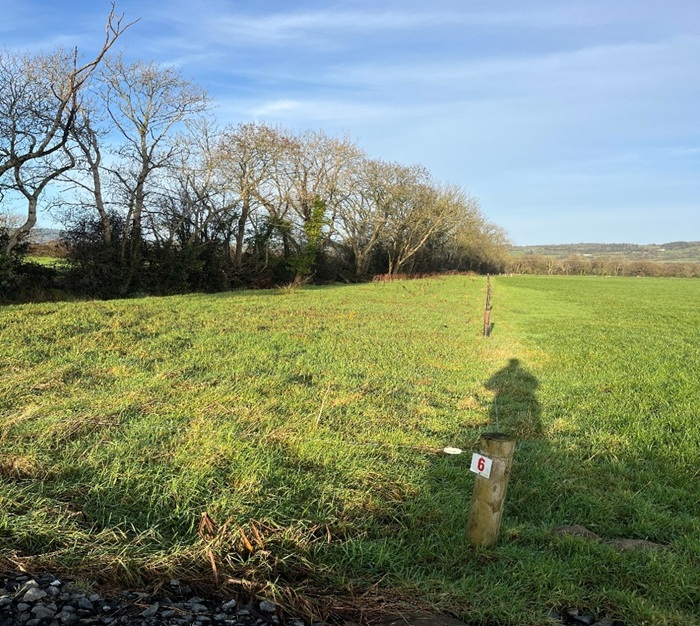
Buffer zone grassland area, Teagasc Kildalton College. There is an open drain along the left-hand side, this buffer stops any runoff from the field from the right-hand side (Source, Jamie Cahill, Kildalton College).
Winter stubble and wild bird cover
For tillage farmers, particularly in the south and east of the country, autumn field management is central to bird conservation.
Leaving cereal stubbles unploughed over the autumn and winter months, a practice highly encouraged under Ireland’s Agri-Climate Rural Environment Scheme (ACRES), provides a lifeline for seed-eating birds like the yellowhammer, linnet, and skylark. The spilled grains and weed seeds left in the wake of the combine harvester serve as an abundant food supply.
Additionally, autumn is when dedicated wild bird cover crops (featuring mixtures of kale, mustard, linseed, and triticale) reach full maturity. These plots are left completely unharvested, standing as dedicated sanctuaries that offer both high-energy feed and dense cover from autumn gales and predators.
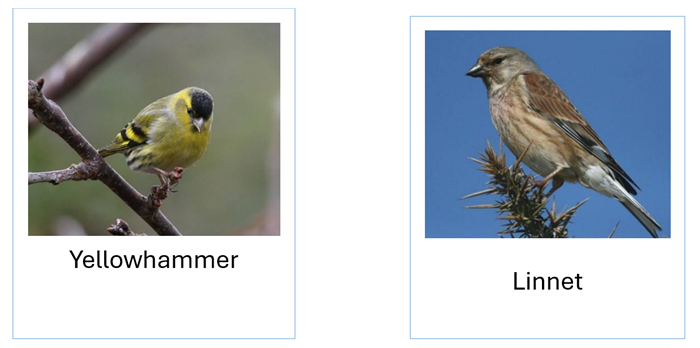
Source: Birdwatch Ireland
Tillage operations and autumn sowing
For tillage farmers, autumn is a race against changing weather windows to harvest remaining crops and establish winter cereals.
The final consolidation of spring crops, such as spring barley and oats, concludes in early autumn. Concurrently, attention changes immediately to preparing seedbeds for winter wheat, winter barley and winter oats. Early autumn sowing (late September to early October) generally yields more robust root systems and higher crop resilience.
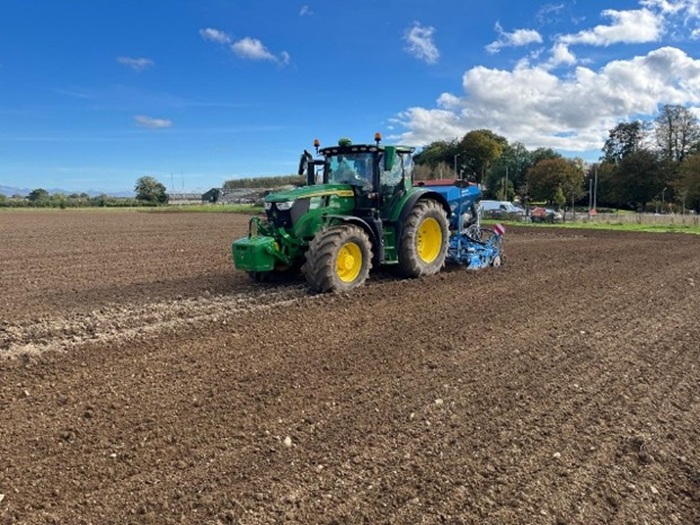
Winter Barley being sown in Kildalton College, Piltown, Co. Kilkenny, 6th October 2026
(Source, Damien Fewer, Kildalton College).
However, tillage farmers must balance this against the heightened risk of Barley Yellow Dwarf Virus (BYDV), which is transmitted by aphids in milder autumn weather.
Integrated Pest Management (IPM) practices, including monitoring aphid flight patterns and selecting BYDV-tolerant crop varieties, are increasingly vital components of the autumn tillage strategy.
Brian Clancy is a Lecturer in Kildalton College. Find out more about Kildalton College here.