
Seaweed by-products – Sustainable feed ingredients for pigs?
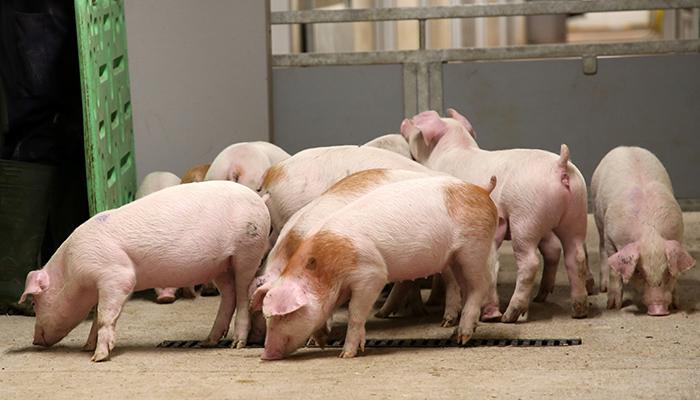
Improving the sustainability of pig production while maintaining animal health and growth is one of the key challenges facing the livestock sector. Dr. Clara Negrini, Teagasc Research Officer, discusses
As part of the Horizon Europe project CIRCALGAE, researchers at Teagasc Pig Development Department investigated whether ingredients produced from seaweed processing can provide a sustainable alternative feed ingredient for use in pig diets.
Following the extraction of high value products (e.g. agar, phycocyanin, etc) from seaweed, a substantial residue remains. Rather than treating this by-product as a waste product, CIRCALGAE explored how it can be further processed so that it is suitable for use as a feed ingredient in pig diets. This approach supports the principles of the circular bioeconomy by reducing waste and creating new, high-value feed ingredients from existing resources.
The research focused on feeding these revalorised seaweed-derived ingredients during the post-weaning period, as during this stage of production pigs are particularly vulnerable to digestive disorders and reduced feed intake. As seaweeds often contain significant levels of bioactive compounds their dietary inclusion could be particularly beneficial during this stage of production. Across a series of feeding trials, four revalorised seaweed-derived ingredients were evaluated for their effects on animal growth performance and intestinal health.
In addition to measuring pig growth, intestinal structure and function, blood parameters, and intestinal microbiota were examined to gain a better understanding of how these novel ingredients interact with the animal. This work was carried out in collaboration with research partners across Europe, combining expertise across different fields.
The studies showed that dietary inclusion of the selected revalorised seaweed-derived ingredients at levels between 1 and 5%, when substituted for conventional feed ingredients, maintained pig growth and health. Some revalorised ingredients improved feed efficiency during the critical early post-weaning period, while others promoted changes in intestinal structure, gut barrier function or modulated intestinal microbial composition.
As CIRCALGAE enters its final phase, the project team led by Prof. Peadar Lawlor and comprising of Dr. Clara Negrini, Joe Glynn, Dr. Linda Giblin and Prof. Gillian Gardiner (SETU) is now completing data analysis and the publishing of results. The knowledge generated will help guide the future development of sustainable feed ingredients derived from marine resources and contribute to more resilient and resource efficient pig production systems.
The CIRCALGAE project was supported by the European Union’s Horizon Europe Research and Innovation Programme (Grant Agreement No. 101081329).