

Edited By
Michael Gottstein
Head of Sheep Knowledge Transfer
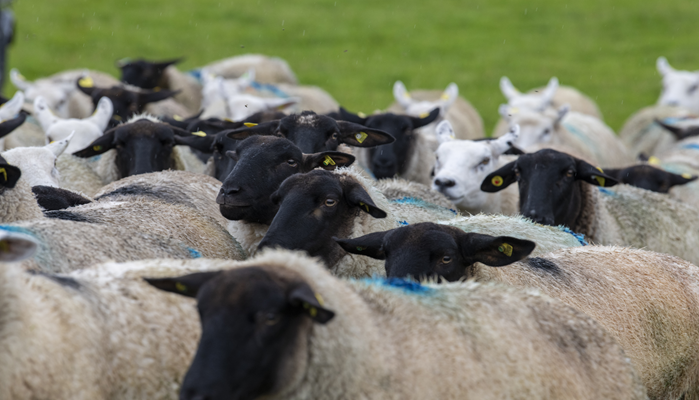
With October being an extremely busy time on sheep farms, Head of Sheep Knowledge Transfer, Michael Gottstein focuses on the key tasks for the month ahead, including finishing lambs, breeding, vaccination for bluetongue and the correct practices when dipping your flock.
Grassland
High temperatures and moisture drove much needed grass growth across the country over recent weeks. However, as we go through October and temperatures and daylight hours reduce, grass growth will tail off.
Important actions in terms of grassland management are:
- Protect regrowth to maximise grass growth into the autumn.
- Prioritise access to the best grass to the stock that will benefit most from it.
- Do a fodder budget. This will consist of days of grass ahead plus winter fodder available for all categories of livestock on the farm.
- Don’t forget to close paddocks in time to ensure there is grass in the springtime. 20% of the grazing areas should be grazed and closed by the end of October. Earlier lambing flocks need to close areas earlier.
- Farmyard manure closing date is the end of the month.
Lamb finishing
Continue to draft lambs regularly, there is no point in giving away free meat.
Take some time to assess what the prices of lambs are in the marts versus selling directly to the factory. There are times when it may be financially advantageous to sell in the mart as opposed to sending lambs directly for slaughter. This is particularly the case for heavier lambs that will kill over the factory price cut off.
Tie your lamb finishing targets into your fodder budget. Be realistic about animal performance. Work out if you have enough fodder to keep and finish all the lambs or if you would be better off to sell some lambs as stores. Store prices have increased in recent weeks.
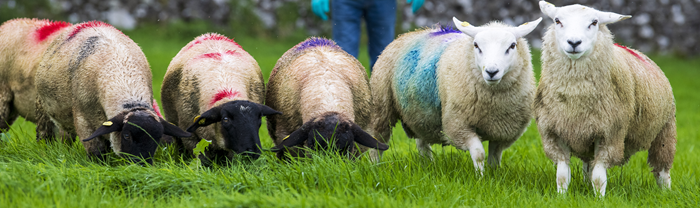
Maximise the benefit of concentrate supplementation
On most farms, finishing lambs will need some concentrate supplementation to improve flesh and kill out percentage. When feeding lambs concentrates, it is important to maximise the benefit from this input.
First up is flock health. Lambs suffering from parasites or painful conditions such as lameness will not perform optimally. Consequently, it is important to address all this issues.
For internal parasites (fluke and worms), treat with an effective anthelmintic. Go back after a few weeks to check and make sure that the anthelmintic used has done the job. External parasites that cause itching and scratching should also be tacked.
Lameness is a big issue on sheep farms, and it is essential that lame lambs are separated from the group and treated at the earliest possible opportunity. Examine the feet to see what is causing the problem. For conditions like scald, standing lambs in a footbath will be sufficient. For conditions like footrot and CODD, contact your vet regarding suitable antibiotics to tackle these conditions.
Mating
October is the month when most of the country’s ewes are mated. The single biggest contributor to the success of your sheep flock for the coming year is body condition score (BCS) of the ewes.
Thin ewes are a problem, and these ewes will create lots of work and will be more likely to lose lambs next year or, at best, wean light lambs.
Options at this stage are very limited for these light ewes but actions that could be considered include:
- Delay mating to allow ewes to gain more condition
- Cull ewes that haven’t recovered sufficient body condition (those less than 2.75)
- In extreme cases where a high percentage of ewes are in BCS of less than 3.0, consider mating these a separate group and supplement them during mating to improve BCS.
Raddle the ram
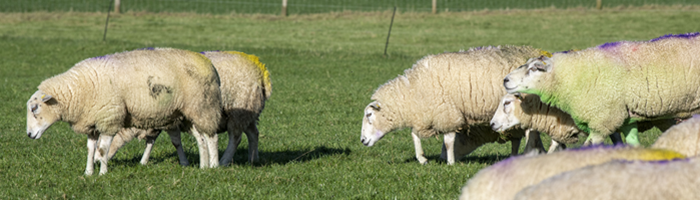
Raddle is cheap but not always easy to keep topped up. Having said that, it is the single biggest insurance policy against infertility. All rams should be raddled from the start of mating. Change the colour of the raddle at least every two weeks. Start with the lighter colours first generally yellow followed by orange, green, red, purple, blue and black.
Bluetongue vaccine
Bluetongue virus cases have ramped up significantly in the UK this autumn, with many sheep deaths confirmed particularly in the south west. Additionally, active infection has also been identified in Ireland this autumn.
The advice is that all sheep and cattle should be vaccinated to protect them. The risk is not just down to protecting against infertility, i.e. infertile rams or barren ewes, but also protecting against sheep deaths.
IT IS NEVER TOO LATE TO VACCINATE YOUR SHEEP! The vaccine is safe to use in pregnant sheep. If you haven’t vaccinated your sheep yet, you should seriously consider doing it as soon as possible.
Dipping sheep
Plunge dipping remains the best option to control a broad spectrum of external parasites that affect sheep. For dipping to be effective, it must be carried out properly.
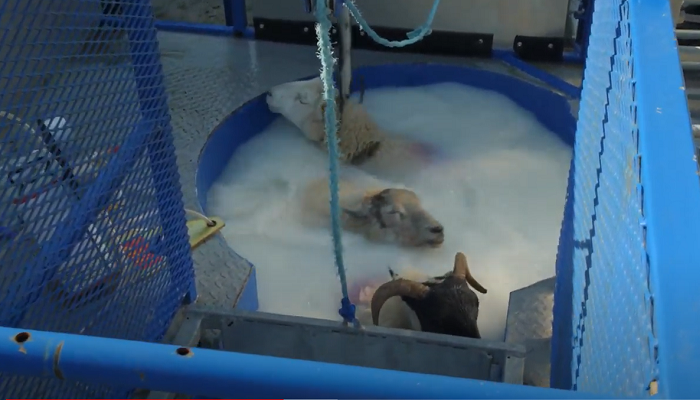
The key points to ensure effective dipping are as follows:
- Clean the dip tub and refill with clean water and make up the dip to the recommended concentration.
- Each sheep must stay in the dip tub for at least 60 seconds. This is the minimum time, not the target, and failure to meet this requirement is why most dipping is not fully effective.
- Replenish the dip concentrate periodically. This will depend on the size of the tank and the product being used. Follow the manufacturer’s instructions.
- After dipping, allow the sheep to drip so that the solution runs back into the tank.
- For 24 hours after dipping, sheep should be retained in fields away from watercourses to prevent dip for entering watercourses. This also applies to transporting sheep immediately after dipping – avoid this as the dip dripping off the sheep will contaminate roadside drains and end up in waterbodies.
- Empty the dipping tank immediately after dipping has been completed. The spent dip should be stored in a slurry tank for subsequent land spreading.
It is in the interests of all sheep farmers to keep sheep dips out of waterbodies. Failure to ensure this happens risks the availability of such products for sheep farmers into the future. Certain dips have already been banned in other countries due to concerns about the impacts they have on water quality.
Dipping organic sheep is challenging this year, as the only available product is currently out of stock. Indications are it will be into late spring/summer before new product will hit the shelves. For organic sheep farmers looking to control external parasites, they should consider other options such as pour-ons and injectable products in the absence of dips. If dipping was an action chosen for the Sheep Welfare Scheme then applicants MUST notify the Department of Agriculture, Food and the Marine (DAFM) that they are either:
1). Confirm in writing that s/he wishes to change CAT B action to footbathing,
OR
2). Opt out of CAT B altogether, meaning their max payment now will be up to €8/ewe rather than up to €13/ewe.
It is important that this notification is made to DAFM before notice of an administrative check or inspection.
OviCast Podcast
Presented by Ciaran Lynch, the Teagasc OviCast podcast brings you the latest advice, insights and technical updates for the sheep industry. Listen to episodes below: