
Sheep, methane and global emissions
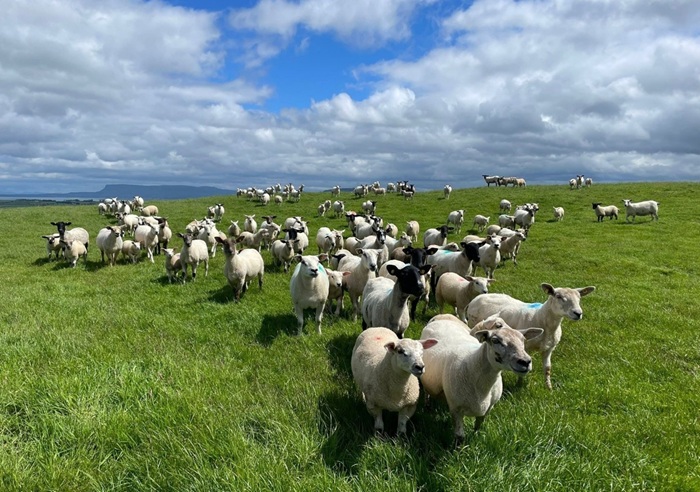
Methane from livestock remains a big focus in climate discussions, and sheep are no exception. A new international study, led by Teagasc researcher Dr Fiona McGovern, published in Small Ruminant Research, brings together data from over 6,000 sheep across Ireland, the UK, France, Norway, Uruguay and New Zealand to better understand what drives methane emissions; and what this means for breeding more efficient sheep.
Eimear Ferguson, Science Communications and Engagement Officer at Teagasc spoke with some of the team behind this latest paper. The study looked at daily methane output, feed intake, growth and feed efficiency in both ewes and lambs, across a wide range of breeds, diets and production systems.
What did the researchers find?
Put simply, bigger sheep eat more and emit more methane. While this will not surprise farmers, the strength and consistency of this relationship across countries is important. According to the findings, the animal’s liveweight was moderately linked to methane output in every system studied, while daily feed intake showed an even stronger link in some countries.
In Ireland, over 4,000 ewes were monitored, using portable accumulation chambers, a mobile system that allows methane to be measured under practical grazing conditions. Across all countries, sheep were measured on diets ranging from fresh grass to conserved forages and concentrates.
As Dr Fiona McGovern explains:“Even with different systems and diets, the same biological patterns showed up. Sheep that eat more produce more methane. The detail matters because it shows these relationships hold true across quite different farming systems.”
Feed efficiency is not the whole answer
One key question was whether more feed-efficient sheep also produce less methane. Feed efficiency was measured using Residual Feed Intake (RFI) i.e. how much an animal eats compared to what it is expected to need. The answer? Not necessarily. The study found little to no link between feed efficiency and methane emissions. This means that while efficient sheep save on feed costs, breeding for efficiency alone will not automatically reduce methane.
A role for CO2?
Interestingly, carbon dioxide (CO₂) emissions were more intricately linked to feed intake and growth than methane. Because CO₂ reflects an animal’s metabolism, it may offer a cheaper way to estimate feed intake in the future, though the researchers stress that timing and measurement methods matter.
“For Irish sheep farming, this work supports the national effort to collect data on traits that matter for both productivity and the environment. We now have methane records from thousands of animals across commercial flocks, measured under normal grazing conditions,” notes Team Lead and Senior Research Officer at Teagasc, Dr Noirin McHugh
What does this mean for farmers?
The takeaway is clear:
- Heavier, faster-growing sheep tend to emit more methane.
- Feed efficiency alone will not solve the methane challenge.
- Methane traits can be included in breeding programmes, but alongside production traits, not instead of them.
The consistency of results across countries shows that methane reduction and productive farming do not have to be in conflict. With enough high-quality data, breeding tools can be developed that support both climate and farm performance goals.
In Ireland, this work is continuing through initiatives like GrassToGas, supported by the Department of Agriculture, Food and the Marine. As more data is collected, breeding indexes can evolve to reflect both efficiency and emissions.
Reducing methane in sheep farming is not about chasing a single number. It is about understanding the balance between genetics, feed, environment and management; and this international collaboration is a crucial step in that direction.
Read the full paper in Small Ruminant Research here.
Featured image: Sheep graze beneath the timeless peaks of Ben Bulben. Photo supplied by Karla Burke