
26 August 2023
Signpost Update: Scanning results and 200-day weights
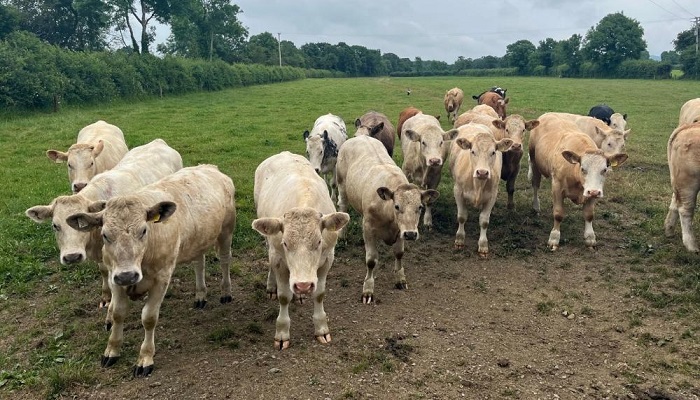
Ruairi Cummins, participant in the Teagasc Future Beef Programme and the Teagasc Signpost Programme, provides an update on his farm from the month of August, which includes a focus on scanning results, animal performance and preparing for weaning.
The cows were scanned at the end of July to see if they were in calf or not. 43 cows were scanned and it turned out that seven of these were not in calf, which was no surprise. Two of these had hard calvings this year and the other five appear to have suffered an early embryo loss.
The seven heifers were also scanned and five of these are in calf to AI bulls. According to the scanner, one of the heifers had internal reproductive issues and would never go in calf anyway.
All in all, I was happy enough with the results. I plan to calve down over 45 cows next spring and already have five in-calf cows sourced from a local herd that will arrive later in the year.
In the meantime, I have separated this year’s bull calves and their cows from the heifer calves and their cows to avoid any surprises. Three of the empty cows are fat already and can be sent directly to the factory in late September / early October. The remainder will either be fed ration at grass and sold in the factory with some heifers, or else sold through the mart. Either way they won’t be housed over winter.
Weighing
We also weighed the cows and calves as part of the SCEP scheme. The 21 weanling heifers averaged 246kg and gained 1.26kg/day since birth, which I was delighted with. The 20 weanling bulls averaged 264kg and gained 1.38kg/day since birth. The five dairy-beef heifers were also weighed and they averaged 188kg, after gaining 0.89kg/day since birth.
Weaning
ICBF produces a useful weaning performance report for the suckler calves and I find it useful to benchmark against the targets. The target 200-day weight for heifers is 250kg and my heifers are 290kg.
The target for the bulls is 300kg at 200 days and my bulls are doing 320kg, which tells me that they’re doing well, despite the weather this year.
The average weight of the cows is 700kg and, on average, they are producing a calf that is 44% of their body weight, which is above the target of 42%. While I like to see the calves doing well, I also like to check on any that aren’t doing so well. Only one calf was doing less than 1kg/day and she’s a heifer calf born on 22nd February. She was only 30kg at birth and just hasn’t caught up on her comrades. Her cow produced a grand calf last year so I’m not sure why this one is smaller, but there will always be one.
The calves are creep grazing ahead of the cows and will be fed barley at grass before and after weaning. This will help to reduce the amount of grass they’re eating and will reduce stress at weaning – the main task in autumn.
Fertiliser
I will spread the last round of fertiliser this month; a half bag of protected urea per acre on the home farm and 1-1.5 bags of 18-6-12 per acre on the out farm to help build the soil indexes. Farmyard manure has been spread on some second-cut silage ground and on a poor performing paddock. This will help build grass for autumn grazing to try and keep the cattle out grazing as late as possible.
Ruairi Cummins is a participant in the Teagasc Future Beef and Signpost Programmes. This article first appeared in the Irish Examiner as part of a Teagasc Signpost Programme update. To access more information on Ruairi’s farm, click here.
Also read: 200-day weights under the spotlight at Newford
Also read: Red clover a winner on suckler farms