
Silvoarable Agroforestry: New Pilot Scheme
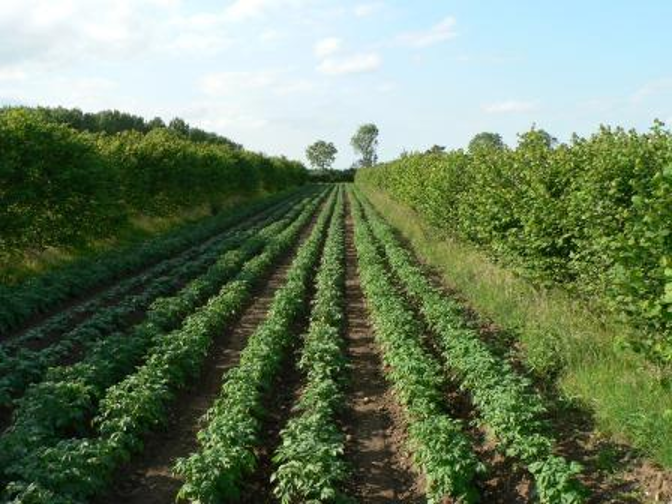
Silvoarable is an Agroforestry option where trees are grown with other farm crops such as cereals or fruit and vegetables. Crops are normally grown amongst single or multiple rows of trees, creating a more diverse multi-tiered farming environment. Tom Houlihan, Frances McHugh and John Casey, Teagasc Forestry Development Department, tell us more.
The Department of Agriculture, Food and the Marine (DAFM) launched this innovative Agroforestry (pilot) option as one of a range of actions arising from the Mid-Term review of the Forestry Programme (March 2026). This pilot is available to land managed under arable farming systems.
Silvoarable (Forest Type 13 of the DAFM Afforestation Scheme) creates farming systems with many beneficial elements. These include enhanced microclimates, mitigation of wind and water erosion, improved soil health, better nutrient cycling, carbon sequestration, and long-term farm diversification. The agroforestry system can also provide an ideal habitat for pollinating and predatory insects that can form part of a future integrated management plan for pest species.
Some basics
Acceptable broadleaf species include Oak, Sycamore, Italian Alder, Red Oak, Walnut, Scots Pine (15% max), Spanish Chestnut, Birch and Cherry. Monocultures should be avoided, with a minimum of 3 and a maximum of 5 tree species to be used. Other species, including conifers, will be also considered on a site-by-site basis. A maximum of 20% of the trees planted can comprise of trees grown for fruit and nuts.
The attractive financial support through grant aid (see table 1) is slightly less than that for Silvopastoral systems since the young trees do not require the same level of protection in the Silvoarable system. However, in some cases, rabbit/hare protection or deer fencing may be required and these requirements should be considered at the planning stage.
Stocking and spacing
A minimum stocking rate of 400 trees per hectare (ha) is required. The spacing between rows of trees is up to 25m max. Alternative spacing can be proposed and will be evaluated on a case-by-case basis. Tree layouts should be designed to allow machinery access to facilitate continued arable crop production, with thinning of trees over time reducing stocking density from 400 trees/ha to approximately 100-150 trees/ha to maintain light levels. The need for root pruning may also be a future management consideration. Like other systems, Silvoarable Agroforestry requires a long-term commitment from the forest owner.
The Silvoarable Agroforestry grant scheme is on a pilot basis at present. Projects under this pilot scheme must not exceed 7.5ha, while the minimum plot area and width eligible under FT13 are 0.5ha and 20m tree-to-tree, respectively.
Table 1: Grant Rates
| Forest Type
Agroforestry – silvoarable |
Grant Rates (excluding fencing) €/ha |
Annual Premium Payments €/ha |
Number of Premiums for Non-Farmers |
Number of Premiums for Farmers |
| FT 13 | €6,000 | €829 | 10 | 10 |
The Agroforestry Silvoarable option is one of three Forest Types available under Agroforestry. Silvopasture and Forest Gardens are also of significant interest under this scheme. A range of other Forest Types provide plenty of options for farmers and landowners, catering for all objectives.
Further information
Contact your Local Forestry Advisor
Details for the Silvoarable (FT14) are set out in the DAFM Forestry Standards Manual and are also covered in the DAFM booklet Agroforestry, Afforestation Scheme Forest Types 8, 13 and 14.
There is also plenty of practical information and events available through the Irish Agroforestry Forum and the AF4EU project website, which contains practical examples and technical articles on agroforestry from across Europe.