
Soil health improvements on Signpost tillage farms
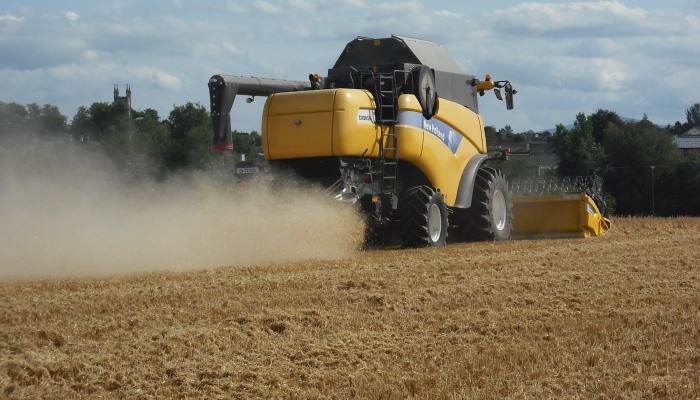
John Mahon, Signpost Tillage Advisor, reflects on the progress and actions taken by tillage farmers enrolled in the programme to improve soil health.
Soil health is central to production on tillage farms. The Signpost tillage farmers are well aware that improving and maintaining good soil health brings production benefits, reduces risk to water quality, enhances soil biology and increases capacity to store and sequester carbon.
The ‘12 Steps to Reduce Gaseous Emissions on Tillage Farms’ recognises the importance of soil improvement through three main actions – application of organic manures, straw chopping and incorporation, and growing cover crops.
Organic manures
All the Signpost tillage farms now use organic manures. Analysis of manures allows them to select the most appropriate type for their farms and determine correct application rates. Another consideration for some was the trade-off between improving soil biology and structure versus addressing low soil fertility. Solid manures tend to be used where the priority is to improve soil structure, biology and long-term fertility; liquid manures are selected where immediate nutrient availability and fertility are the main concerns.
A recent development on four of the farms, demonstrated at farm walks, is the in-crop spreading of slurries in early spring to winter-sown cereals using low ground-pressure umbilical technology. Compared with autumn application, this is greatly benefiting nutrient use efficiency (NUE) and has allowed reductions in chemical nitrogen of up to 30%. As a result, these farms are lowering input costs while also improving soil biology.
Straw chopping
Around 16% of the total tillage area on the Signpost tillage farms in 2024 had straw chopped and incorporated – up from almost none when the programme began four years ago. Uptake has been boosted by the Department of Agriculture, Food and the Marine funded Straw Incorporation Measure (SIM), introduced in 2021. However, there is substantial variation between farms in levels of straw incorporation (0-60%), driven by location and local straw markets.
Those who carry out straw chopping on a rotational basis now report noticeable benefits in terms of soil health, structure and particularly soil biology. Farmers also reported an eased workload at harvest and a quicker turnaround of fields for stale seedbed cultural control of grass weeds where they are a problem, or the earlier establishment of cover crops to build high biomass. Looking ahead, returning straw directly to the soil is probably the single most effective on-farm practice to increase soil carbon which could become financially rewarding in future carbon schemes.
Cover (catch) crops
In 2024, 26% of the tillage area on these farms had cover crops incorporated. This represented nearly 100% of the eligible spring-cropping area, allowing for the 20-25% left in stubble for farmland birds. The advantages observed include the return of organic matter and captured nutrients mopped up overwinter to the soil, improved soil biology and easier spring cultivation.
In 2025 the Farming for Water EIP has significantly increased uptake of cover crops, by providing incentives to adopt this practice. From a few years’ experience on these farms, two observations stand out. Firstly, mild winters produced very large biomass crops in two seasons; this made destruction in spring more challenging and caused a temporary, reversible nitrogen deficit for the following crop as soil microbes immobilised N while breaking down the vegetation. Secondly, these farmers are very conscious of their cover crop species mixes to avoid creating problems for rotational break crops such as brassicas, legumes or clover. For example, this autumn there has been an increase in reported incidence of clubroot in winter oilseed rape; some of which may be due to repeated use of brassica cover crops over several seasons contributing to a build-up of inoculum in some fields.
Reflections and next steps
The first phase of the Tillage Signpost Programme has been a steep learning curve for me, the advisory team and the farmers. Considerable progress has been made by this group and all tillage farmers in adopting practices that can improve their farm profitability while also enhancing environmental sustainability.
The next phase will build on these learnings and use the new Tillage AgNav carbon calculator to track and benchmark the programme’s impacts. I would like to extend a big thank you to all the Signpost demonstration farmers for your motivation, commitment and enthusiasm, and especially those who contributed to this monthly column.
The above article was first published in the Farming Independent as part of a Signpost Programme update.
More from Teagasc Daily: Observations from the Signpost Tillage Programme Phase 1