
Soil Health Week: Avoid physical damage
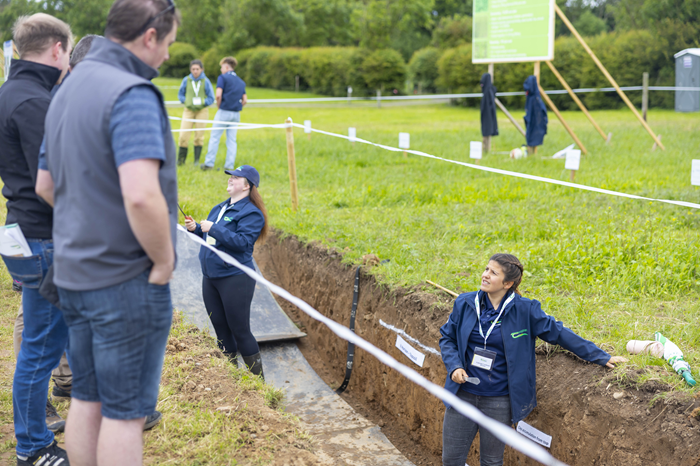
Soil structure has a major influence on how well a soil functions. When it is damaged, writes Dr. Veronica Nyhan, Teagasc Soil and Nutrition Specialist, crop establishment and rooting can suffer, water infiltration is reduced and the soil can become less resilient to both drought and heavy rainfall.
In Ireland, compaction is the most common form of physical soil damage, usually caused by machinery or livestock traffic, particularly when soils are wet. Poorly drained soils are especially vulnerable. Soil erosion can also be a concern, particularly where bare or cultivated soils are exposed to heavy rainfall or wind.
When it comes to compaction, prevention really is better than cure. Before travelling or cultivating, check conditions below the surface. A soil may appear dry on top but still be vulnerable to damage at depth. This is particularly important with increasingly heavy machinery, where high axle loads can cause compaction deeper in the soil profile.
Where possible, reduce machinery traffic, particularly in wet conditions. Using wider tyres, lower tyre pressures and technologies such as VF tyres can help spread the load. Fixed tramlines or controlled traffic systems can also limit the proportion of the field exposed to repeated machinery traffic.
Headlands deserve particular attention. Repeated turning and trafficking mean they are often the first areas where structural damage becomes evident. Where possible, vary turning areas and consider carrying out tillage operations on the main body of the field before completing the headlands.
Reducing the depth, frequency and intensity of cultivation can help protect soil structure and soil organisms. However, reduced tillage is not automatically the answer to compaction. In Ireland’s wet climate, soil conditions still need to be monitored and cultivation depth or intensity adjusted where necessary.
The principle is simple: do as little tillage as possible and as much as necessary. As soil structure improves, less work and expense should be required to produce a seedbed.
Where compaction is already present, first identify where it is and how deep it goes. Shallow damage may recover through rooting, soil biological activity and natural wetting and drying. Deeper compaction is more difficult to correct. Mechanical loosening such as subsoiling should be reserved for severe compaction and only carried out when soil conditions are sufficiently dry for the compacted layer to shatter rather than smear.
The key message is to diagnose before trying to fix. Preventing physical damage is generally easier, cheaper and more effective than repairing it afterwards.
Teagasc Soil Health Week
Teagasc will host Soil Health Week from next Monday, 21 September to Friday, 25 September, highlighting the importance of healthy soils for sustainable agriculture, food production and the wider environment. Soil Health Week will bring together farmers, advisers, researchers, students and members of the public through a programme of farm walks, school events, practical demonstrations, workshops and online activities.