
Soil Health Week: Managing Soils in the Right Way
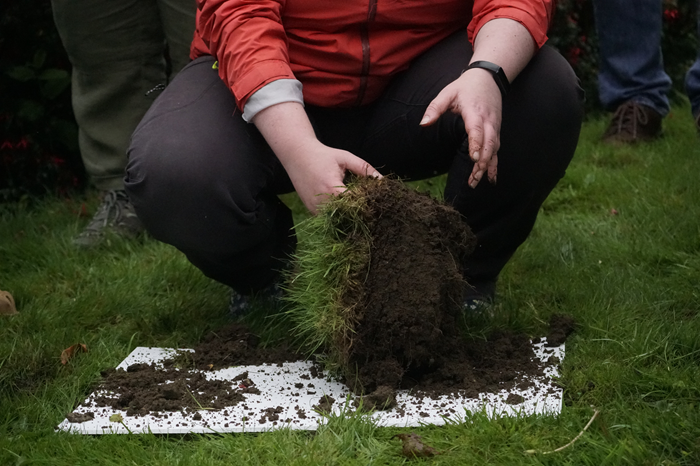
Soils are at the heart of our food systems. They support farm productivity, food security and the health of our wider environment, while also contributing to the resilience of rural communities and the planet. As part of Soil Health Week 2026, Dr. Fiona Brennan, Teagasc Soil Biology Research Officer, Johnstown Castle, writes on the importance of managing soils in the right way.
Healthy soil is a dynamic mixture of minerals, organic matter, air and water. It is also one of the most biodiverse ecosystems on Earth, providing a habitat for a wide range of beneficial organisms. When soils function well, they cycle nutrients, store carbon, filter water and provide the conditions needed for healthy crops and livestock production.
Soils are among the most valuable resources on any farm. They are also one of the greatest legacies farmers, as custodians of the land, can pass on to future generations. However, soils take a long time to form and can be damaged or lost quickly through erosion, compaction, nutrient imbalance or declining organic matter. Once badly degraded, they can be difficult to restore. Sustainable soil management is therefore essential.
There is no single management approach that suits every field. Irish soils are diverse, with different textures, drainage characteristics, slopes and levels of fertility. Each soil has its own strengths and vulnerabilities, so it is important to work with the soils you have for better results. There are, however, six general principles that can help farmers and other soil custodians manage soils more effectively.
1). Know your soils
Understanding the soils on the farm is the starting point for better decision-making.
2). Assess your soil health
Regularly checking soil structure, pH, nutrient levels, organic matter, earthworm activity, rooting and compaction provides valuable information on how soils are functioning.
3). Avoid physical damage
Compaction, erosion and excessive soil disturbance can reduce pore space, restrict root growth, damage soil structure and increase run-off.
4). Support soil biodiversity
Soils are alive, supporting earthworms, fungi, bacteria, insects and many other organisms that are essential members of the farming workforce.
5). Build or maintain soil organic matter
Soil organic matter acts like a sponge, a glue, a nutrient store and a fuel for soil biology.
6). Maintain balanced soil fertility
Healthy soils require a balanced supply of nutrients.
These principles are relevant across all farming systems, but they work best when adapted to local conditions. Good soil management means understanding the soil, recognising its limitations and working with its natural strengths.
Further details of the principles of good soil management are outlined in the Farming for Soil Health handbook, which is free to download here
Download the Farming for Soil Health handbook (English) here
Download the Farming for Soil Health handbook (Gaeilge) here
Teagasc will host Soil Health Week from Monday, 21 September to Friday, 25 September 2026, highlighting the importance of healthy soils for sustainable agriculture, food production and the wider environment.
Throughout the week, farmers, advisers, researchers, students and members of the public will be brought together through farm walks, school events, practical demonstrations, workshops and online activities. The programme will focus on practical measures to improve and protect soil health, including knowing your soils, assessing soil health, avoiding compaction and erosion, supporting soil biodiversity, building soil organic matter, soil sampling and balanced nutrient management.
The key message is simple: managing soils in the right way today protects the productivity, resilience and value of the farm for the future.