
22 January 2024
Soil Sampling for ACRES Tranche 1
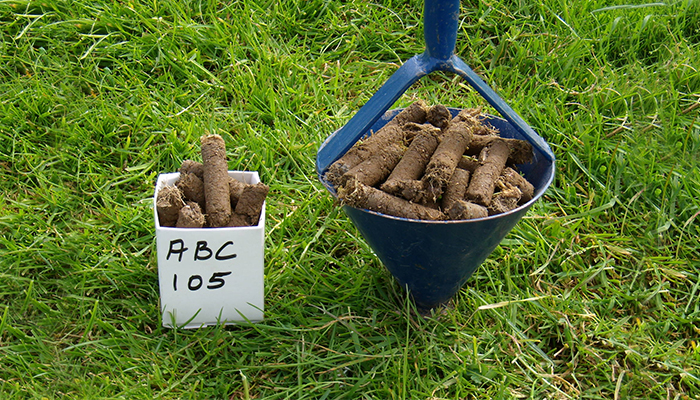
Eamonn Dempsey, Teagasc Advisor, tells us that all participants in ACRES Tranche 1 must have valid soil sample results or soil sample exemption forms uploaded on the ACRES online system by the 15th May 2024.
Under Conditionality the prohibited application period for chemical fertiliser and slurry is an ideal opportunity to have soil samples taken for the whole farm. All participants in ACRES Tranche 1 both Co-operation and General must have valid soil sample results or soil sample exemption forms uploaded on the ACRES online system by the 15th May 2024. Non commonage land declared on the applicant’s 2023 BISS application whether owned/leased/rented must be sampled and analysed.
At least one analysis per every five hectares of land up to 40 hectares is required. The maximum area for any individual soil sample is 5 hectares, however the number of soil samples to be taken if in Nitrate Derogation should be discussed with your advisor.
If you have selected soil sampling as an action for the Eco Scheme in your 2023 BISS Application, these samples may be submitted for acres if they meet the ACRES Requirements regarding submission date, soil sample area etc. Commonage lands must not receive chemical Nitrogen or Phosphorus in ACRES, and there is no requirement to soil sample these lands. Privately owned mountain land and rough grazing not in receipt of applied chemical or organic fertiliser may be exempt from soil sampling, A declaration outlining why these lands have not been sampled must be submitted by an approved ACRES Advisor by the 15th May 2024.
The quality of the fertiliser plan is dependent on soil samples being taken correctly, which includes sampling to the correct depth of 10 centimetres, and taking different samples from different soil and crop types. Samples should be taken in a W pattern across the field. Any unusual spots such as gateways, troughs, feeding points, dung or urine patches, hedges or places where lime has been stored should be avoided. At least 20 cores should be taken per sample, and avoid taking samples on saturated or extremely dry soils. Ensure the soil sampling equipment is clean and free of rust or old soil residues to avoid contamination. Galvanized, bronze or brass corers should not be used as they can affect micro nutrient testing.
Only samples taken on or after the 01/01/2022 will be considered valid for Tranche one participants. Valid soil samples from other schemes e.g. soil sampling programme, Nitrates Derogation will be acceptable for ACRES. Allow 3 to 6 months between fertiliser P and K applications and taking fresh soil samples. The soil sample results will allow the advisor and the farmer to tailor a fertiliser plan for the coming year to match the needs of the soil and the crop.
Information on soil PH, lime, P and K indexes, will allow for a targeted application of slurry and choosing a fertiliser that has the correct balance of Nitrogen, Phosphorus, Potassium and Sulphur. Your soil sample analysis will show the rate of lime required depending on the soil type, soil pH and crop type. In any case the maximum that can be applied is 7.5 tonne/Hectare and apply the balance after 2 years. Soil sampling promotes more sustainable use of fertilisers, which mainly addresses climate and water quality priorities.